
Quick Answer
A scalp infection occurs when bacteria, fungi, or occasionally a virus affects the skin of the scalp or hair follicles, causing itching, redness, scaling, pus-filled bumps, or crusting, and sometimes hair loss. Because several scalp conditions look alike, the right treatment depends on identifying the actual cause, which is why persistent symptoms are worth getting checked by a dermatologist.
What Is a Scalp Infection?
Your scalp is skin, just like the rest of your body. The difference is that it’s packed with hair follicles and produces oil to keep your hair and skin healthy.
That combination, warm, naturally oily, and full of tiny openings where hair grows out, can make it easier for bacteria and fungi to take hold. All it usually needs is a small break in the skin barrier or the environment tipping out of balance.
A scalp infection is what happens when one of these organisms gets past your skin’s natural defences and starts multiplying. Depending on the cause, it can:
- Sit on the surface of the skin
- Affect the hair follicle itself
- Spread across a wider area if left untreated
That’s part of why symptoms and severity vary so much from person to person. Treatment varies just as widely too. Some mild follicular infections improve with appropriate topical care, while infections such as tinea capitis usually require prescription antifungal treatment.
If your scalp has been bothering you for a while and nothing seems to help, it’s frustrating to keep guessing at what’s actually wrong. A quick scalp assessment can tell you exactly what you’re dealing with, instead of another round of trial and error. Talk to our dermatology team.
Tried different shampoos but your scalp is still itchy, flaky, or irritated?
Don’t keep guessing. Get your scalp checked to find out what’s actually causing the problem.
What Causes a Scalp Infection, and Who's More Likely to Get One?
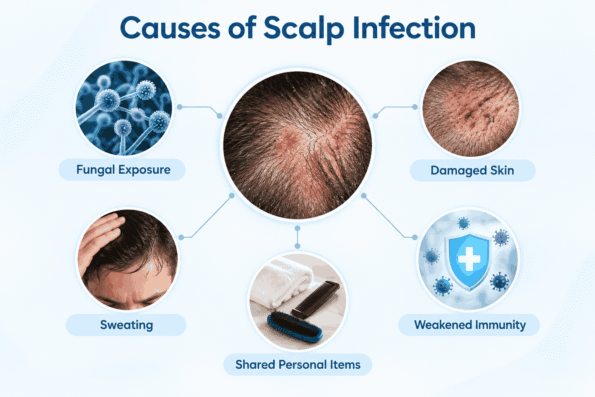
Scalp infections develop when bacteria, fungi, or viruses enter or multiply on the scalp, and a few factors make that more likely:
- Fungal exposure – contact with an infected person, animal, or contaminated item like a comb or hat can spread infections such as tinea capitis, which is why they’re especially common in children
- Damaged skin – scratching, cuts, or existing irritation give bacteria an easier point of entry
- Sweating – a warm, damp scalp, especially under tight caps or helmets for long stretches, creates conditions fungi and bacteria both favour
- Shared personal items – combs, towels, and hats that touch an infected scalp can pass the infection on
- Weakened immunity – conditions like poorly controlled diabetes can make it harder for the body to keep these organisms in check
Having one or more of these doesn’t mean you’re guaranteed to get an infection. It just explains why some people deal with scalp issues more often than others.
What Are the Types of Scalp Infection?
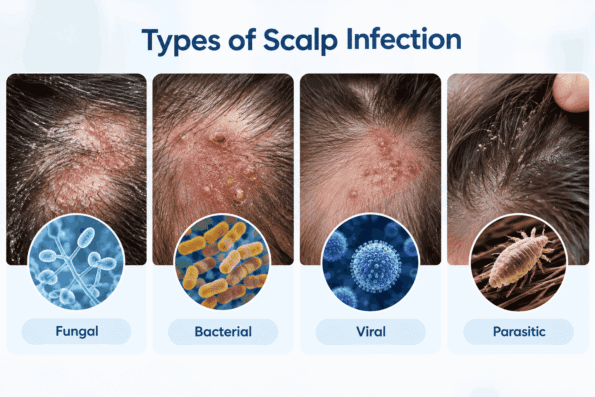
Scalp problems caused by infectious organisms can be broadly grouped into fungal, bacterial and viral infections. Parasitic infestations such as head lice cause similar symptoms but aren’t infections in the medical sense.
Fungal Scalp Infection
Fungal scalp infections, particularly tinea capitis (scalp ringworm), are among the most common, especially in children.
Typical signs include:
- Scaly, round patches
- Hair breaking off close to the scalp
- Occasionally, a tender, boggy swelling called a kerion in more severe cases
We’ve covered this in detail, including how it’s treated, in our guide to fungal infection of the scalp.
Bacterial Scalp Infection
Bacteria, most often Staphylococcus aureus, cause conditions like folliculitis and impetigo. Signs typically include redness, tenderness, pustules, and crusting or other inflammation.
Folliculitis is one condition where bacteria infect the hair follicles directly. If you’re dealing with small, tender bumps around your hairline or where you part your hair, our dedicated guides on scalp folliculitis and folliculitis treatment go deeper into bacterial and fungal folliculitis specifically.
Viral Infections
These are less common but worth knowing about. Shingles, caused by the same virus as chickenpox, can affect the scalp and usually presents as a painful, one-sided rash.
Viral scalp infections generally need antiviral treatment rather than antibiotics or antifungals, so an accurate diagnosis matters here more than almost anywhere else.
Parasitic Infestations
Head lice aren’t technically an infection since they’re a living parasite rather than a microorganism. But they cause enough itching and scalp irritation that people often group them with infections. Worth mentioning for completeness, though the treatment approach is entirely different.
Is Every Itchy or Flaky Scalp Actually an Infection?
Not necessarily, and this is where a lot of people go wrong. Dandruff, seborrheic dermatitis, and scalp psoriasis all cause itching and flaking too, but none of them are infections in the medical sense, even though a yeast called Malassezia plays a role in some of them.
Scalp infection vs dandruff
Dandruff mainly causes flaking and itching. Redness can also occur, particularly when seborrheic dermatitis is involved. Pus, significant swelling, painful sores or patchy hair loss are less typical and may point toward another scalp condition. If flaking and mild itching are your main symptoms, our full breakdown of dandruff and Malassezia may be more relevant.
| Sign | Dandruff | Possible Scalp Infection |
|---|---|---|
|
Flaking
|
Common |
Can occur
|
|
Itching
|
Common
|
Common
|
|
Redness |
Sometimes |
Can occur
|
|
Pain or tenderness
|
Less typical
|
Can occur
|
|
Pus |
Not typical
|
May occur
|
|
Crusting or oozing
|
Not typical
|
May occur
|
|
Patchy hair loss
|
Not typical
|
Can occur
|
|
Broken hairs
|
Not typical
|
Can occur with some infections
|
Scalp infection vs seborrheic dermatitis
This goes a step further than dandruff. Expect redness, greasy yellowish scales, and sometimes flaking that spreads to the eyebrows or sides of the nose. It’s an inflammatory condition, not an infection, though it can flare up alongside one. Our guide on seborrheic dermatitis covers this in detail.
Scalp infection vs psoriasis
Psoriasis causes thick, well-defined, silvery patches and is an autoimmune condition rather than an infection, though cracked plaques can occasionally become infected.
Scalp infection vs folliculitis
Folliculitis affects individual hair follicles and often appears as small, acne-like bumps. Because some forms are infectious while others have different triggers, a dermatologist may need to examine the scalp to determine the exact cause.
Scalp infection vs contact dermatitis
Sometimes it isn’t an infection or an inherent scalp condition at all, just a reaction to something you’re using. A new shampoo, hair dye, or styling product can leave the scalp red, itchy, and inflamed without any infectious organism involved. Removing the trigger often settles things down. If symptoms persist after you’ve stopped using the product, it’s worth getting checked rather than assuming it’ll resolve on its own.
If you’re not sure which of these you’re looking at, that’s completely normal. Even dermatologists sometimes need a closer look before they’re confident, which is really the point of seeing one rather than working through a shelf of shampoos on your own.
What Dermatologists Look For
Distinguishing a true scalp infection from a look-alike condition usually comes down to a few clues that aren’t always obvious to a patient:
- The exact pattern of hair breakage
- Whether there’s a single organism involved or a mixed picture
- How the affected area responds to a short trial of treatment
This is also why dermatologists are often cautious about diagnosing purely from a description or a photo. Conditions like early fungal infection and seborrheic dermatitis can look nearly identical in the first week or two. A hands-on scalp examination, and occasionally a simple skin scraping, usually settles the question far faster than cycling through different shampoos at home.
“Many people mistake persistent scalp itching or flaking for ordinary dandruff. However, if these symptoms are accompanied by pus-filled bumps, painful areas, crusting, broken hair, or patchy hair loss, I recommend consulting a dermatologist for a proper scalp examination rather than relying solely on anti-dandruff products. Identifying the underlying cause is essential to choosing the right treatment and protecting scalp and hair health.”
Dr. Kiran Chotaliya, M.D. (Skin & V.D.), Dermatologist & Hair Transplant Surgeon
Symptoms of a Scalp Infection
| Symptom | What It Might Mean |
|---|---|
|
Itching |
Fungal infection, inflammation, or lice
|
|
Redness
|
Inflammation or active infection
|
|
Scaling or flaking
|
Fungal infection or a related scalp condition
|
|
Pus-filled bumps
|
Bacterial involvement, likely folliculitis
|
|
Crusting |
Infection or severe inflammation
|
|
Pain or tenderness
|
Deeper infection or inflammation
|
|
Broken hairs
|
Possible tinea capitis
|
|
Patchy hair loss
|
Some fungal or scarring conditions
|
|
Swelling |
More significant infection
|
|
Fever or swollen lymph nodes
|
Possible spreading infection, needs medical attention
|
Scalp infection symptoms vary according to the type of infection. Some people notice itching or scaling first. Others develop painful bumps, crusting, swelling, or hair changes from the outset.
Can a Scalp Infection Cause Hair Loss?
Hair loss caused by some scalp infections can improve once the underlying infection is treated. However, severe inflammation that damages the hair follicles can sometimes lead to permanent hair loss, particularly in longstanding or repeatedly untreated cases.
The takeaway isn’t that every scalp infection threatens your hair. It’s that catching it early and treating it properly is what keeps a temporary problem from becoming a permanent one.
Worried that an infection might already be affecting your hair growth? It’s a fair thing to worry about, and it’s also very answerable. Get your scalp checked and know where you stand instead of wondering.
How Is a Scalp Infection Diagnosed?
A dermatologist typically starts with a scalp examination and a few questions about when your symptoms started and how they’ve changed.
From there, depending on what they suspect, they might:
- Take a skin or hair scraping to check for fungal elements under a microscope
- Send a sample for fungal or bacterial culture to identify the exact organism
- Use dermoscopy, a magnified examination of the scalp, to spot patterns that aren’t obvious to the naked eye
- Take a small skin biopsy in rare, more complicated cases
These tests can help distinguish an infection from other scalp conditions and identify the treatment most likely to work.
How Is a Scalp Infection Treated?
Scalp infection treatment depends entirely on the underlying cause, which is exactly why self-diagnosing from a search result isn’t a good idea.
For fungal infections like tinea capitis, prescription antifungal medicine is usually necessary, since topical treatments alone often can’t reach deep enough into the hair follicle. Antifungal shampoo is commonly used alongside treatment to help reduce spreading, though it isn’t a standalone cure.
For bacterial infections, treatment depends on the organism, location and severity. A dermatologist may recommend topical or oral treatment when appropriate.
For viral infections, antiviral medication is the standard approach. This is one situation where treating it like a fungal or bacterial issue would genuinely delay proper care.
One thing worth saying clearly: please don’t self-medicate with leftover antibiotics or random antifungal creams from the pharmacy. Using the wrong treatment doesn’t just fail to help. It can sometimes mask symptoms and make the actual diagnosis harder later.
How long does it take to heal? Recovery depends on the type of infection, its severity, and the treatment required. Some mild infections improve relatively quickly, while conditions such as tinea capitis may need a longer course of prescription treatment. A dermatologist can give you a more realistic timeline once the cause is identified.
What Can You Do at Home While You Wait for Treatment?
While you’re figuring out the cause or waiting for an appointment, a few supportive habits genuinely help without doing any harm:
- Keep the area clean, but skip aggressive scrubbing
- Resist the urge to scratch or pick at bumps, however tempting
- Don’t share combs, towels, or caps with anyone else
- Clean your hairbrush and any tools you use regularly
- Cut back on heavy styling products until things settle down
- Follow whatever your dermatologist prescribes exactly as directed, even after symptoms start improving
- Avoid applying unverified home remedies to an inflamed or infected scalp, as some products can further irritate the skin
How Can You Prevent Scalp Infections?
- Avoid sharing combs, hats, pillowcases, or towels
- Wash your hair regularly, especially after heavy sweating
- Don’t scratch at existing scalp irritation, since broken skin is an easier entry point for infection
- If you have a fungal infection elsewhere on the body, get it treated appropriately and avoid spreading it to other areas
- Get recurring or unusual scalp symptoms checked instead of cycling through products for months
- Keep your scalp reasonably clean and dry, particularly if you’re prone to oiliness or sweating
When Should You See a Dermatologist?
A few situations really shouldn’t wait:
- Symptoms are spreading or getting worse instead of better
- You’re seeing pus or a foul smell
- There’s noticeable swelling or pain
- You develop a fever alongside scalp symptoms
- You’re noticing bald patches or hair breaking off
- Over-the-counter dandruff shampoos haven’t made any real difference after a few weeks
- The same symptoms keep coming back no matter what you try
If you’re experiencing persistent scalp itching, inflammation, sores, unusual scaling or hair loss, a professional scalp assessment can help identify the underlying cause and determine whether treatment is needed. Book a scalp consultation with HairFree HairGrow.
If you’re currently recovering from a hair transplant and noticing similar symptoms around your grafts, your situation is a little different from general scalp infection. See our guide on infection after hair transplant for what’s normal during healing and what isn’t.
Not sure if it’s dandruff, an infection, or something else?
A proper scalp examination can help you get the right answer before the problem gets worse.
Final Thoughts
A scalp infection isn’t always easy to spot on your own, mostly because its symptoms overlap so much with dandruff, seborrheic dermatitis, psoriasis, contact dermatitis and folliculitis. Itching or flaking alone doesn’t automatically mean you’re dealing with one.
What actually matters is the full picture:
- How the scalp looks
- Whether there are sores, bumps or crusting
- Whether hair is breaking or shedding
- How long it’s been going on
- Whether it’s getting better or worse
If you’ve been switching between shampoos and home remedies for weeks without real improvement, that’s usually the clearest sign it’s time for an actual diagnosis rather than another product.
HairFree HairGrow offers scalp consultations to help you take the next step with professional guidance.
Frequently Asked Questions
-
1. What are the first signs of a scalp infection?
Usually itching, redness or mild scaling, though some infections start with more noticeable symptoms like tender bumps or crusting depending on the cause.
-
2. Can a scalp infection cause hair loss?
It's possible, especially if the infection is severe or left untreated for a long time, since ongoing inflammation can damage hair follicles. Treated early, most infections don't leave lasting hair loss.
-
3. Can a scalp infection look like dandruff?
Yes, especially in early stages, which is why some people treat an infection with regular anti-dandruff shampoo for weeks before realising it isn't working.
-
4. Can a scalp infection go away on its own?
Very mild cases sometimes improve with better hygiene and care, but most true infections need targeted treatment. Waiting it out can allow it to spread or worsen.
-
5. Is a scalp infection contagious?
Some scalp infections are contagious, particularly fungal infections such as tinea capitis. Others are not spread from person to person. Whether an infection is contagious depends on its underlying cause.
-
6. How is a scalp infection diagnosed?
Usually with a scalp examination and, if needed, a skin scraping, fungal or bacterial culture, or a closer look with dermoscopy to confirm the exact cause.
-
7. Do scalp infections show up differently in children versus adults?
Tinea capitis is more common in children, while adults more often see bacterial folliculitis. Beyond that, the core symptoms, itching, redness, scaling, are largely similar across age groups.
-
8. When should I see a dermatologist for a scalp infection?
If symptoms are spreading, painful, accompanied by pus or fever, causing hair loss, or not improving after a few weeks of over-the-counter care, it's time for a professional evaluation.