
Quick Answer: Scalp Folliculitis Treatment at a Glance
Learning how to cure folliculitis on scalp starts with identifying your trigger, bacterial, fungal, or irritation-based.
- Bacterial folliculitis on scalp → antimicrobial shampoo + warm compress
- Fungal folliculitis scalp → antifungal shampoo + reduce oiling
- Irritation-based → remove triggering product immediately
Most scalp folliculitis treatment plans show results in 7–14 days. Recurring or painful cases need medical evaluation.
Scalp folliculitis is treated through a combination of gentle cleansing, targeted antibacterial or antifungal care, and avoiding known triggers. Most mild cases improve within 1–2 weeks with consistent home care. Severe or recurring cases may need medical treatment.
If you are noticing small red bumps, itchy spots, or pus-filled pimples on your scalp, you are likely dealing with scalp folliculitis, an inflammation of the hair follicles caused by bacteria, fungi, or irritation. In this guide, Dr. Pratibha Pradhan walks you through how to cure folliculitis on scalp, types, and most effective treatments so you can start healing your scalp today.
What Is Scalp Folliculitis?
Scalp folliculitis is a result of inflamed hair follicles caused by bacteria, fungi, excessive oil, or irritation. Inflammation produces symptoms such as small red bumps, pustules, tenderness, and discomfort that often lead to scalp sensitivity. However, some cases can become chronic and require specific scalp folliculitis treatment.
Common Causes and Risk Factors
Most people experience scalp issues caused by a combination of lifestyle factors, hair-care products, and environmental conditions. Identifying these triggers not only helps in the prevention of recurring episodes but also in the improvement of your scalp condition over time.
Identifying the reason for your flare-ups is very important. Here are some of the most common causes and risk factors:
- Trapping bacteria around hair follicles through profuse sweating
- Using heavy hair products that cause pore blockage
- Infrequent hair washing results in a poor scalp
- Wearing headgear tightly for long periods
- Scratching or causing irritation by rough brushing
It is essential to identify your main cause, which will, in turn, make the treatment of scalp folliculitis much easier and more effective.
Still dealing with itchy bumps and painful pimples on your scalp?
The right diagnosis and treatment can stop recurring folliculitis before it affects your hair health.
Scalp Folliculitis Treatment: Best Ways to Cure It
The approaches to treat and manage folliculitis vary significantly depending on the causative factor, it could be bacteria, fungus, or simply irritation. It is always a good idea to conduct a patch test and monitor your skin’s reaction before introducing any new product or remedy.
1. Gentle Cleansing With the Right Products
Using a good scalp folliculitis shampoo can help remove oil, bacteria, and product build-up from your scalp. When choosing a shampoo for scalp folliculitis treatment, look for mild formulas with calming ingredients like tea tree oil, zinc pyrithione, or salicylic acid. These ingredients help keep your hair follicles clean and are gentle on your scalp.
2. Warm Compress for Immediate Relief
Ten to fifteen minutes of applying a warm compress will help soothe the skin and make the follicles less swollen and softer. Such a basic procedure not only encourages the outflow but also quickly soothes the irritation without harming the skin.
3. Natural Home-Based Solutions
In case you prefer holistic methods, there are some really effective scalp folliculitis home remedies that bring relief. These treatments can calm the inflammation and lessen the number of microbes, which are the main cause of irritation to the hair follicle.
Natural Cure For Folliculitis On Scalp
Some of the commonly used natural remedies are:
- Aloe Vera – For cooling down the affected area
- Diluted tea tree oil – Can help prevent the growth of microbes
- Apple cider vinegar rinse – Known to bring back the scalp’s natural state
- Warm saltwater rinse – Good for cleaning the clogged follicles
If these remedies are used along with the proper hygiene of the scalp, they can lead to scalp folliculitis being treated naturally.
Tried home remedies but your scalp folliculitis keeps coming back?
Get a personalized treatment plan from experienced hair specialists and treat the root cause instead of just the symptoms.
How to Get Rid of Folliculitis on Scalp: Step-by-Step
Getting rid of scalp folliculitis requires a consistent approach rather than a single fix. Here is a practical step-by-step routine that works for most people:
- Step 1 – Identify your trigger (sweat, oil build-up, product residue, or tight headgear)
- Step 2 – Switch to a gentle, medicated shampoo with tea tree oil or zinc pyrithione
- Step 3 – Apply a warm compress on affected areas for 10–15 minutes, once daily
- Step 4 – Avoid scratching, tight hairstyles, or heavy oils until healed
- Step 5 – If no improvement in 7–10 days, consult a dermatologist for prescription care
Most people who follow this routine consistently see clear improvement within 1–2 weeks for mild cases.
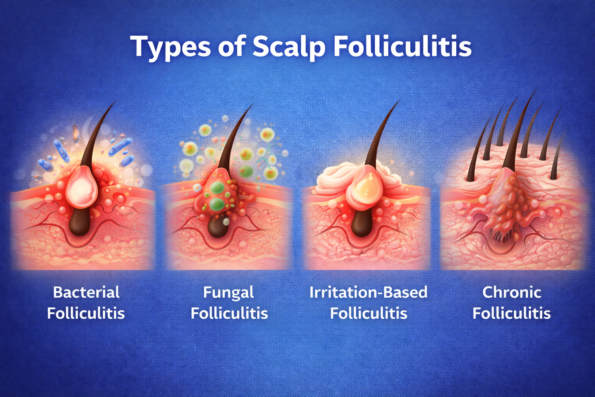
Different Types of Scalp Folliculitis & How They're Managed
Scalp folliculitis treatment takes time. Be patient, as it can take a while for your scalp to fully heal.
Bacterial Folliculitis
Bacterial scalp folliculitis is the most common type and is frequently caused by bacteria from the Staphylococcus family. Light washing, use of warm compresses, and antimicrobial rinses are simple scalp folliculitis home remedies that help with healing. Avoid scratching your scalp, as it can make the inflammation worse and slow down scalp folliculitis treatment.
Fungal Folliculitis
Yeast overgrowth on the scalp triggers this condition. The treatment for fungal scalp folliculitis usually includes the use of antifungal shampoos or the use of herbal remedies that balance the scalp’s natural oils. Regularly washing and drying the scalp prevents the occurrence of this condition.
Chronic or Recurring Folliculitis
In the case where you suffer from recurring scalp folliculitis often, a review of your daily practices and hair-care products is required. Applying too much oil, wearing sweaty hats, or using heavy conditioners can cause skin problems. It is important to maintain a routine of gentle cleansing and avoiding irritants to reduce the outbreak.
Irritation-Based Folliculitis
Dyeing hair, using harsh styling products, or pulling hair too tightly are all things that can cause irritation to the hair follicles. Just eliminating the product that causes the problem is often sufficient to see improvement. Dermatologists may also prescribe cortisone cream for scalp folliculitis in some cases.
What I see most commonly in clinic is patients using heavy oils during a folliculitis flare, which actually worsens the condition. A simple switch to a medicated shampoo for 10 days clears most mild cases without any prescription.
Dr. Pratibha Pradhan, Hair & Scalp Specialist, HairFree HairGrow
Helpful Comparison: Scalp Folliculitis Types at a Glance
| Type of Folliculitis | Common Symptoms | Likely Cause | Helpful Approach | Time to Heal |
|---|---|---|---|---|
|
Bacterial
|
Red bumps, pus-filled bumps
|
Bacteria overgrowth
|
Antimicrobial washes, warm compresses
|
7–10 days
|
|
Fungal |
Itchy bumps, dandruff-like flakes
|
Yeast imbalance
|
Antifungal shampoos, balanced scalp care
|
2–3 weeks
|
|
Irritation-based
|
Tenderness, redness, burning sensation
|
Product reaction
|
Avoid irritants, soothing natural ingredients
|
3–7 days |
|
Chronic
|
Repeating flare-ups
|
Combined triggers |
Lifestyle + hygiene adjustments
|
4–6 weeks
|
How People Are Curing Scalp Folliculitis: What Actually Works
One of the most searched questions about this condition is “how I cured my folliculitis” – and the honest answer is that there is no single fix. What works depends on the type and trigger.
For bacterial folliculitis, most people find relief through a combination of antimicrobial shampoo and warm compresses, used consistently for at least 7 days.
For fungal folliculitis, switching to an antifungal shampoo and reducing heavy oil application usually brings noticeable relief within 2 weeks.
For irritation-based cases, simply identifying and removing the triggering product, a styling cream, dry shampoo, or tight cap, often resolves the condition within days.
The common thread in most recovery stories: consistency in cleansing routine + patience + avoiding re-triggering the scalp.
Worried that scalp folliculitis is causing hair loss or thinning?
Early treatment can reduce inflammation and help protect your hair follicles from long-term damage.
Preventing Future Breakouts
After your scalp heals, keep it clean and healthy to prevent scalp folliculitis from coming back. Good scalp care lowers the chances of it flaring up again. Helpful habits include:
- Washing your hair as soon as you finish your workouts
- Avoiding heavy oils and waxes
- Using gentle brushes and tools that are scalp-friendly
- Making sure your pillowcase and hats are clean
- Letting your scalp dry thoroughly after washing
With a consistent routine and awareness of triggers, controlling the problem becomes much easier.
Final Thoughts
Understanding how to cure folliculitis on scalp is the first step toward lasting relief. Whether you are using natural remedies, gentle cleansing techniques, or seeking professional assistance, consistency remains the most important factor in your scalp folliculitis treatment.
If your symptoms persist or keep coming back, do not delay professional evaluation. Early treatment prevents long-term scalp damage and protects your hair growth.
If you want to refresh your scalp and help your hair grow better, start your scalp folliculitis treatment today with HairFree HairGrow. Take the first step toward a healthy, itch-free scalp and stronger hair.
FAQ
-
1. How long does scalp folliculitis take to heal?
Mild cases typically resolve within 7 to 14 days with proper cleansing and care. Moderate cases may take 2 to 3 weeks. Chronic or recurring folliculitis can take 4 to 6 weeks and may require medical treatment.
-
2. Can scalp folliculitis heal on its own?
Mild folliculitis can sometimes resolve with basic cleansing and hygiene improvements. However, if bumps are persistent or painful, targeted care is still recommended for faster recovery.
-
3. When should I see a doctor for scalp folliculitis?
You should consult a specialist if bumps are spreading rapidly, you develop fever or pain, home remedies show no improvement after 10 days, or you notice significant hair shedding from the affected area.
-
4. Should I apply oil to my hair if I have folliculitis?
Thick oils can block follicles and worsen inflammation. It is best to avoid heavy oils, especially coconut oil and castor oil, until the scalp has fully healed.
-
5. Is scalp folliculitis related to hair loss?
Yes, inflamed follicles can cause temporary hair shedding. In most cases, hair regrows naturally once the scalp heals. However, untreated chronic folliculitis can sometimes cause scarring that affects regrowth.
-
6. Does scalp folliculitis spread from person to person?
Bacterial folliculitis is generally not contagious through casual contact. However, sharing towels, combs, or hats with an infected person is not recommended as it may transfer bacteria.
-
7. Can stress cause scalp folliculitis?
Stress does not directly cause folliculitis, but it can weaken the immune system and make the scalp more vulnerable to bacterial or fungal overgrowth, potentially triggering a flare-up.