
Quick Answer: A hair transplant for NRI in India usually needs 5 to 7 days on the ground, so plan for 7 to 10 days of leave from work. That covers a day for consultation and scalp analysis, a day for surgery, a few days of rest and review, and a final check before you fly home.
If you live in the US, UK, Canada, Australia or the Gulf, you have probably done the maths already. A good hair transplant back home costs as much as a second-hand car. The same surgery in India costs a fraction of that, and you get time with family on the same trip. On paper, it is an easy decision.
Then the real questions show up. How many days of leave do I need? Can I get on a plane after surgery? What if something looks off once I am back in Toronto or Dubai? And how do I know a clinic is genuine when I am choosing it from thousands of kilometres away?
Let’s solve all your queries.
Is a Hair Transplant in India Worth It for an NRI?
For most NRIs, yes, as long as you plan the trip properly and pick a doctor-led clinic. The saving is real, but the surgeon should be the reason you choose, not the price tag.x
Money is usually why people look at India in the first place, and the gap is big. Hair transplant costs in India run roughly 50 to 70 percent lower than in the US, UK, Canada or Australia. For many patients, even after flights and a hotel, the whole trip still costs less than the surgery would at home.
Price is not the only thing that tips the scale. Surgeons and care teams work in English, so nothing gets lost in translation. You can recover near family instead of alone in a hotel room. And Indian surgeons work with South Asian hair every single day, so thick, dark hair and the way it grows is familiar territory, not an exception. If you are in the UK, we have compared the two countries in detail in our guide to hair transplant in the UK vs India.
India is not the right call for everybody, though. If you cannot spare at least a week, if you already trust a surgeon at home, or if you are young and your hair loss is still changing quickly, start with a consultation before you plan anything. A good clinic will tell you honestly when waiting is the better option.
If you want to see how India stacks up against other destinations, read how India compares with other countries.
Hair Transplant Cost in India for NRIs
Cost depends on the number of grafts and the technique, not on your passport. At HFHG, international patients typically spend about $1,200 to $3,500, compared with $8,000 to $15,000 or more in the US and UK.
The final figure depends on how many grafts you need, which technique your surgeon recommends and what is bundled into the package. For a closer look at what moves the bill, see our hair transplant cost guide or our all-inclusive international packages.
Budgeting the whole trip: The procedure price is only one part of an NRI budget. Add return flights (ideally on a flexible fare), any hotel nights beyond what your package covers, food and local transport, and the value of the leave you take. If family is travelling with you, include their tickets and stay too.
Seeing prices from $1,200 to $3,500 and still not sure what your own hair will need?
NRI Hair Transplant in India: Do You Need a Visa?
If you travel on an Indian passport or hold an OCI card, you do not need a visa to enter India. If you are a foreign citizen of Indian origin without OCI, you will need an Indian visa, and for treatment that is usually a medical visa.
The word NRI gets used loosely, so here is how it works in practice.
- Indian passport holders living abroad: no visa needed.
- OCI cardholders: no visa needed. Carry your foreign passport and your OCI card.
- Foreign passport holders of Indian origin without OCI: you need a visa. The medical visa, which can be applied for through the e-Visa portal or the nearest Indian consulate, is the common route. The online application asks for a supporting letter from the treating hospital in India, and our team provides an invitation letter to help with it.
Visa rules change from time to time, so check the official Indian government visa portal or your nearest consulate before you book anything.
How Many Days Do You Need to Stay in India for a Hair Transplant?
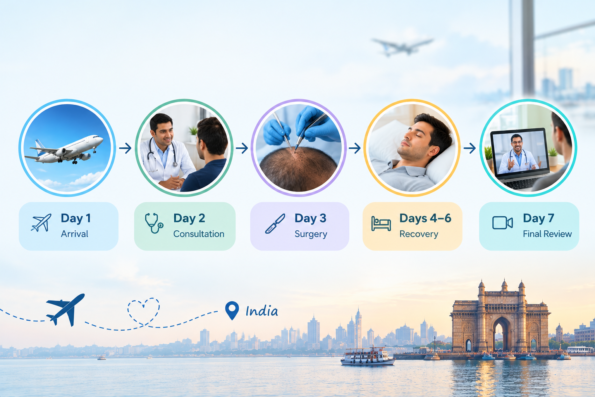
Plan for 5 to 7 days in India and take 7 to 10 days off work. The trip itself fits in 5 to 7 days, but the extra days of leave protect you from a delayed flight, a rescheduled surgery or a slower return to work.
Here is what a typical trip looks like.
| Day | What happens | What you should do |
|---|---|---|
|
Before you fly
|
Video consultation with the surgeon, photos reviewed, graft estimate and technique discussed
|
Share your medical history, including any blood thinners or supplements you take
|
|
Day 1
|
You land and settle into your hotel or family home, with airport pickup arranged
|
Rest, drink plenty of water and keep the evening light
|
|
Day 2
|
In-person consultation, scalp and donor area analysis, hairline design and final graft count
|
Ask every remaining question and confirm the plan in writing
|
|
Day 3
|
Surgery day. You are back at your hotel or home by evening with your medicines and care kit
|
Eat a normal breakfast, wear a front-buttoning shirt and bring something to watch or listen to
|
|
Day 4
|
Post-operative review. The team checks the donor and recipient areas and shows you how to wash your scalp
|
Follow the wash and care routine exactly as shown
|
|
Days 5 to 6
|
Rest. Short, calm walks are fine
|
Keep your head slightly raised when you sleep. Avoid crowds, dust, direct sun and heavy sweating, and do not scratch or rub the area
|
|
Day 7
|
Final review, follow-up schedule and your surgeon’s clearance to fly home
|
Confirm your video check-in dates before you leave
|
Treat this as a sample, not a rule. Your surgeon sets the real schedule after seeing your hair.
A small trick that saves a lot of awkwardness: plan the surgery so the days of visible healing fall on a weekend, a public holiday or a stretch of working from home. Most people feel comfortable getting back to a normal routine somewhere around day 10 to 14, though how visible the signs are differs from person to person.
Seeing prices from $1,200 to $3,500 and still not sure what your own hair will need?
When Is the Best Time for an NRI to Get a Hair Transplant?
The best time is whenever you can keep 10 to 14 days free of big events and photographs, not a particular month.
For the first week or two you will have visible redness and small scabs, so a quiet stretch matters more than the season. Many NRIs pick a long winter break or the gap after a family function. If a wedding is the reason you are doing this, plan the surgery about a year ahead, because results take 8 to 12 months to fully show. Hot, humid months do ask for a little extra care with sweat and sun, which we cover in our article on how weather affects hair transplants.
Planning Your Hair Transplant Trip to India: A Step-by-Step Checklist
Start with an online consultation, get everything in writing, and book flights only after your surgery date is confirmed.
- Book a video consultation. Send clear photos of the front, top, crown, both sides and the back of your head, in good light.
- Get a written plan. It should include the technique, estimated grafts, total cost and exactly what is included.
- Sort your documents. Check that your passport has at least six months of validity left, carry your OCI card if you have one, and apply for a medical visa if you need it.
- Choose your city. Most NRIs fly into Mumbai, Delhi, Ahmedabad, Hyderabad, Bangalore or Kolkata. Pick the clinic closest to your airport or your family.
- Book a flexible return ticket. A change-friendly fare is worth the extra money, since your surgeon, not the calendar, decides when you are ready to fly.
- Decide where to stay. A hotel arranged by the clinic is the simplest option. If you stay with family, set up a quiet room with clean bedding and extra pillows, and keep pets away from your head for the first week.
- Pack sensibly. Button-front shirts that do not need pulling over your head, a soft neck pillow, your regular medicines and anything your surgeon asks you to bring.
- Tell your workplace early. Many people are back on laptops within a week, but plan for at least a few days without video calls while the redness settles.
What to carry with you:
- Documents: passport, OCI card or visa as applicable, the clinic’s invitation letter if you need a visa, your printed treatment plan and graft estimate, and travel and health insurance details.
- Health: a list of your current medicines and allergies, the contact details of your doctor back home, and clear photos of your scalp from before treatment, taken in good light.
- Comfort: front-buttoning shirts, a soft neck pillow, a loose and clean cap only if your surgeon approves, and something to watch or listen to on surgery day.
- Planning: flights with a spare night built in, leave approved at work, and calendar reminders for your follow-up video calls.
What Happens on Surgery Day?
You stay awake under local anaesthesia, the procedure takes anywhere from 4 to 8 hours depending on the number of grafts, and you go back to your hotel or home the same day.
Your surgeon begins by marking the hairline with you, because this is the one decision you should be part of. The donor area at the back and sides of the scalp is then numbed, individual grafts are taken out, and they are placed one by one into the thinning area at the right angle and direction. You can take breaks, eat, watch something or even nap.
The technique depends on your donor hair, the area to be covered and your goals. At HairFree HairGrow, the options include FUE, BIO-FUE, BIG-FUE, DHI and body hair transplant, and your surgeon recommends one after examining your scalp rather than pushing a single method on everyone. For a full side-by-side, read our FUE hair transplant guide.
Can You Fly Home After a Hair Transplant?
Usually yes, once your surgeon has checked your scalp at the post-operative review. Most surgeons are comfortable with a flight within a few days, but there is no single number that suits everyone, so let your surgeon make the call.
This is exactly why we suggest a flexible return ticket. The review is quick, but if your scalp needs one more day, you should not have to pay a change fee or feel rushed.
A few small habits make the flight easier:
- Keep your medicines, care instructions and the clinic’s contact numbers in your cabin bag, not your checked luggage.
- Avoid pressing the front or back of your scalp hard against the headrest. A soft neck pillow helps.
- Wear a loose, clean cap only if your surgeon has okayed it.
- Drink plenty of water and resist the urge to touch or scratch.
- Carry a short note from the clinic describing your procedure, in case anyone asks.
What Recovery Looks Like Once You Are Back Home
The final result takes 8 to 12 months, but the awkward phase is mostly over within the first two months. Every scalp heals at its own pace, but this is the usual pattern.
- First 3 to 5 days: some redness and mild swelling, sometimes around the forehead. Tiny scabs form around each graft. Sleep with your head slightly raised.
- Days 7 to 14: the scabs soften and fall off during gentle washing. Most people feel comfortable stepping out by the end of week two.
- Weeks 2 to 8: the transplanted hairs shed. It looks alarming and it is completely normal. The roots stay in place and prepare to grow new hair.
- Months 3 to 4: fine new hairs begin to appear.
- Month 6: noticeable density, though it is still maturing.
- Months 8 to 12: final thickness and a natural look.
Until your surgeon says otherwise, skip heavy workouts, swimming, alcohol and long hours in direct sun. Our guide to hair transplant success rate explains what a good outcome looks like at each stage.
“Shedding is the phase that worries overseas patients the most, because there is no clinic around the corner to walk into. We tell everyone the same thing: if you are unsure, send a clear photo to the care team instead of guessing. Most of the time, what looks like a problem is simply the normal growth cycle.”
Dr. Chintan Bhavsar, MD (Skin & VD) MBBS, DDV, HairFree & HairGrow
Follow-Up From Abroad: What Happens After You Fly Home?
Follow-up continues after you leave, through video check-ins and photo updates for up to six months, so you do not need to fly back for routine reviews.
In practice, you send photos at set intervals, the team reviews them and speaks to you on a video call when needed. Before you commit to any clinic, ask four things. Who will answer my messages? How quickly? How often are the check-ins scheduled? And what happens if I need to see a doctor locally?
One rule worth remembering: if you ever notice spreading redness, pus, fever or severe pain, contact the clinic straight away and see a local doctor. Do not wait for the next scheduled check-in.
How to Choose a Hair Transplant Clinic From Another Country
Check who actually performs each step of the surgery, ask for a written plan, and be wary of any quote that arrives before the clinic has seen your photos.
Distance makes it harder to verify a clinic, so a few direct questions do most of the work.
- Will a qualified dermatologist or hair transplant surgeon plan the hairline, make the incisions and supervise the implantation? Which steps, if any, are handled by technicians?
- Can I speak to the surgeon before I book, and not only to a sales coordinator?
- Can I see before and after results from patients with hair like mine, ideally at 12 months? Real case studies with timelines tell you more than a single polished photo.
- What exactly is included in the package, in writing?
- What does follow-up look like once I am home?
Red flags are just as useful. Be careful with a fixed price quoted without photos, pressure to pay in full for a limited-time slot, no named surgeon, results with no timeline, or a price that looks too good to be true. Poorly done surgeries can often be repaired, but it is harder than getting it right the first time, which is why we have a dedicated page on failed hair transplant correction.
“A hair transplant is a medical procedure, not a holiday package. Meet the surgeon, ask who does what in the operation theatre, and do not book anything you cannot get in writing.”
Dr. Chintan Bhavsar, MD (Skin & VD) MBBS, DDV, HairFree & HairGrow
How HairFree HairGrow Supports NRI Patients
With 25,000+ surgeries behind us and every procedure performed by qualified dermatologists and hair transplant surgeons, our medical tourism for hair transplant in India program wraps the whole trip into one plan. Here is what NRI patients get:
- A pre-surgery video consultation, followed by a one-to-one surgeon consultation and hair analysis on arrival
- Airport pickup, local transport and two to three nights of hotel accommodation
- The procedure with the technique your surgeon recommends, plus a medication and care kit
- A warranty certificate with the surgeon’s signature and structured follow-up for up to six months, including from your home country
The clinic network makes the choice of city easy. If you are landing in Mumbai, Delhi, Ahmedabad, Hyderabad, Bangalore or Kolkata, you will find us in or near each of them: Mumbai, Delhi (Gurugram), Ahmedabad, Hyderabad, Bangalore and Kolkata. If your family is in Gujarat or Maharashtra, Surat and Pune work well too. Surgery is planned by Dr. Chintan Bhavsar and our team of surgeons across clinics.
Frequently Asked Questions
-
1. Is a hair transplant in India safe for NRIs?
Yes, when it is done by a qualified surgeon in a clinic that follows strict hygiene and sterilisation protocols. Check who performs the surgery, ask for a written plan and meet the surgeon before you book.
-
2. Do NRIs need a visa for a hair transplant in India?
Indian passport holders and OCI cardholders do not need a visa. Foreign citizens of Indian origin without OCI usually need a medical visa, and the clinic can provide an invitation letter. Always confirm current rules on the official government portal.
-
3. How many days do NRIs need to stay in India for a hair transplant?
Plan for 5 to 7 days in India and take 7 to 10 days off work. The extra days of leave cover the first week of visible healing and any flight changes.
-
4. Can I fly back right after a hair transplant?
Usually after your post-operative review, which most surgeons schedule within a few days. Your surgeon gives the final go-ahead, so keep your return ticket flexible.
-
5. Can I recover at my family's home instead of a hotel?
Yes, if you can set up a quiet, clean room with extra pillows and keep pets and crowded family events away for the first week. The first days are about rest and the wash routine, so ask your clinic what to prepare before you arrive.
-
6. Can I have the consultation before I travel?
Yes. Share photos and your hair loss history, and a surgeon reviews them online, estimates your grafts and recommends a technique before you book any flight.
-
7. When can I go back to work?
Many people return to desk work within about a week, once swelling and redness are manageable. Heavy exercise and sweaty, dusty work need to wait longer, so ask your surgeon for dates that suit your job.
-
8. What if I have a problem after I return abroad?
Contact the clinic with a clear photo straight away. For spreading redness, pus, fever or severe pain, see a local doctor as well and keep the clinic informed.
-
9. Which Indian city should I choose?
Pick the clinic closest to your arrival airport or your family, since recovery is easier near people you know. HFHG has clinics in Mumbai, Delhi (Gurugram), Ahmedabad, Hyderabad, Bangalore, Kolkata and more.
-
10. Can NRI women get a hair transplant in India?
Yes, if they are suitable candidates after a consultation. Women's hair loss often follows a different pattern, so read our female hair transplant page before planning.
-
11. Can I time the surgery around a wedding or family event?
Yes, but plan ahead. Visible redness and small scabs last about 10 to 14 days, and the full result takes 8 to 12 months, so for a wedding it is best to have the surgery about a year earlier.
-
12. When will I see the final result?
Shedding between weeks 2 and 8 is normal. New growth starts around months 3 to 4, hair looks visibly thicker by month 6, and most patients see the full result between 8 and 12 months.
Ready to Plan Your Hair Transplant Trip to India?
Planning this from another country and not sure who to trust with your hair?
