
Quick Answer: Scalp Folliculitis at a Glance
Scalp folliculitis is inflammation of the hair follicles on the scalp, usually caused by bacteria or Malassezia yeast. It shows up as red, itchy, or pus-filled bumps. Mild cases settle in a few days to weeks, but if it keeps coming back, is painful, or you notice thinning, see a dermatologist. Deep or long-standing cases can scar the follicle and cause permanent hair loss.
If you’ve been noticing small, red, itchy bumps on your scalp especially around your hairline or where your hair parts you’re not imagining things. That persistent irritation has a name: folliculitis scalp.
It’s more common than most people realise, and the good news is that with the right scalp folliculitis treatment, it’s very manageable. The tricky part is that scalp folliculitis can look a lot like dandruff, acne, or even a fungal infection, which means many people treat it incorrectly for months before getting real relief.
In this blog, we’ll explore what scalp folliculitis is, scalp folliculitis symptoms, treatment options, and how to prevent it.
What is Scalp Folliculitis?
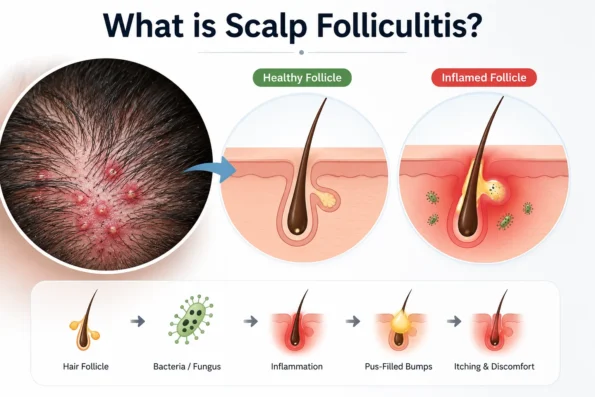
Scalp folliculitis is a condition where the hair follicles on your scalp become inflamed, often due to an infection caused by bacteria or fungi. This inflammation can lead to redness, pus-filled bumps, itching, and even pain in the affected areas. While it may sometimes resolve on its own, recurrent folliculitis scalp treatment cases can be persistent and troublesome.
You may want to read more about how pimples on the scalp can lead to hair loss and what signs to watch out for.
Struggling with scalp issues and not sure what’s causing them?
Causes of Scalp Folliculitis
Bacterial Infection: The most common cause is a bacterial infection, particularly from Staphylococcus aureus. This bacteria invades the hair follicles, leading to repeated inflammation.
Skin Conditions: Conditions like acne, seborrheic dermatitis on the scalp, or eczema can make the hair follicles more susceptible to infection.
Sweat, Product Buildup and Friction: Heavy sweating, unwashed styling products and constant friction can build up around the follicle opening, making it easier for bacteria or fungi to take hold.
Underlying Conditions: Diabetes or other conditions that affect the immune system can make follicles more prone to infection.
Shaving and Picking: Shaving the scalp, or picking at bumps, opens the skin and lets bacteria in.
Symptoms of Scalp Folliculitis
Recognising scalp folliculitis symptoms early is key to faster recovery. Common signs include:
- Redness and Inflammation: The skin around the hair follicles may become red and swollen.
- Pus-filled Bumps: Small, pus-filled bumps or pimples may form on the scalp.
- Itching: The affected area can be itchy, causing discomfort.
- Pain: Some people may experience pain, especially when touching or combing their hair.
Proper diagnosis is essential to differentiate scalp folliculitis from other conditions like tinea capitis (scalp ringworm). Your dermatologist may perform a clinical examination and, in rare cases, a biopsy or culture to confirm the diagnosis.
Where on the Scalp Does Folliculitis Usually Appear?
Scalp folliculitis can show up anywhere hair grows, but people most often notice it at the hairline, along the parting, at the back of the head and near the nape, because these spots get the most friction, sweat and product buildup. Bumps at the back of the head often go unnoticed until they turn tender while combing or lying on a pillow.
Not sure if it’s folliculitis or something else? Send a clear photo of your scalp on WhatsApp and our team will take a first look.
Bacterial vs Fungal Folliculitis - How to Tell the Difference
This distinction matters because the treatments are completely different. Using an antibiotic cream on a fungal infection won’t help and vice versa.
| Feature | Bacterial Folliculitis | Fungal (Malassezia) Folliculitis |
|---|---|---|
|
Appearance |
Red bumps, may have yellow pus |
Uniform small red bumps, rarely with pus |
|
Location |
Can appear anywhere on scalp |
Often on forehead, hairline, upper back |
|
Itch level |
Moderate |
Often intensely itchy |
|
Gets worse with |
Touching, shaving |
Hot weather, sweating, oily products |
|
Responds to |
Antibiotic creams |
Antifungal shampoos/creams |
A simple rule of thumb: if you’ve been on antibiotic treatment for 2–3 weeks with no improvement, ask your dermatologist to test for Malassezia. Many cases of “stubborn folliculitis” are actually fungal in nature, a condition known as Malassezia folliculitis. Learn more about fungal infection on scalp and hair loss and how to identify it correctly.
Other Types of Scalp Folliculitis You Should Know
Beyond bacterial and fungal, a few other forms show up on the scalp:
- Irritation or traction folliculitis: caused by friction, tight hairstyles, headgear, shaving or heavy products. It usually settles once the trigger is removed.
- Recurrent or chronic folliculitis: keeps returning in the same area. This usually means the trigger (a fungus, a product, a habit) has not been found yet, and it needs a proper diagnosis.
- Folliculitis decalvans: a rare inflammatory form that can cause patchy scarring hair loss. Signs include recurring pus bumps, soreness and tufts of several hairs coming out of one opening.
Folliculitis can also occur on the face, chest, back and legs, not just the scalp.
When Scalp Folliculitis Starts Affecting Your Hair
Most people lose some hair around the bumps while the follicle is inflamed, and it grows back once the infection is treated. The trouble starts when inflammation goes on for months, or the follicle gets scarred.
Watch for these signs:
- Hair not regrowing in a spot even after the bumps have cleared
- Smooth, shiny or slightly scarred patches
- Thinning along the hairline or parting where bumps used to be
- Tufts of hair coming out of one opening
If a follicle is scarred, the hair cannot grow back on its own. In that case, doctors first bring the inflammation fully under control, and only then decide what can be done to restore the area. Getting the cause treated early is what protects the follicle.
Noticing thinning where the bumps were? Find out early.
Scalp Folliculitis Treatment Options
Understanding how to treat folliculitis depends on whether the cause is bacterial or fungal. Here are the main approaches:
Topical Antibiotics: Applying antibiotic creams, lotions, or ointments can help reduce bacterial infection and inflammation in the affected follicles. This is the first step in most folliculitis on scalp treatment plans.
Oral Medications: In more severe cases, oral antibiotics may be prescribed. It’s essential to complete the full course to ensure the infection is fully treated.
Antifungal Treatment: For fungal folliculitis, the right treatment for folliculitis involves antifungal shampoos or creams. Learn more about effective dandruff fungus treatment that can also help control Malassezia-related scalp issues.
Skin Care and Hygiene: Maintaining a gentle skincare routine with mild cleansers and exfoliants helps keep hair follicles clean and free from bacteria.
Lifestyle Changes: Regular exercise and proper hygiene practices can strengthen your immune system, reducing the chances of recurrent infections.
How Scalp Folliculitis Is Treated
Treatment depends on whether the cause is bacterial or fungal: bacterial cases usually need topical or oral antibiotics, fungal cases need antifungal shampoos or medication, and both need a gentle scalp-care routine alongside.
Not seeing results with home remedies? Our dermatologists specialize in diagnosing and treating scalp folliculitis, bacterial or fungal. Don’t let it damage your hair follicles permanently.
Best Shampoo for Scalp Folliculitis
The right shampoo won’t cure folliculitis on its own, but it makes a significant difference especially for fungal cases and prevention.
For fungal folliculitis:
- Ketoconazole shampoo (e.g. Nizoral) — the gold standard for Malassezia. Use 2–3 times a week, leave on for 3–5 minutes before rinsing.
- Selenium sulfide shampoo — also effective against fungal overgrowth, widely available over the counter.
- Zinc pyrithione shampoo — milder option, good for maintenance after the infection clears.
For bacterial folliculitis:
- Benzoyl peroxide wash — helps clear bacteria from the scalp surface and follicles.
- Tea tree oil shampoo — has natural antimicrobial properties, works well as a supporting wash alongside prescription treatment.
What to avoid: Heavy conditioning shampoos, oil-based hair masks, and anything with silicones or thick emollients, these can further clog follicles and slow recovery.
A quick tip: when using a medicated shampoo, apply it to a dry or slightly damp scalp first (not soaking wet hair). This ensures the active ingredient reaches the scalp rather than getting diluted immediately.
Folliculitis vs Dandruff vs Seborrheic Dermatitis
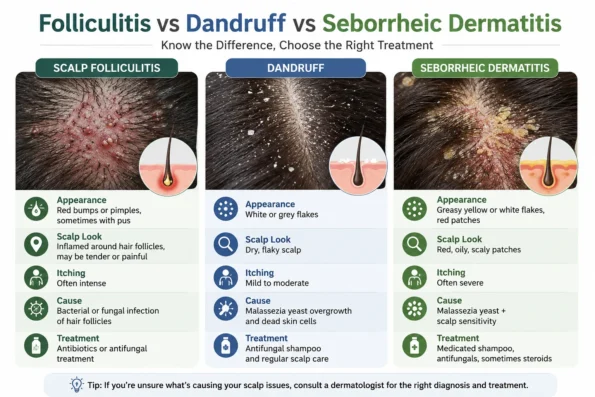
These three conditions are frequently confused because they all cause scalp irritation and flaking. Here’s how to tell them apart:
| Feature | Scalp folliculitis | Dandruff | Seborrheic dermatitis |
|---|---|---|---|
|
Main symptom |
Red bumps, pus |
White/grey flakes |
Greasy yellow flakes |
|
Scalp appearance |
Inflamed around follicles |
Dry, flaky |
Red, oily patches |
|
Itching |
Yes, often intense |
Yes, mild-moderate |
Yes, often severe |
|
Hair loss risk |
Yes, if severe |
Rarely |
Possible if chronic |
|
Cause |
Bacteria, fungi or irritation |
Malassezia overgrowth |
Malassezia + skin sensitivity |
|
Treatment |
Antibiotic or antifungal |
Antifungal shampoo |
Medicated shampoo + steroids |
The important overlap: both dandruff and seborrheic dermatitis are caused by Malassezia, the same fungus behind fungal folliculitis. This is why the conditions often appear together, and why treating one can sometimes improve the other.
Scalp folliculitis vs seborrheic dermatitis, the quickest tell: folliculitis shows up as distinct, individual bumps centred on each hair follicle. Seborrheic dermatitis shows up as broader, greasy, flaky patches, without a bump at every follicle. If you’re seeing separate bumps you could count, think folliculitis. If you’re seeing flaky, oily patches with no real bumps, it’s more likely seborrheic dermatitis.
If you’re unsure which one you have, the safest approach is to see a dermatologist rather than cycling through different over-the-counter products.
When to See a Dermatologist
Home care is fine for a mild, one-off breakout. Book an appointment if:
- Bumps have not improved after 2–3 weeks of treatment
- The bumps are painful, swollen, spreading or oozing
- It keeps coming back in the same area
- You have fever, or a bump feels like a deep boil
- You notice hair thinning or bald patches
A dermatologist can tell bacterial from fungal (sometimes with a swab or culture) and start the right treatment straight away, instead of you cycling through products.
“Bacterial and fungal folliculitis can look almost the same on the scalp, but they need completely different treatment. If the bumps haven’t improved in two to three weeks, or you notice thinning where they were, get your scalp examined early. Treating the right cause early is what protects the follicle.”
— Dr. Richa Sanmukhani, M.D. Skin – V.D., Dermatologist & Hair Transplant Surgeon
If any of this sounds like you, our dermatologists above can take a look.
What We See at HairFree HairGrow
At HairFree HairGrow, I commonly see patients who mistake scalp folliculitis for dandruff or simple pimples. Some have already tried multiple shampoos or treatments without knowing whether the cause is bacterial, fungal, or something else. In my experience, identifying the actual cause first makes a significant difference in choosing the right treatment.
Prevention Tips for Scalp Folliculitis
Prevention is always better than cure. Here are some tips to help prevent scalp folliculitis:
- Maintain Cleanliness: Regularly clean your scalp with a gentle, sulfate-free shampoo and avoid excessive oiling.
- Healthy Diet: A balanced diet rich in vitamins and minerals can strengthen your immune system.
- Personal Hygiene: Use your own towel, razor, and comb, and avoid sharing them with others.
- Consult a Dermatologist: Regular check-ups with a dermatologist can help keep your scalp healthy and prevent folliculitis from recurring.
By following these preventive measures and seeking proper treatment, you can keep your scalp healthy and free from folliculitis.
Final Words
Dealing with scalp folliculitis can be frustrating, but with the right care and attention, you can keep it under control. By understanding the causes, exploring treatment options, and following some simple preventive measures, you can keep your scalp healthy and free from irritation.
If your scalp has settled but your hair has not bounced back, or you are noticing thinning, do not wait it out. Early assessment gives you the most options.
Taking care of your overall health is the foundation for achieving healthier hair. If you’re dealing with hair loss and looking for effective treatments, consider visiting HairFree and HairGrow Clinic today. Schedule a consultation and take the first step towards restoring both your hair and confidence with our top-tier hair transplant services.
Our clinics are located in Surat, Ahmedabad, Pune (Pimple Gurav), Pune Kharadi, Hyderabad, Kolkata, Bangalore, Bhopal, Delhi (Gurugram), Nagpur, Mumbai, Vapi (Silvassa), and Bangladesh.
Frequently Asked Questions
-
Can scalp folliculitis cause hair loss?
Yes, severe or untreated scalp folliculitis can sometimes lead to temporary hair loss. Constant inflammation may weaken the hair follicles and increase hair shedding. In rare chronic cases, long-term inflammation may even damage follicles permanently if not treated properly.
-
Is scalp folliculitis contagious?
Most cases of scalp folliculitis are not highly contagious. However, bacterial or fungal infections can spread through shared towels, combs, pillow covers or razors.
-
What does scalp folliculitis look like?
Scalp folliculitis usually appears as small red bumps, white-headed pimples, or pus-filled lesions around the hair follicles. Some people also notice scalp redness, crusting, itching, or tenderness in the affected area.
-
Which shampoo is best for scalp folliculitis?
Shampoos containing ketoconazole, salicylic acid, zinc pyrithione, or tea tree oil are commonly recommended for managing scalp folliculitis symptoms. The ideal shampoo and routine depends on whether the condition is bacterial, fungal, or related to dandruff and oil buildup.
-
Can dandruff cause scalp folliculitis?
Not directly, but severe dandruff and excess scalp oil can create an environment where bacteria or fungi grow more easily, which can raise the risk of scalp folliculitis.
-
How long does scalp folliculitis last?
Mild cases may improve within a few days to weeks with proper scalp care and folliculitis treatment. Chronic or recurrent folliculitis may take longer and sometimes requires medical treatment to fully control the infection and inflammation.
-
Can scalp folliculitis go away on its own?
Some mild cases can improve naturally if the scalp is kept clean and irritation is avoided. However, persistent or worsening symptoms should not be ignored, especially if pain, pus-filled bumps, or hair shedding develops.
-
Is scalp folliculitis the same as scalp acne?
Not exactly. Scalp acne and scalp folliculitis may look similar, but folliculitis specifically involves inflammation or infection of the hair follicles. Both conditions can cause pimples and irritation, which is why they are often confused.
-
What kills Malassezia on the scalp?
Malassezia yeast is commonly controlled using antifungal treatments such as ketoconazole shampoos, selenium sulfide, or prescription antifungal medications. Maintaining a clean scalp and reducing excessive oil buildup may also help manage fungal overgrowth.
-
Is scalp folliculitis a staph infection?
Often, yes. Bacterial scalp folliculitis is most commonly caused by Staphylococcus aureus, a bacterium that lives on the skin and can enter through small breaks around the follicle. Fungal and irritation-related types are not staph infections, so the right treatment depends on the cause.
-
Will my hair grow back after scalp folliculitis?
In most cases, yes. Hair lost during an active flare usually regrows once the infection is treated and the follicle is not damaged. If inflammation has been long-standing and has scarred the follicle, regrowth may not happen. Get thinning checked early.
-
What is traction folliculitis?
Traction folliculitis is follicle irritation caused by constant pulling or friction, such as from tight hairstyles, helmets or caps. It appears as small bumps or pimples along the hairline or where the pull is greatest, and it usually improves when the pressure is removed.
-
Which doctor should I see for scalp folliculitis?
A dermatologist is the right first stop. If you are also noticing hair thinning or bald patches, choose one who also treats hair loss, so both the infection and the hair concern are handled together.
-
Why does scalp folliculitis keep coming back?
Recurrence usually means the underlying trigger has not been dealt with. Common reasons are a fungal cause treated with antibiotics, heavy products or oils, friction from headgear, or a weakened skin barrier. A dermatologist can identify the cause so the cycle stops.