
Quick Answer: Pimple-like bumps on your scalp that hurt are usually caused by clogged hair follicles, bacterial infection (folliculitis), or fungal growth. They can cause hair loss if left untreated. Treatment includes medicated shampoos, antibiotics, and keeping the scalp clean.
Have you ever noticed small pimple-like bumps on your scalp that itch, hurt, or even lead to hair fall? If yes, you’re not alone. These tiny bumps, often called pimples on scalp hair loss, can be a real pain, literally and figuratively! They can make your scalp itchy and painful and sometimes cause hair loss, too. In this blog, we’ll dive into what these pimples are, why they happen, what their symptoms are, and how to treat them. Let’s get started!
What Are Pimples on Scalp?
So, what exactly are these little bumps? In simple words, pimples on scalp are small red or pus-filled bumps that pop up on your head. Some call them scalp acne, while others might refer to them as scalp folliculitis. They can be soft or hard, painful or itchy, and sometimes even filled with pus. These bumps don’t care about your age; they can bother kids, adults, or even older folks!
Here’s a quick difference:
- Pimples: Small bumps, usually without pus.
- Acne: Bumps with pus or oil inside, often more stubborn.
- Folliculitis: Infection of hair follicles, the most common cause of painful bumps on scalp.
Don’t ignore scalp pimples thinking they’re normal…
sometimes they can weaken your hair roots too. The earlier you treat them, the easier it is to control hair loss.
Pimple-Like Bumps on Scalp That Hurt - What Could They Be?
Many people notice pimple-like bumps on their scalp that hurt or feel sore to touch. These painful bumps feel different from regular pimples. Here’s what they could be:
| Type | Looks Like | Painful? | Hair Loss? |
|---|---|---|---|
|
Folliculitis |
Red, pus-filled bumps |
Yes |
Sometimes |
|
Scalp Acne |
Whitehead or blackhead |
Mild |
If severe |
|
Cyst |
Hard lump under skin |
Very painful |
Yes, if infected |
|
Ringworm |
Scaly patch with bumps |
Itchy |
Yes |
Why Do I Have Pimples on My Scalp?
If you’re asking yourself “why do I suddenly have pimples on my scalp?” or “why do I keep getting pimples under my hair?” you’re not alone.
Pimples under your hair appear when:
- Oil from hair products clogs follicles under thick hair
- You sweat but don’t wash soon after (gym, helmet use)
- Hormones spike, especially during periods, pregnancy, or puberty
- You haven’t washed your pillowcase or hat recently
Symptoms of Pimples on Scalp
How do you know if you’ve got scalp acne or pimples on scalp? Here are the signs to look out for:
- Red bumps that might hurt or itch.
- Painful, swollen bumps, especially when touched (common sign of folliculitis).
- Pus-filled bumps (yuck, right?).
- Hard or soft lumps on the scalp.
- Itching or burning feeling.
- Hair falling out around the bumpy area (this is where scalp acne hair loss kicks in).
These symptoms can happen to anyone, anytime, there’s no age limit! Whether it’s summer or winter, these bumps can trouble you.
Why Do Pimples on Scalp Happen?
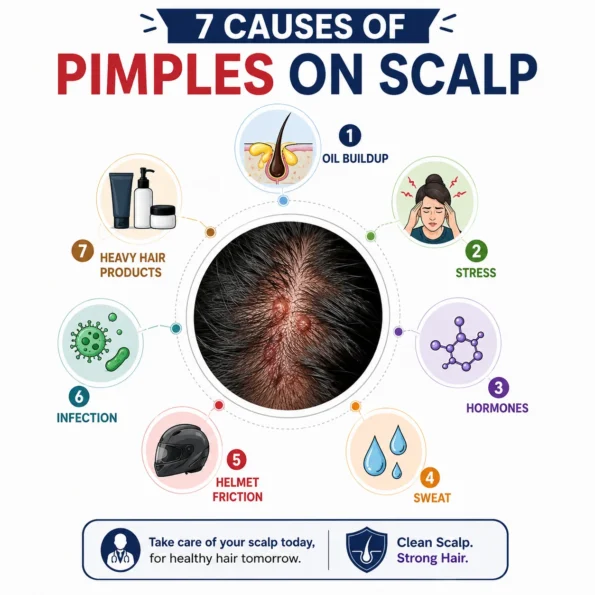
Now, let’s talk about the causes of pimples on scalp. Why do these annoying bumps appear? There are many reasons, and I’ll break them down for you:
1. Clogged Hair Follicles
Hair follicles are tiny openings where hair grows. When they get blocked by oil, dirt, or dead skin, pimples form. This is a big reason for scalp folliculitis, pimples on scalp, and hair loss. Things like leftover shampoo, gel, or oil can clog them up.
2. Hormonal Changes
Are hormones going up and down? That can cause scalp acne, too! Teens (ages 11-30) often get acne because of hormone shifts, but pimples can stick around longer on the scalp for anyone. This is also why many people suddenly notice pimples under their hair during puberty or pregnancy.
3. Stress
Feeling stressed or tense? Stress messes with your body’s chemicals and hormones, including cortisol, leading to pimples on scalp. It’s like your scalp is shouting, “Help me!”
4. Friction from Hats or Helmets
Wearing tight hats, helmets, or caps? The rubbing (friction) can irritate your scalp and cause scalp folliculitis hair loss. Good news? Once you stop wearing them, the pimples often go away.
5. Genetics
If your mom, dad, or someone in the family had this problem, you might get it too. Blame your genes for these bumps!
6. Oily Scalp or Products
Too much oil from your scalp glands (called sebum) or using heavy hair products can clog pores. This leads to scalp acne hair loss over time.
7. Infections
Bacteria, viruses, or yeast can sneak into your scalp and cause scalp folliculitis. These infections make pimples worse and are the most common reason pimple-like bumps on the scalp hurt.
8. Medicines
Some medicines have side effects that trigger pimples on scalp. If you suspect this, talk to your doctor.
| Cause | How It Leads to Pimples |
|---|---|
|
Clogged Follicles |
Oil/dirt blocks hair pores |
|
Hormones |
Changes trigger oil production |
|
Stress |
Messes with body chemicals |
|
Friction (Hats) |
Irritates scalp skin |
|
Genetics |
Runs in the family |
|
Oily Scalp |
Excess oil clogs pores |
|
Infections |
Bacteria/yeast infect follicles |
Can Scalp Pimples Cause Hair Loss?
Yes, scalp pimples can contribute to hair loss. Here’s how:
- Inflammation and Infection – Persistent pimples can inflame hair follicles, weakening the roots and causing hair to shed.
- Scarring Alopecia – Severe cases of infected pimples can lead to scarring, permanently damaging hair follicles.
- Itching and Scratching – Constantly scratching the scalp can cause hair breakage and further irritation.
- Folliculitis Decalvans – A rare but serious form where repeated infection causes permanent hair loss in patches. See a dermatologist if you notice this pattern.
If you’re noticing hair fall along with painful scalp bumps, don’t wait too long.
Early treatment can help prevent permanent damage.
How to Prevent Scalp Pimples and Hair Loss
Don’t worry, there are ways to fight pimples on scalp! Let’s look at some easy fixes and treatments:
1. Keep Your Scalp Clean
Wash your hair regularly with a gentle shampoo. Don’t overdo it (too much washing dries your scalp) or underdo it (oil builds up). Cleanliness is key to stopping scalp acne.
2. Avoid Oily Products
Skip heavy oils, gels, or creams. If your scalp is dry, try something light like tea tree oil—it’s less greasy and fights bacteria.
3. Use the Right Shampoo for Your Problem
- Tea Tree Oil Shampoo – Antibacterial, good for folliculitis
- Ketoconazole Shampoo – For fungal or yeast-related bumps
- Salicylic Acid Shampoo – For clogged pores and scalp acne
- Zinc Pyrithione Shampoo – For dandruff-related scalp bumps
4. Reduce Hat/Helmet Use
Love your cap or helmet? Use it less to avoid friction and let your scalp breathe. This helps with scalp folliculitis hair loss.
5. Medical Help
If home tricks don’t work, see a doctor. Here’s what they might suggest:
- Anti-Dandruff Shampoo: For flaky, bumpy scalps.
- Antibiotics: If there’s pus or infection.
- Painkillers: To ease the pain.
- Antifungal Creams: For yeast or fungal issues.
Warning: Don’t self-medicate! A doctor can figure out the real cause with tests.
6. Watch Out for Serious Stuff
Rarely, these bumps might signal something bigger, like a cyst or skin cancer. If they don’t go away, get them checked.
Prevention Tips
Prevention is better than cure, right? Here’s how to keep pimples on scalp away:
- Wash your hair 2-3 times a week with a mild shampoo.
- Avoid touching your scalp with dirty hands.
- Stay stress-free, try relaxing with music or a walk.
- Don’t overuse hair products like gels or sprays.
- Keep hats and helmets clean to avoid friction.
- Rinse thoroughly after conditioner or oil treatments; residue causes clogged follicles.
- After sweating at the gym or during sport, rinse your scalp with water even if you’re not shampooing.
When to See a Doctor?
If your pimples on scalp don’t improve with home care, or if they hurt a lot, ooze pus, or cause big hair fall, see a doctor. They’ll dig deeper to find the cause and fix it properly.
- Bumps appear in clusters or spread quickly – could be contagious folliculitis.
- You have fever along with scalp bumps – sign of deeper infection.
Getting painful scalp pimples again and again?
It may not be “just dandruff.” Getting your scalp checked early is always the safer option.
Final Thoughts
Dealing with scalp acne or pimples on scalp can be frustrating, but you’ve got this! Whether it’s clogged follicles, stress, or oily products, now you know the pimples on scalp causes and how to tackle them. Start with good hygiene, avoid triggers, and get help if needed. Your scalp and hair will thank you.
If painful pimples on your scalp are becoming frequent, causing irritation, or leading to hair fall, don’t ignore them. Early scalp treatment can help prevent infection, inflammation, and long-term hair damage. HairFree HairGrow Clinic offers advanced scalp and hair treatments with expert guidance tailored to your condition.
With 12+ branches across India, including Surat, Ahmedabad, Pune (Pimple Gurav), Pune Kharadi, Hyderabad, Kolkata, Bangalore, Bhopal, Delhi (Gurugram), Nagpur, Mumbai, Vapi (Silvassa), and Bangladesh, our experts are here to help you take control of your scalp health before the problem worsens.
FAQs About Pimples on Scalp Hair Loss
-
1. Can pimples on scalp cause permanent hair loss?
Yes, if they damage hair follicles badly (like with scalp folliculitis hair loss), hair might not grow back. Treat them early.
-
2. Is scalp acne the same as pimples?
Not quite! Scalp acne usually has pus, while pimples on scalp might just be small bumps.
-
3. How long do scalp pimples last?
A few days to weeks, depending on the cause. Stubborn ones need scalp acne treatment.
-
4. Can stress really cause scalp pimples?
Yes! Stress messes with hormones, leading to pimples on scalp.
-
5. What's the best shampoo for scalp acne?
Try an anti-dandruff or tea tree oil shampoo, but ask a doctor for the perfect fit.
-
6. Why do I have pimples on my scalp?
The most common reasons include clogged follicles from product buildup, bacterial infection (folliculitis), hormonal changes, or stress. If it's recurring, see a dermatologist.
-
7. What causes pimples under my hair?
Pimples under your hair form when oil, sweat, or product residue blocks follicles in hard-to-see areas. They're common in people with thick or oily hair.
-
8. What is a pimple on my head?
A pimple on your head is usually a clogged or infected hair follicle. It can range from a small red bump to a painful cyst. If it's hard, very painful, or doesn't go away, get it checked by a doctor.
-
9. Why do I keep getting pimples on my scalp?
Recurring scalp pimples usually mean the underlying cause isn't addressed, oily scalp, heavy products, hormonal imbalance, or chronic stress. Switching to a medicated shampoo and reducing product use often helps.