
Quick Answer
Hair fall in monsoon increases due to high humidity, excess scalp oil, fungal infections, and temporary nutritional changes that weaken hair roots. Losing 50–100 hairs daily is normal, and seasonal shedding may temporarily rise to around 150–200 strands. If hair fall continues for more than 3 months or you notice visible thinning, consult a hair specialist.
Every monsoon, the same story repeats itself. More hair on the pillow. A clogged shower drain. A hairbrush that looks alarming. And the growing anxiety, is this normal or is something wrong?
Hair fall in monsoon is one of the most common concerns at hair clinics across India, and for good reason. The June – September season creates a perfect storm of humidity, scalp infections, nutritional stress, and follicle damage, all happening at once. Most people either panic and try every shampoo they find, or dismiss it as “just the season.” Both approaches miss the point.
In this guide, we break down the real science behind monsoon hair fall, what you can do at home, and when it’s time to see a specialist.
Is Your Monsoon Hair Fall Temporary or the First Sign of Baldness?
Find the real cause early and take the right steps before hair loss gets worse.
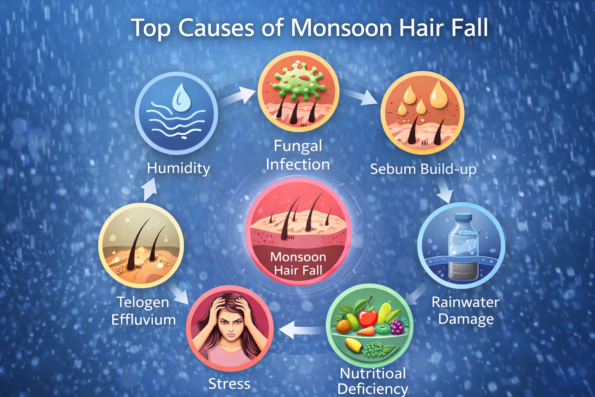
Why Does Hair Fall Increase in Monsoon? Top 7 Reasons
It’s not just the rain. Multiple biological and environmental factors converge during the monsoon season to attack your hair from several directions simultaneously. Here’s each one explained clearly.
1. Telogen Effluvium - The Medical Name for Seasonal Shedding
Hair grows in cycles: the active growth phase (anagen), the transition phase (catagen), and the resting/shedding phase (telogen). When the body experiences sudden environmental stress like a dramatic rise in humidity, heat fluctuations, or nutritional changes, more follicles are pushed into the telogen phase simultaneously.
This is called telogen effluvium, and it’s the primary mechanism behind seasonal hair loss. It’s temporary, but if the underlying triggers aren’t addressed, it can persist well beyond the season.
2. High Humidity Swells the Hair Follicle
When humidity climbs to 80–90% (common across Indian cities during peak monsoon), moisture seeps into the hair shaft and root. The hair follicle swells, the root attachment weakens, and hair breaks and falls more easily. Research indicates that hair fall in monsoon can increase by up to 30% from this mechanism alone.
3. Scalp Fungal Infections - The Most Overlooked Cause
Fungi like Malassezia thrive in warm, humid conditions. When hair stays wet for long periods, tied up, poorly ventilated, or simply not dried thoroughly, the scalp becomes a breeding ground for fungal infections.
The result is persistent dandruff, itching, redness, and significantly weakened hair roots. Scalp fungal infection is one of the fastest ways to accelerate monsoon hair fall, and it’s almost entirely preventable.
4. Sebum Overproduction and Clogged Follicles
In response to humidity, your scalp’s sebaceous glands go into overdrive, producing excess sebum. This oil mixes with sweat and airborne pollution, forming a layer that clogs hair follicles.
Clogged follicles can’t support healthy hair, leading to progressive weakening and increased shedding. This also worsens dandruff and creates a cycle that’s hard to break without a proper cleansing routine.
5. Acidic Rainwater Disrupts Scalp pH
Rainwater is naturally mildly acidic, and in cities like Ahmedabad, Surat, or Pune, pollution makes it more so. Your scalp’s natural pH sits between 4.5 and 5.5. Repeated exposure to acidic rainwater throws this balance off, creates a hospitable environment for bacteria and fungi, and weakens hair roots over time. Getting drenched and not washing your hair promptly worsens this considerably.
6. Nutritional Deficiencies - A Seasonal Side Effect
During monsoon, people tend to eat less raw produce (due to contamination risk) and more comfort foods. The result is a temporary dip in key nutrients: iron, zinc, biotin, and Vitamin D, all of which are critical for follicle strength and hair growth. Even a mild, short-term deficiency during this season can visibly increase hair fall.
7. Stress and Disrupted Sleep
High humidity, heat, disrupted routines, and general discomfort elevate cortisol levels. Elevated cortisol directly interferes with the hair growth cycle, pushing follicles toward the shedding phase prematurely. Most people underestimate this connection, but stress is a well-documented, clinically proven contributor to monsoon hair fall.
Expert Insight
“One of the biggest mistakes I see patients make is waiting too long before consulting a specialist. Monsoon hair fall that looks seasonal can sometimes be masking early-stage androgenetic alopecia or a scalp infection that’s been quietly progressing. A proper scalp analysis early in the season can completely change the outcome.”
— Dr. Kiran Chotaliya, M.D. Skin – V.D. HairFree HairGrow
Normal vs. Abnormal Hair Fall in Monsoon - Know the Difference
Before acting, it helps to understand what’s expected and what’s a warning sign.
| Parameter | Normal (Manageable) | Abnormal (See a Doctor) |
|---|---|---|
|
Daily strand count
|
50–200 strands
|
200+ strands consistently
|
|
Duration
|
Resolves within 6–8 weeks
|
Continues beyond 3 months
|
|
Pattern |
Diffuse, all-over shedding
|
Patches, thinning at crown or temples
|
|
Scalp condition
|
Mild oiliness or dandruff
|
Redness, sores, persistent itching
|
|
Hair texture
|
Slightly weaker than usual
|
Significant brittleness, breakage at root
|
|
Other symptoms
|
None
|
Fatigue, weight changes, nail changes
|
If you notice patches or a receding hairline, it may be worth understanding if androgenetic alopecia or traction alopecia is involved — both can worsen during monsoon.
How to Control Hair Fall in Monsoon - A Practical Routine
These tips work best as a consistent routine, not as one-off fixes.
Scalp Hygiene: More Important Than Usual
- Wash hair at least 3–4 times a week during monsoon. An oily scalp in humid weather is a fast track to fungal infections.
- Never tie wet hair in a bun or tight ponytail, trapped moisture accelerates fungal growth and puts stress on weakened roots.
- Dry hair thoroughly after washing. Use a dryer on cool/low heat if needed, air drying keeps the scalp damp for too long.
- If you get caught in the rain, wash or thoroughly dry your hair within 30 minutes of getting home.
Choosing the Right Shampoo for Dandruff
If you have dandruff or scalp itching during monsoon, a shampoo containing ketoconazole or selenium sulfide addresses the fungal cause directly. Use a clarifying shampoo once a week to remove oil and pollution buildup. Avoid heavy conditioners on the scalp, apply only to the ends.
Why Is Your Hair Still Falling Even After Changing Shampoos and Hair Oils?
A professional scalp check can reveal the underlying cause and the best solution.
Diet: What to Eat for Stronger Hair
| Nutrient | Why It Matters | Best Sources |
|---|---|---|
|
Iron |
Carries oxygen to hair follicles
|
Spinach, lentils, pumpkin seeds
|
|
Zinc |
Regulates sebum, repairs follicles |
Chickpeas, dairy, nuts
|
|
Biotin |
Essential for keratin production
|
Eggs, almonds, sweet potato
|
|
Vitamin D
|
Supports follicle cycling
|
Fatty fish, fortified foods, sunlight
|
|
Protein |
Hair is 95% keratin (protein)
|
Dal, paneer, eggs, chicken
|
Styling Habits to Avoid This Season
- Skip heat styling tools – hair is already structurally weaker in monsoon humidity
- Postpone chemical treatments (colour, rebonding, smoothening) until post-monsoon
- Avoid tight hairstyles – prolonged root tension leads to traction alopecia
- Switch to a satin pillowcase – cotton creates friction on wet or damp hair overnight
Don’t underestimate sleep and stress. 7–8 hours of sleep and basic stress management (walking, yoga, limiting screen time before bed) directly lowers cortisol, which directly reduces hair fall. This isn’t generic wellness advice; it’s clinically relevant for monsoon hair loss.
What Are Monsoon Hair Fall Causes and Solutions?
| Cause | What It Does | What Helps |
|---|---|---|
|
High humidity
|
Swells follicles, weakens roots
|
Keep hair dry; wash regularly
|
|
Fungal infection
|
Damages scalp, accelerates shedding
|
Ketoconazole shampoo, dry scalp promptly
|
|
Sebum overproduction
|
Clogs follicles, worsens dandruff
|
Clarifying shampoo, lightweight conditioner
|
|
Acidic rainwater
|
Disrupts scalp pH
|
Wash hair after rain exposure
|
|
Nutritional deficiency
|
Weakens hair structure
|
Iron, zinc, biotin-rich diet
|
|
Stress / poor sleep
|
Elevates cortisol, disrupts hair cycle
|
Sleep 7–8 hrs, manage stress actively
|
|
Telogen effluvium
|
Mass follicle shedding phase
|
Address triggers; GFC/PRP if persistent
|
When Home Remedies Are Not Enough
Seasonal hair fall in monsoon typically resolves within 6–8 weeks with proper care. But these signs mean you should stop self-treating and see a hair specialist:
- Hair fall hasn’t reduced after 3 months
- Visible thinning or a receding hairline
- Bald patches or clumps of hair falling at once
- Persistent scalp redness, sores, or itching despite regular washing
- Hair fall accompanied by fatigue, sudden weight change, or brittle nails, possible thyroid or iron deficiency
Advanced Hair Fall Treatments at HairFree HairGrow
When lifestyle changes aren’t enough, these are the treatments our specialists recommend based on individual scalp diagnosis.
GFC Therapy (Growth Factor Concentrate)
Your own blood is processed to isolate concentrated growth factors, which are then injected into the scalp. GFC therapy improves follicle health, reduces inflammation, and stimulates new hair growth. It’s one of the most effective non-surgical options for monsoon-related hair fall and early-stage thinning.
PRP Therapy (Platelet-Rich Plasma)
PRP treatment concentrates platelets from your blood and injects them into the scalp to reactivate dormant follicles and improve scalp circulation. Results are typically visible after 3–6 sessions.
Scalp Microneedling + Mesotherapy
Controlled micro-injuries trigger the scalp’s natural healing response, while vitamins and growth factors are delivered directly into the scalp for maximum absorption. Effective for both active hair fall treatment and improving overall scalp health.
FUE Hair Transplant
For cases with significant thinning or visible baldness, FUE (Follicular Unit Extraction) and Direct Follicular Implantation. offer permanent solutions. HairFree HairGrow performs advanced hair transplants across Ahmedabad, Surat, and Pune.
Not sure which treatment is right for you?
HairFree HairGrow offers consultation with a microscopic scalp analysis, diagnosis first, and a treatment plan after.
Conclusion
Monsoon hair fall is common, frustrating, and, in most cases, completely manageable. The key is understanding that it’s never just one cause. Address the scalp hygiene, fix the diet, manage the stress, and protect your hair from rain. For most people, that’s enough.
Frequently Asked Questions
-
1. Is hair fall in monsoon normal?
Yes, to a degree. Losing up to 150–200 strands per day during the season is within the range of seasonal hair fall. What's not normal: shedding that exceeds this consistently, lasts beyond 3 months, or is accompanied by visible thinning or patches.
-
2. Will monsoon hair fall stop on its own?
In most cases, seasonal hair loss improves by October as humidity drops. However, if underlying causes like scalp fungal infection, nutritional deficiencies, or stress haven't been addressed, shedding often continues into the post-monsoon months.
-
3.How often should I wash my hair in monsoon?
At least 3 times a week, and up to every alternate day if you have an oily scalp. In monsoon, washing less frequently is actually more harmful, oil, sweat, and pollution buildup accelerates fungal infections and follicle blockage.
-
4. Does rainwater cause hair fall?
Yes. Rainwater is acidic and carries airborne pollutants in urban areas. It disrupts your scalp's natural pH, creating conditions for bacterial and fungal growth. Always wash or thoroughly dry your hair after getting caught in the rain.
-
5. Which shampoo is best for monsoon hair fall?
It depends on your scalp type. If you have dandruff or itching, a ketoconazole-based antifungal shampoo targets the root cause. For oily scalps, a tea tree or salicylic acid shampoo works well. When in doubt, consult a dermatologist; the wrong shampoo can worsen the problem.
-
6. What is the difference between GFC and PRP for hair fall?
Both are blood-derived treatments, but GFC therapy isolates only the growth factors (more concentrated and targeted), while PRP uses the full platelet-rich plasma. GFC is generally considered more precise. A specialist at HairFree HairGrow will recommend the right option after assessing your scalp.
-
7. When should I see a doctor for monsoon hair fall?
Immediately if: hair fall continues beyond 3 months, you notice patches or thinning, or your scalp has persistent redness or sores. Early hair fall treatment always delivers better results than waiting.