You’ve been scrolling through before-and-after photos for a week. Some show a full head of hair after a transplant. Others show a clean, dense shaved look with SMP. Both look good, and both promise a fix for hair loss. Now you’re stuck on one question: SMP vs hair transplant, which one is actually right for me?
Here’s the honest answer. Neither is better for everyone. They solve two different problems, and the right pick depends on your hair loss, your donor hair, your hairstyle and what you expect to see in the mirror. This guide will help you work out which side you fall on.
Quick Answer
- Scalp micropigmentation (SMP) works on appearance. Tiny pigment dots mimic hair follicles, so your scalp looks denser or shaved. No new hair grows.
- A hair transplant works on actual growth. Healthy follicles from the donor area are moved to thinning areas, and they grow real hair.
- Want real, stylable hair and have enough donor hair? A transplant usually makes more sense. Want a short or shaved look, or don’t have enough donor hair? SMP is often the better fit.
- You don’t always have to pick one. Some people use both.
Not sure which side you fall on?
A doctor can tell you in one look at your scalp and donor area.
What Is the Difference Between SMP and Hair Transplant?
Think of it this way. SMP is like shading. A transplant is like planting.
| Feature | Scalp Micropigmentation | Hair Transplant |
|---|---|---|
|
What it does
|
Creates the look of hair or a shaved head with pigment
|
Moves real follicles so new hair grows
|
|
Does hair actually grow?
|
No
|
Yes
|
|
Procedure
|
Non-surgical, done in sessions
|
Surgical
|
|
Donor hair needed?
|
No |
Yes
|
|
When you see results
|
Quickly, as sessions progress
|
Gradually, over several months
|
|
Hairstyle options
|
Mostly short or shaved looks
|
Short or long, you can style it
|
|
Long-term
|
Fades slowly, needs touch-ups
|
Transplanted hair is long-lasting
|
Dermatology literature describes scalp micropigmentation (SMP) as a cosmetic cover-up for hair and scalp concerns, not a treatment that regrows hair [1][2][3]. A hair transplant is the opposite: a surgical procedure built around growing real hair. If you want to see how the SMP process works step by step, read our guide on scalp micropigmentation treatment.
When Is SMP the Better Choice?
SMP tends to suit you if:
- You like (or are happy to wear) a short or shaved hairstyle.
- Your hair loss is advanced and your donor area doesn’t have enough hair to cover the bald areas properly. This is common in advanced male pattern hair loss.
- You want a non-surgical option.
- You have scalp scars, including from an earlier surgery, that you want to blend in [3][5].
- You’re a woman with diffuse thinning and want the scalp to look less visible. A transplant isn’t always suitable here, so a doctor needs to examine you first. You can read more on female hair loss and female hair transplant.
One thing to keep in mind. SMP gives you the look of density, not real hair. If you grow your hair long, the pigment on the scalp may show against it. And published research is still catching up: studies on SMP note that standard protocols and long-term data are limited [4]. So think about how you want to wear your hair five years from now, not only today. Curious how natural it can look? We’ve covered that in does scalp micropigmentation look real.
When Is a Hair Transplant the Better Choice?
A hair transplant is usually the stronger option if:
- You want real hair that grows, that you can cut, comb and style any way you like.
- You have good donor hair at the back and sides.
- You have a receding hairline or thinning crown and want to rebuild it. Hairline reconstruction is designed for exactly this.
- Your hair loss has slowed down or stabilised, so the new hairline stays balanced as you age.
- You’re okay with waiting. Full results from a transplant often take around a year.
Early 20s and not sure if it’s actual hair loss? Read mature hairline vs receding hairline first. Many people rush into a decision before they know their pattern.
When a Hair Transplant May Not Be Right for You
This part rarely gets said clearly, so let’s say it. A transplant isn’t the answer for every case.
It may not work well if your donor hair is limited, if your hair loss is still progressing fast, or if the scalp has a condition that needs treatment first. In very advanced baldness, there may simply not be enough donor hair to cover everything. In such cases, a good doctor will tell you so. They may suggest SMP, medication treatment, PRP or a combination instead.
That’s exactly why a proper hair analysis matters more than choosing a procedure from a photo. If you’re unsure about your androgenetic alopecia stage, that’s the first thing to confirm.
5 Questions to Ask Yourself Before You Decide
Answer these honestly, and you’ll probably know which way you lean.
- How do I want to wear my hair? Short or shaved leans towards SMP. Longer, styled hair leans towards a transplant.
- How much donor hair do I have? Good donor hair opens up the transplant option. Limited donor hair makes SMP more realistic.
- How stable is my hair loss? If it’s still moving fast, a doctor may want to stabilise it before planning either procedure.
- Do I want real growth or just the look of density? This is the biggest question. Be honest about what would make you happy when you look in the mirror.
- How soon do I want to see a change, and what’s my budget? SMP usually shows its look sooner and often costs less upfront. A transplant takes longer and costs more upfront, but gives you growing hair.
If you answered “real hair, good donor, stable loss”, think transplant. If you answered “short look, limited donor, no surgery”, think SMP. If your answers are mixed, keep reading.
Answers pointing in different directions?
Send us a few photos of your scalp and a doctor from our team will guide you on WhatsApp. No guesswork.
Can You Have Both? SMP After a Hair Transplant
Yes, the two can work together [1].
- Added density: If the transplanted area looks a little thin, SMP can add visual density.
- Scar camouflage: SMP can blend scars from earlier hair restoration procedures into the surrounding scalp.
- Reduced contrast: It can soften the contrast between your hair and your scalp, so the result looks fuller.
Already had a transplant that didn’t give the coverage you expected? Read about failed hair transplant cases and why hair transplants fail so you know what your options are.
What About Cost?
SMP cost depends on the area treated and the experience of the clinic and technician. Full scalp coverage usually costs more than small patches or touch-ups. A touch-up after a year or two may also be needed, so budget for it.
Hair transplant cost is calculated per graft, so it depends on the number of grafts, the technique and your grade of baldness. A smaller transplant of 1,000 to 1,500 grafts, for example, is roughly ₹30,000 to ₹75,000 plus GST. The final price is only confirmed after a doctor examines you.
For detailed numbers, see our guides on SMP cost in India and hair transplant cost.
Common Myths About SMP and Hair Transplant
Myth: SMP makes hair grow back.
It doesn’t. SMP is a cosmetic pigment treatment. It doesn’t stimulate follicles.
Myth: A hair transplant is always the better choice because it’s “real”.
Not always. If donor hair is limited, or you want a shaved look, SMP may suit you better.
Myth: SMP is permanent like a regular tattoo.
SMP is considered semi-permanent. It fades gradually and typically lasts around 4 to 8 years, and touch-ups may be needed.
Myth: You have to choose one.
You don’t. Plenty of people use SMP to finish what a transplant started.
Myth: Anyone can get either procedure.
Both need proper assessment. A scalp condition, an allergy or unstable hair loss can change what’s safe for you. For scarring conditions especially, medical advice should come before any scalp procedure [3][5].
What Our Doctor Says
“When someone asks me whether to go for SMP or a transplant, I don’t start with the procedure. I start with their hair loss pattern, their donor area and how they want to wear their hair. SMP can’t grow hair, and a transplant can’t create donor hair that isn’t there. The right choice is the one that fits the person in front of me, and sometimes that means using both.”
Dr. Santpal Sangwan, M.B.B.S., M.D. (Skin – V.D), Dermatologist & Hair Transplant Surgeon, HairFree HairGrow
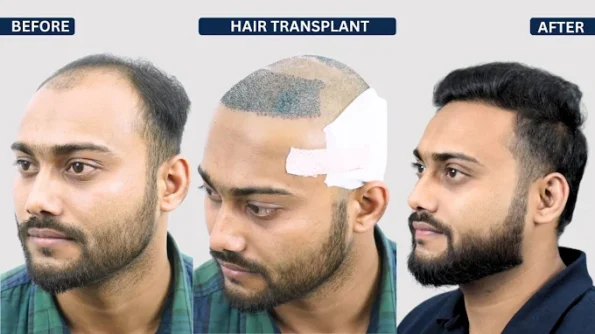
Want to see how this plays out for real patients? Browse our before and after results and case studies.
Frequently Asked Questions
-
1. Is SMP better than a hair transplant?
Neither is better for everyone. SMP is better if you want a non-surgical, short or shaved look. A hair transplant is better if you want real, growing hair and have enough donor hair.
-
2. Can I get SMP after a hair transplant?
Yes. Many people get SMP after a transplant to add density or to blend scars. Your doctor will tell you when the scalp is ready.
-
3. Is a hair transplant more permanent than SMP?
Transplanted hair is taken from areas that usually keep their hair, so the results are long-lasting. SMP fades slowly over time and may need touch-ups.
-
4. Which is cheaper, SMP or a hair transplant?
SMP usually costs less upfront, roughly ₹20,000 to ₹80,000, compared with ₹30,000 to ₹3,00,000 plus GST for a hair transplant, depending on grafts and technique. But the right choice depends on your goal, not just the price.
-
5. Is SMP suitable for women?
It can be, especially for women with diffuse thinning who want the scalp to look less visible. A doctor should assess your hair loss first, since a transplant is not always an option in these cases.
-
6. Can SMP be removed if I don’t like it?
It can be reduced or removed with laser treatment, but it’s best to plan carefully and choose an experienced practitioner so you don’t have to.
-
7. Can I choose SMP if I’m still losing hair?
It depends on your pattern. If hair loss is still progressing, the hairline design and density may need adjusting later. Discuss this with a doctor before you start.
So, Which One Should You Choose?
If you want real hair and have the donor hair for it, a transplant gives you something SMP can’t. If you want a clean, dense, low-fuss look, or your donor area can’t cover the loss, SMP can be the smarter route. And if your situation sits in between, a combination may give you the best of both.
The best next step is not to guess. A doctor can look at your scalp, your donor area and your hair loss pattern, and tell you what will work for you.
Ready to stop guessing?
Book a free consultation with the HairFree HairGrow team and get a clear, doctor-led answer on SMP, a transplant, or both.
Book Your Free Consultation → or call +91 72728 32222
Sources
- Acıbadem International: Scalp Micropigmentation vs Hair Transplant
- WebMD: What to Know About Scalp Micropigmentation
- Journal of Clinical and Aesthetic Dermatology: Scalp Micropigmentation, a Concealer for Hair and Scalp Deformities
- Journal of Cosmetic Dermatology (2025): SMP for Localized Alopecia, Case Series