
Quick Answer: No, donor hair does not grow back in the same spot. Once a follicle is removed, it’s gone from that area permanently. But here’s the good part: your donor area still looks completely normal because the surrounding hair fills in and covers the extraction sites.
Most people walk into a hair transplant consultation thinking about one thing: how their hairline will look after. But the hair transplant donor area deserves just as much attention.
If it’s not managed properly, whether that’s overharvesting, poor technique, or bad aftercare, you could end up with thinning at the back of your head that’s hard to fix. That’s a problem nobody talks about enough.
This guide covers everything you need to know: From does donor hair actually grow back, to how to take care of it properly, so let’s start.
What Is the Hair Transplant Donor Area?
Simply put, the hair transplant donor area is where the surgeon takes hair from. For most people, that’s the back and sides of the scalp.
These areas are chosen for a specific reason. The hair follicles here are resistant to DHT, the hormone that causes pattern baldness. When these follicles are moved to a thinning or bald area, they keep that resistance. They grow there permanently, just like they would at the back of your head.
A healthy donor zone typically holds around 10,000 to 12,000 hair grafts in total. A good hair transplant surgeon can safely extract up to 6,000 of those across one or more sessions without leaving any visible thinning behind.
Does Donor Hair Grow Back After Hair Transplant?
Straight answer: No, it doesn’t.
The specific follicles that were removed are gone from the donor site for good. They’re now growing in the recipient area, your hairline, crown, or wherever they were placed.
But, and this is the part most people don’t realize, the donor area doesn’t look empty or patchy when the hair transplant procedure is done right. Here’s why:
- The surrounding follicles are completely untouched and keep growing normally
- Each extraction point is tiny, just 0.7 to 1mm, invisible once the hair grows even a little
- A skilled hair surgeon spreads extractions evenly, so no single spot looks thin
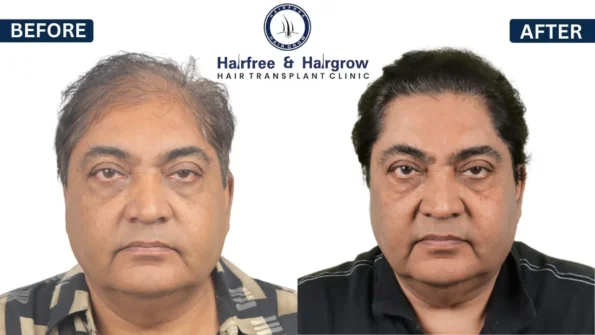
So yes, the extracted follicles don’t come back. But visually? The donor area looks full and normal within a few weeks.
Still unsure about your donor area? Book a free consultation with our hair transplant expert — get a personal donor assessment done today.
What Happens to the Donor Area After Hair Transplant?
The first few days can look a little alarming if you don’t know what to expect. Let’s walk through it.
Day 1 to 3: Small scabs form around each extraction point. There’s some redness and mild swelling. A light bandage is placed over the area. You can usually remove it the next morning.
Day 4 to 7: Scabs start falling off on their own. Redness fades. The area might look slightly uneven if many grafts were taken, but this settles quickly as the surrounding hair grows out.
Week 2: The surface is mostly healed. Any visible dots or pinkness have reduced significantly. You can get a haircut after Day 14, just make sure all scabs are gone first.
Donor area after 1 month: Swelling is completely gone. Scabs have cleared. The scalp texture feels normal again. Some people, especially those with fair skin, might notice a bit of mild redness still, but it fades.
Donor area after 2 months: The small extraction marks blend in with the surrounding skin. Hair has grown enough to cover the area completely for most people.
3 to 6 months: The donor area looks entirely natural. No scarring, no patchiness. This is also when the transplanted area starts showing real growth.
Hair transplant donor area recovery is generally quicker than people expect — especially with FUE. The biggest factor? Following your surgeon’s aftercare instructions. That alone can make or break your recovery.
FUE vs FUT — How Each One Affects Your Donor Site
The hair transplant technique your surgeon uses has a direct impact on what your donor area after hair transplant looks and feels like long term.
FUE — The Preferred Method in 2026
In FUE, individual follicles are extracted one at a time using a tiny punch tool (0.6 to 1mm). The result is hundreds of microscopic dot scars that become invisible once your hair grows even a few millimetres. Most people keep their hair short after FUE with zero visible signs of surgery.
FUE works best when:
- You want to keep your hair short
- You want minimal scarring
- You’re planning possible future sessions
- You want a faster, less uncomfortable recovery
FUT — The Strip Method
FUT involves surgically removing a strip of scalp from the donor zone. That strip is then divided into individual grafts. It leaves a linear scar across the back of the head, which can be visible if you cut your hair very short. In 2026, FUT is used far less often because FUE simply offers better outcomes for the donor site.
Not Enough Donor Hair for Transplant? Here's What Can Be Done
Having not enough donor hair for transplant doesn’t automatically mean you can’t have a procedure. Surgeons in 2026 have more options than ever.
Beard and Body Hair
Beard hair is the closest match to scalp hair in texture, thickness, and growth pattern. Hair from the chest and stomach can also work well. Leg and arm hair is generally avoided because it’s too thin and grows unpredictably.
Combining Multiple Donor Sites
A surgeon can take a portion from the scalp, a portion from the beard, and sometimes the chest, all in one or across multiple sessions. This builds up enough grafts without over-extracting from any single area.
PRP Therapy
Platelet-Rich Plasma injections are used to strengthen existing follicles in a weak donor area. Many clinics in 2026 include PRP as part of their standard transplant package, which improves graft quality and speeds up recovery.
Hair Cloning 2026’s Emerging Technology
Researchers are working on multiplying follicles in a lab and replanting them. It’s still in clinical trials but showing real promise. For patients with severely limited donor areas, this could be a future solution.
Scalp Micropigmentation (SMP)
When graft supply is very limited, SMP creates the visual appearance of density without any surgical extraction. It’s often combined with a limited transplant to give the most natural-looking result.
Want to know if you have enough donor hair? Start your free hair analysis here, our team will check your donor density and give you an honest plan.
What Is an Overharvested Hair Transplant — and How to Avoid It
An overharvested hair transplant happens when too many grafts are taken from the donor zone, leaving it visibly thin, uneven, or scarred. It’s one of the most serious problems in hair restoration, and in many cases it’s permanent.
Signs that overharvesting has happened:
- Obvious thinning at the back and sides of the scalp
- Patchy areas that don’t get covered even as hair grows
- Visible scarring even at a normal hair length
- No grafts left for any future procedures
How to protect yourself:
- Choose a clinic where the surgeon, not technicians, does the extraction
- Make sure extractions are spread evenly across the entire donor zone, not concentrated in one area
- Be cautious of clinics that promise very high graft numbers in a single session without a thorough evaluation
- Ask your surgeon directly: “How will you protect my donor area for future use?”
The donor site for hair transplant surgery should always be treated as a limited, long-term resource. A good surgeon thinks about what your donor area will look like five or ten years from now, not just on the day of the procedure.
Can the Donor Area Be Used Again?
Yes — in many cases it can.
If your first procedure was done conservatively and there’s still enough density remaining, a second or even third session is absolutely possible. This is exactly why how your hair transplant doctor handles the donor area the first time matters so much.
Before a repeat hair transplant session, your surgeon will check:
- How much follicle density is left per cm²
- The condition of any scar tissue from previous extractions
- Whether beard or body hair needs to be brought in as additional donor sources
Patients who’ve had overharvesting done may not be candidates for another scalp session at all. It’s one of the harder lessons in hair restoration and another reason why choosing the right surgeon the first time protects your long-term options.
How to Take Care of the Donor Area After Hair Transplant
Good aftercare is what separates a smooth recovery from a slow, complicated one. It’s simple, you just have to actually do it.
Days 1 to 7:
- Wash gently with the saline solution or mild hair shampoo your surgeon recommends
- Don’t scratch, rub, or put any pressure on the donor area even if it itches
- Stay out of direct sunlight
- Sleep with your head slightly elevated to reduce swelling
- Take prescribed antibiotics and anti-inflammatory medication on schedule
Days 7 to 30:
- Let scabs fall off on their own, don’t pick at them
- Light walking and daily activities are fine; avoid heavy workouts or anything that causes heavy sweating for at least 2 weeks
- You can get a haircut (scissors only, no clippers) after Day 14, once all scabs are clear
- Keep using any topical creams or ointments your surgeon prescribed
Month 1 Onwards:
- Avoid swimming pools and direct sun on the donor area for at least 4 weeks
- Regular hairstyling can resume after Month 1
- Don’t skip follow-up appointments. Your surgeon needs to check that everything is healing properly
A few things people often overlook:
- Eat enough protein, hair is made of keratin, which your body builds from protein
- No smoking or alcohol for at least 2 weeks, as both slow down healing
- Keep stress in check, it actually affects follicle health during recovery
Conclusion
The hair transplant donor area is the foundation of your entire result. Get it right, and the outcome looks natural in the front and the back. Ignore it, and problems show up later that are hard to fix.
FUE is the better choice for donor preservation in 2026. And if your scalp donor supply is limited, Body Hair Transplantation using beard and body hair are real, workable alternatives.
The most important step? An honest consultation with someone who will actually look at your donor area and tell you the truth about what’s possible.
At Hairfree & Hairgrow Clinic, every hair transplant starts with a detailed donor area analysis, not guesswork.
With 18+ years of expertise and clinics across Surat, Ahmedabad, Pune (Pimple Gurav), Pune Kharadi, Hyderabad, Kolkata, Bangalore, Bhopal, Delhi (Gurugram), Nagpur, Mumbai, Vapi (Silvassa), and Bangladesh, Hairfree & Hairgrow Clinic offers trusted, result-driven hair restoration.
Frequently Asked Questions
-
Does donor area hair grow back after a hair transplant?
The extracted follicles don't grow back at the donor site; they're permanently in the recipient area now. But the surrounding hair remains intact and continues growing, so the donor area looks completely normal within a few weeks.
-
How long does donor area recovery take?
The surface heals in 7 to 14 days. Cosmetically, where you can't tell anything was done, takes about 2 to 3 months. By 6 months, the donor area is completely back to normal.
-
What does the donor area look like after 10 days?
Most scabs are gone. Redness has faded significantly. The tiny extraction dots are barely visible, and once the surrounding hair grows even a couple of millimetres, you can't see them at all.
-
Can the donor area be used again for a second transplant?
Yes, if the first session was done conservatively and enough density remains. Your surgeon will assess this before any follow-up procedure.
-
What is an overharvested donor area?
It's when too many grafts are taken from one zone, leaving it permanently thin or patchy. It's preventable; choosing a skilled, conservative surgeon is the most important step.
-
What if I don't have enough donor hair on my scalp?
Beard, chest, or stomach hair can be used as alternative donor sources through Body Hair Transplantation. PRP therapy can also help strengthen a borderline donor area before surgery.
-
Is the donor area visible after FUE?
No. The dot scars from FUE are 0.7 to 1mm, invisible once your hair grows a few millimetres. FUT's linear scar can be visible at very short hair lengths.
-
How do I take care of my donor area after the transplant?
Keep it clean, don't scratch it, avoid sun exposure, don't cut or shave before Day 14, and follow every aftercare instruction your surgeon gives you. Attend your follow-up appointments.