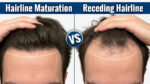

Quick answer: FUE hair transplant (Follicular Unit Extraction) is a surgery where hair follicles are taken one by one from the back and sides of your scalp and planted into thinning or bald areas. It’s done under local anaesthesia, needs no stitches, and leaves tiny dot scars instead of a line.
Before you read: why another FUE guide?
If you’ve spent a few nights reading about hair transplants, you’ve noticed the pattern. Every page says FUE is “advanced, painless and permanent.” Very few explain what the third week looks like, why one clinic quotes ₹40,000 and another ₹2 lakh for the same “FUE”, or what the different technique names actually mean.
This guide is written to answer those questions in the order you’ll probably ask them.
What is FUE hair transplant?
FUE is a hair transplant method where individual follicles are removed from the permanent zone of your scalp and planted, one by one, where hair has thinned or gone.
Each follicular unit holds 1 to 4 hairs, and the surgeon removes them under local anaesthesia with tiny punches of roughly 0.6 to 1.0 mm. The donor area is at the back and sides of the head because hair there is resistant to the hormone that causes pattern baldness. That’s the reason transplanted hair keeps growing for life.
Think of your donor area as a small, fixed field. You can move crops from that field to another, but you can’t make the field bigger. That is why the plan matters as much as the procedure.
Why is FUE so common now? It has become the dominant technique, ahead of the strip method (FUT), because it avoids a linear scar and recovery is faster. The 2022 ISHRS Practice Census found that 75.4% of male patients worldwide chose FUE.
One thing to keep in mind: FUE describes how the grafts are harvested. It doesn’t decide how good your hairline looks. That comes from design, angle, density planning and the surgeon’s judgement.
How is an FUE hair transplant done? (Step by step)
It’s a one-day outpatient surgery under local anaesthesia. Both FUE and FUT are typically completed within a day, though FUE takes longer in the chair.
- Consultation and fitness check. The surgeon assesses your hair loss pattern, donor density, scalp and general health, and agrees a graft plan with you.
- Hairline design. The hairline is marked to suit your face and your age, with future hair loss in mind.
- Local anaesthesia. The areas are numbed before extraction starts.
- Graft extraction. A micro-punch takes follicular units from the donor area, which is trimmed short first. Some clinics offer partial shave options, so ask.
- Recipient sites. Tiny openings are created at the correct angle and direction, so the new hair grows the way your natural hair does.
- Implantation. Grafts are placed one by one, either with forceps or with an implanter, depending on the technique.
- Cleaning and bandaging. The area is cleaned and bandaged, and you leave with aftercare instructions.
A detail that’s easy to miss: grafts survive better when they spend less time outside the body and are stored properly. This is one reason different clinics get different results from the same “FUE”.
FUE vs FUT: what's the real difference?
FUE leaves tiny dot scars and heals faster. FUT leaves a fine line scar but can deliver more grafts in a single session.
| Table Header | FUE | FUT (strip) |
|---|---|---|
|
Scar
|
Tiny round white dots spread over a larger donor area
|
One generally fine linear scar
|
|
Grafts in one session
|
Works best for small to moderate sessions
|
Typically the highest yield of hair
|
|
Best for
|
Very short hairstyles, tight scalp, athletes, body or beard donor hair
|
Maximum fullness in one session
|
|
Cost trend |
Often higher because it needs more surgeon time
|
Often lower
|
FUE is also the technique of choice when a scalp is too tight for a strip, when older strip scars make another strip impossible, or when hair must be taken from the beard or body.
For an average patient with good donor hair, graft take is commonly quoted at around 90 to 95% for either method in skilled hands. Treat that as a benchmark, not a guarantee. We explain what “success” actually measures in our guide to hair transplant success rate.
So which is better? Neither, for everyone. If you want to keep your hair very short or get back to sport quickly, FUE fits. If you need maximum density in one go and can live with a hidden line scar, FUT deserves a conversation.
FUE techniques explained
“FUE” is the extraction method. The names you see on clinic websites (Sapphire FUE, Bio FUE, BIG FUE, I-FUE, Stem Cell FUE) describe how the recipient sites are made, how grafts are placed, and what supports the grafts before and after.
| Technique | What's different | Learn more |
|---|---|---|
|
Standard FUE
|
Micro-punch extraction, blade-made recipient sites, grafts placed with forceps
|
The baseline for every technique below
|
|
Sapphire FUE
|
Recipient sites cut with sapphire-tipped blades instead of steel
|
Sapphire FUE guide
|
|
Bio FUE
|
FUE plus PRP and Ringer Lactate support for grafts
|
Bio FUE technique
|
|
BIG FUE
|
Bio-Advanced Implanter with Graft Gro Factor and Graft Chiller (HFHG’s technique)
|
BIG FUE technique
|
|
I-FUE
|
Implanter-based FUE with very fine sapphire slits |
I-FUE technique
|
|
Stem Cell FUE
|
Stem cell concentrate combined with grafts and injected into the scalp
|
Compare methods
|
Two honest notes for comparing hair transplant methods. First, no technique name replaces a good surgeon and a good plan. Second, research on stem cell support alongside FUE is promising but still calls for further study, so choose it for the added support, not as a guarantee of extra density.
And be wary of any page promising a technique that avoids scarring completely. The ISHRS position is that FUE scars are much less visible than FUT scars, but FUE is not scarless.
A note on “scarless” claims
Some pages claim a technique avoids scarring completely. The ISHRS position is that FUE scars are much less visible than FUT scars, but FUE is not scarless, and one clinical body reminds patients that no hair loss surgery is scarless. If a page promises zero scars, treat it as a red flag.
Who is a good candidate for FUE?



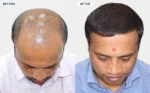
The best candidates have stable, patterned hair loss, enough donor hair and realistic expectations. Many surgeons see Norwood stages 3 to 5 as the strongest group.
- Stable loss. Hair loss that’s still progressing quickly can leave a transplanted hairline stranded as an “island” later.
- Age. Many doctors prefer waiting until after 25, and for most people the optimal window is between 30 and 45.
- Medical therapy first for younger patients. An international expert consensus recommends at least 6 months of finasteride and/or minoxidil for patients under 30 to confirm the loss has stabilised. “Not yet” is a responsible answer, not a rejection.
- Enough donor hair. If even your donor zone is thinning (diffuse unpatterned alopecia), transplanted hair won’t stay permanent, so surgery is not advised.
- Time and patience. FUE can involve long sessions, and multiple sessions for large areas.
Reading about Norwood stages and graft counts, but still not sure where your own hair falls?
Why waiting can save you money and regret: ISHRS data shows repair surgeries rose from 5.4% of all transplants in 2021 to 6.9% in 2024. A disproportionate share of repairs is linked to premature procedures.
How many grafts might you need? It depends on the size of the area. A small receding hairline can need around 1,000 grafts, while a fully bald crown can need 4,000 or more. For Norwood 3 and 4, clinics commonly cite about 2,000 to 3,500 grafts. Your surgeon should confirm the number after examining your donor density.
What about women? Women are assessed on the Ludwig scale, not the Norwood scale, and FUE is suitable only in selected cases where thinning follows a pattern and donor hair is stable. Some older FUE guidance treats a need to cut the hair short as a limit for women, so ask about partial-shave options.
Our pages on female hair transplant and the best age for hair transplant in women cover this in more detail.
FUE recovery timeline: what happens and when
Most people return to routine within 7 to 10 days, but the real result takes up to a year. The middle months are where patience gets tested.
| When | What to expect |
|---|---|
|
Days 1 to 5
|
Redness, swelling and mild discomfort in both areas. Non-physical work is possible after about 2 to 5 days, though scabs will show.
|
|
Week 1 to 2
|
Most people are back to daily routines within 7 to 10 days. Avoid anything that makes you sweat until your surgeon says so.
|
|
Around 1 month
|
Exercise clearance usually comes about now.
|
|
Months 1 to 3
|
The shedding phase. Transplanted hair sheds before it regrows, and some nearby existing hair may shed too (shock loss). It does not mean the surgery failed.
|
|
Months 3 to 6
|
Growth starts at roughly 3 to 4 months by some clinics’ counts, 4 to 6 months by others. By about 6 months nearly half the final result is typically visible.
|
|
Months 9 to 18
|
Full density is visible by 12 to 18 months. The hairline tends to fill in before the crown, and some patients keep thickening up to 14 to 15 months.
|
A habit that helps your head more than your hair: take a photo in the same light, at the same angle, once a month. A mirror check at month 3 compared with a photo from day 0 is much kinder than the mirror alone.
Sources disagree by a few weeks on when growth begins, which is normal. Bodies aren’t clocks. Follow your surgeon’s aftercare sheet over any generic timeline, including this one.
What results should you expect, and will you still need medicines?
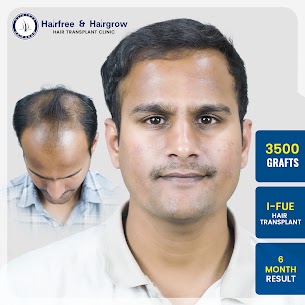
A well-planned FUE gives natural, permanent results in the transplanted area, but it doesn’t stop the rest of your hair from thinning.
You may need finasteride or minoxidil long term to protect non-transplanted hair. Finasteride generally doesn’t need to be stopped before surgery and can help reduce post-surgical shock loss. Ask about your medicine plan before you book.
Natural-looking results come from four things:
- A hairline designed for your face and your age, not for maximum density today.
- Grafts placed at the correct angle and direction.
- A donor area that isn’t over-harvested.
- A plan for future hair loss, so the result still looks right in ten years.
Risks, side effects and myths
FUE is safe in experienced hands, but it isn’t risk-free and it isn’t scarless.
- Common and temporary: swelling, itching, transient pain and temporary shedding.
- Scarring: small dot scars in the donor area, much less visible than a line scar but not zero.
- Over-harvesting: taking too many grafts from one zone can leave the donor area looking thin, and that can’t easily be repaired. It’s more common where speed matters more than planning.
- Less common: infection (about 1 to 2% in one estimate), poor graft growth, nerve damage, and the need for additional sessions as natural hair keeps thinning.
- Call your surgeon early for heavy pus, spreading redness, severe pain or unusual swelling.
Myths vs reality
| Myth | Reality |
|---|---|
|
“FUE is scarless.”
|
It leaves small dot scars. They’re far less visible than a strip scar, but they exist.
|
|
“All transplanted hair grows.”
|
Graft take is often quoted at 90 to 95% in skilled hands, and it’s a benchmark, not a promise.
|
|
“Shedding means it failed.”
|
Initial shedding is expected. Many patients see part of the transplanted hair fall before regrowth.
|
|
“One surgery and I’m done.”
|
Native hair can keep thinning, so some people need medicines or a later session.
|
|
“The cheapest FUE is the smartest deal.”
|
Who does the extraction and how the donor is planned matter more than the label.
|
FUE hair transplant cost in India: A Transparent Breakdown
In India, FUE is priced per graft. Most published prices fall between ₹50,000 and ₹3,00,000 or more, and the final quote depends on how many grafts you need, the technique, the surgeon and the city.
The market is wide. One analysis of 111 clinics found a median published rate of ₹30 to ₹75 per graft. These are reference ranges, not a quote for any one person.
| What moves the price | Why it matters |
|---|---|
|
Graft count
|
A small hairline and a bald crown are different jobs
|
|
Technique |
Sapphire, implanter-based and biologically supported methods usually cost more than standard FUE
|
|
Who performs it
|
One clinic guide notes that at the lowest per-graft rates, extraction is often done by technicians while the doctor only designs the hairline. Ask who does what.
|
|
Surgeon and clinic
|
Experience and set-up affect the rate
|
|
City
|
Clinic overheads differ from city to city
|
See how hair transplant cost in Surat compares with Ahmedabad and Mumbai.
Read the quote, not just the total. Many quotes exclude 5% GST, blood tests, PRP sessions and post-op medication. For per-graft rates, city-wise ranges and a graft-wise estimate, see our detailed hair transplant cost guide.
Got a quote that feels too low to trust, or too high to understand?
Why two quotes for "the same FUE" can differ by lakhs
- Graft count. A small hairline and a bald crown are different jobs.
- Technique. Sapphire, implanter-based and biologically supported methods cost more than standard FUE.
- Who performs it. One clinic guide notes that at the lowest per-graft rates, extraction is often done by technicians with larger 0.9 to 1.0 mm punches, while the doctor only designs the hairline. That’s a question to ask, not a rule.
- Surgeon experience and clinic set-up.
- What’s included. Many quotes exclude 18% GST, blood tests, PRP sessions and post-op medication.
A five-line checklist before you accept any quote
- Is GST included?
- Are tests, medicines and PRP included?
- Who exactly performs extraction, slit creation and implantation?
- What is the graft count, and how was it decided?
- What happens if a touch-up or follow-up is needed?
A last thought on cost: a transplant is a one-time spend, while wigs and topical routines keep costing month after month. But a bad transplant is the costliest option of all, because repair surgery costs more and the donor hair is limited.
For a graft-wise estimate, see our Hair Transplant Cost in India guide.
How to choose a clinic for FUE
Choose the surgeon and the process, not the offer. Ask these questions and note how clearly each one is answered. If you’re comparing options, our list of the top hair transplant clinics in India can help you shortlist.
- Who designs the hairline, and who performs extraction and implantation? The ISHRS condemns unlicensed technicians carrying out FUE harvesting.
- Will I get a written graft plan based on my donor assessment?
- Can I see before-and-after photos with the month each photo was taken?
- What is my long-term plan for medicines and for future hair loss?
- How are grafts stored and kept viable between extraction and placement?
- What does the quote include, and what will be added later?
- What follow-up is included, and who do I contact if something looks wrong?
Five mistakes people make with FUE
- Doing it too early, while hair loss is still moving fast.
- Picking the lowest price without asking who holds the punch.
- Stopping medicines because “the transplant will handle it.”
- Judging the result at month 3, in the middle of shedding.
- Ignoring the donor area. It’s limited. Use it with a plan.
Why Hairfree Hairgrow for FUE hair transplant
At Hairfree Hairgrow, you don’t get one technique for everyone. You get the FUE Hair Transplant technique matched to your hair loss, your donor and your goals.
HFHG offers Standard FUE, Bio FUE, Stem Cell FUE, BIG FUE and I-FUE, so the conversation in your consultation is about what suits you, not what the clinic happens to offer. What that means for you:
- A technique chosen for your case. A small hairline touch-up, a crown and an advanced Norwood stage can each call for a different approach.
- Graft care that starts before implantation. HFHG’s protocols include graft chilling and preservation in RL and PRP with controlled temperature, so grafts spend less time stressed.
- Fine, planned slits. Techniques such as BIG FUE and I-FUE use micro sapphire blades for small incisions, aimed at faster healing and less damage to nearby hair.
- A consultation that can say “not yet.” If medicines should come first, that’s the honest advice.
- Clinics in multiple cities, including Surat, Pune, Delhi, Mumbai, Hyderabad, Kolkata and Ahmedabad.
You’ve done the reading. The only thing left is someone looking at your actual scalp.
FAQs
-
1. What does FUE stand for?
Follicular Unit Extraction. Individual follicular units of 1 to 4 hairs are removed from the donor area and transplanted into thinning areas.
-
2. Is FUE hair transplant permanent?
Yes, for the transplanted hair, because it comes from the donor zone resistant to the hormone behind pattern baldness. Your non-transplanted hair can still thin, which is why long-term planning matters.
-
3. Is FUE painful?
The procedure is done under local anaesthesia, so you're numb during it. Mild discomfort, tightness and swelling afterwards are common and usually settle within days.
-
4. How long does FUE take to show results?
Growth usually begins around 3 to 6 months. Full results take 12 to 18 months, and the hairline tends to fill in before the crown.
-
5. How many grafts will I need?
It depends on your Norwood stage, the size of the area and donor density. Many Norwood 3 and 4 cases fall in the 2,000 to 3,500 range, and your surgeon confirms after examining your scalp.
-
6. FUE vs FUT: which is better?
Neither for everyone. FUE suits people who want no linear scar, faster healing and the option of short hair. FUT can offer more grafts in one session.
-
7. Does FUE leave scars?
Yes, tiny dot scars in the donor area. They're much less visible than a strip scar, but FUE is not scarless.
-
8. What is the best age for FUE?
There is no single age. Many doctors prefer waiting until after 25, and for most people the optimal window is 30 to 45. Stable hair loss matters more than the number.
-
9. Can women get FUE hair transplant?
In selected cases, yes. Women are assessed on the Ludwig scale, and the surgeon checks the thinning pattern and donor stability first.
-
10. How soon can I return to work?
For non-physical work, many people go back within 2 to 5 days, though scabs and redness will show. Exercise usually waits about a month.
-
11. Will I need medicines after FUE?
Often yes. Finasteride or minoxidil can protect the hair you haven't lost, and finasteride generally doesn't need to be stopped before surgery.
-
12. How much does FUE hair transplant cost in India?
Most published prices sit between ₹50,000 and ₹3,00,000 or more, priced per graft. Graft count, technique, surgeon and city move the number. See the cost breakdown above.
Ready to know where you stand?
Your donor hair, your Norwood stage and your goals decide the right technique, and a consultation is where that gets checked properly. Book a consultation at Hairfree Hairgrow and leave with a clear graft plan, the technique that suits you, and an honest answer on timing.
- ISHRS, information on FUT and FUE and its stand on unlicensed technicians: https://ishrs.org/fut/
- PubMed Central, “Complications in follicular unit excision hair transplantation”: https://www.ncbi.nlm.nih.gov/pmc/articles/PMC12909172/
- Wikipedia, hair transplantation (punch sizes): https://en.wikipedia.org/wiki/Hair_transplantation