
Quick Answer
Sebum is a natural oil produced by the sebaceous glands attached to your hair follicles. In the right amount, it protects your scalp and keeps hair from drying out. But when it builds up faster than it’s cleaned away, it mixes with dead skin cells, sweat, and product residue to form sebum buildup on the scalp, which can leave hair looking greasy and, in some people, contribute to dandruff or irritation.
Having a healthy scalp is key to strong, beautiful hair. Today, we’re diving into the world of sebum – that oily stuff your scalp makes. You might only notice it when you do the scratch test and see buildup under your nails, but it’s more important than you think! Sebum plays a big role in keeping your hair and skin healthy. In this blog, I’ll break down what sebum is, how it affects your scalp (especially sebum buildup on scalp), and simple ways to manage it. Let’s get started.
What Is Sebum, Anyway?
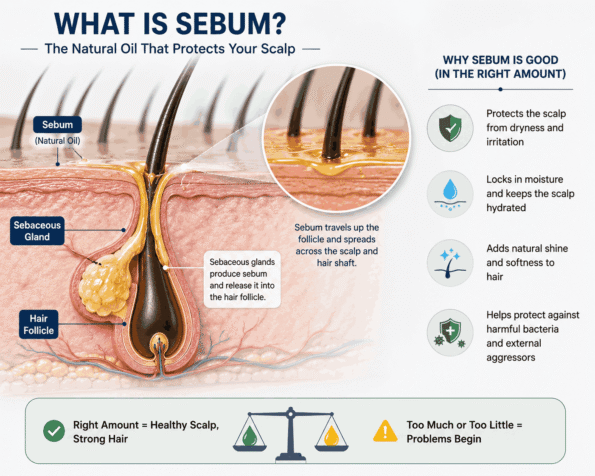
Sebum is that oily stuff your skin makes. It comes from tiny glands called sebaceous glands, which are all over your body—including your scalp. These glands are hooked up to your hair follicles and push out hair sebum through the follicle’s opening. This oil mixes with sweat and other stuff on your scalp, creating that greasy feeling you sometimes notice.
So, what’s the point of hair sebum? It’s actually a good thing! It acts like a shield for your skin, keeping it from getting too dry and controlling what gets absorbed. In the right amounts, it’s great for a healthy scalp. But when there’s too much or too little, that’s when trouble starts.
Hair Sebum Causes: Why Does Your Scalp Get Oily?
Several factors can contribute to excess hair sebum production, including:
- Hormonal Imbalances – Changes in hormones, especially during puberty, pregnancy, or stress, can trigger high hair sebum production.
- Diet – Eating too much oily or sugary food can increase sebum levels.
- Overwashing Hair – Washing your hair too often can strip natural oils, causing the scalp to produce more oil to compensate.
- Wrong Hair Products – Using harsh shampoos or conditioners can disrupt the scalp’s oil balance.
- Genetics – Some people naturally produce more sebum due to their genes.
- Environmental Factors – Heat, humidity, and pollution can increase oiliness.
A note on washing frequency: there’s no single schedule that works for everyone. If your scalp gets oily within a day, washing daily or every other day may suit you better, especially with straight hair. If your scalp is dry or sensitive, less frequent washing may be more appropriate; let your scalp’s actual behavior guide the routine, not a fixed rule.
Sebum and Your Roots
Some research suggests that sebum composition can vary among different population groups, including differences in wax ester levels. However, sebum production is also influenced by individual factors such as genetics, hormones, and skin type, so hair and scalp care should be based on individual needs rather than ethnicity.
Symptoms of Sebum Buildup on the Scalp
Sebum buildup can show up in a few different ways. Common signs include:
- Greasy or oily-looking roots, even soon after washing
- Hair that feels heavy, flat, or coated
- Visible oily residue on the scalp
- Flaking, especially oily or yellowish flakes rather than dry ones
- Itching or a tight, irritated feeling
- Scalp odor
- A “clogged” feeling at the roots
- Small bumps or scalp acne
If you’re noticing several of these together, especially redness or ongoing irritation, it’s worth reading further before you start treating it.
Is Your Scalp More Oily Than It Should Be?
Greasy roots, flakes, itching or buildup shouldn’t be something you just put up with. Find out what’s really causing your scalp problems.
Sebum Buildup vs. Dandruff vs. Seborrheic Dermatitis vs. Product Buildup
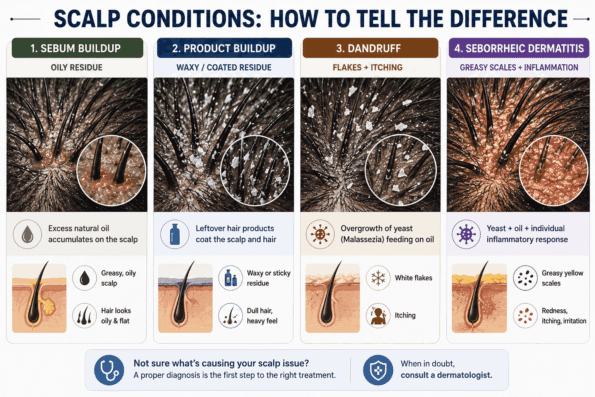
Scalp buildup” isn’t always pure sebum; it’s often a mix of oil, dead skin, sweat, and leftover product. Here’s how to tell the difference:
| Condition | Typical Signs | Main Cause |
|---|---|---|
|
Sebum buildup
|
Greasy, oily residue at the roots
|
Excess natural oil accumulating
|
|
Product buildup
|
Waxy or sticky residue, dulled hair
|
Leftover oils, gels, conditioners, styling products
|
|
Dandruff |
Flaking with itching
|
Malassezia yeast feeding on sebum
|
|
Seborrheic dermatitis
|
Greasy scales with visible inflammation
|
Yeast and sebum plus an individual inflammatory response
|
|
Scalp folliculitis
|
Red bumps, sometimes with pus
|
Inflamed or infected hair follicles
|
Excess Hair Sebum and Scalp Problems
When your scalp pumps out too much oil, it’s not just about looking greasy. It can cause bigger issues:
- Dandruff: A yeast called Malassezia loves excess hair sebum. It eats the oil, breaks it down, and leaves behind irritating fatty acids. For some people, this leads to redness, itching, and those annoying flakes.
- Acne: Oily scalps can clog pores, just like on your face, causing breakouts.
- Shi ny, Greasy Hair: Nobody wants that “I-haven’t-washed-in-days” look, right?
But here’s the big question: can sebum buildup on scalp make your hair fall out? Let’s dig into that next.
Can Sebum Cause Hair Loss?
Short answer: sebum itself does not directly cause common pattern hair loss (androgenetic alopecia).
If you’ve ever noticed bald spots looking extra shiny, you’re not alone. Doctors who study hair loss (aka androgenetic alopecia) often see oily scalps in their patients. Studies even show that people with this type of hair loss tend to have bigger sebaceous glands pumping out more sebum. This is a correlation researchers have observed, not proof that sebum causes the hair loss.
Here’s the indirect pathway that’s better supported: persistent sebum buildup can feed the Malassezia yeast, which can trigger inflammation. That inflammation, if it reaches the follicle, may worsen conditions like seborrheic dermatitis or folliculitis, both of which can contribute to shedding or scalp discomfort in some people. Sebum buildup is unlikely to be the root cause of pattern hair loss, but if it’s contributing to ongoing scalp inflammation, that’s worth addressing.
How to Remove Hair Sebum Naturally
If you are struggling with excess hair sebum, follow these steps to keep your scalp clean and healthy:
1. Use the Right Shampoo
Choose a gentle, sulfate-free shampoo that helps with hair sebum control. Look for ingredients like tea tree oil or salicylic acid to cleanse excess oil.
2. Wash Hair Properly
- Wash based on how quickly your scalp gets oily, rather than a fixed schedule.
- Avoid using very hot water, as it can stimulate more hair sebum production.
- Massage your scalp gently while shampooing to remove oil effectively.
3. Try Natural Remedies
- Apple Cider Vinegar Rinse – Mix one part vinegar with two parts water and rinse your scalp to remove excess oil. Some people use a diluted apple cider vinegar rinse, but there’s limited evidence it meaningfully reduces sebum buildup, and undiluted vinegar can irritate the scalp.
- Aloe Vera Gel – Apply fresh aloe vera to your scalp to control oil and soothe irritation.
4. Maintain a Healthy Diet
A balanced diet with enough protein, vegetables, and healthy fats supports overall skin and scalp health. Increase your intake of leafy greens, nuts, and omega-3 fatty acids. Stay hydrated by drinking plenty of water.
5. Use Dry Shampoo
A good dry shampoo can absorb oil and keep your hair fresh between washes.
6. Avoid Overusing Hair Products
Too much conditioner, styling gel, or oil-based serums can make sebum buildup on scalp worse. Use lightweight products instead.
7. Scalp Exfoliation
Exfoliate your scalp once a week with a gentle scrub to remove dead skin and oil buildup.
Tried Different Shampoos but Your Scalp Is Still Acting Up?
The problem may not be your shampoo. Get expert guidance to understand what’s behind the buildup, dandruff or irritation.
How Is Excess Sebum and Scalp Buildup Treated?
The right treatment depends on what’s actually causing your symptoms:
- Simple oiliness: an adjusted washing routine and the right shampoo are usually enough.
- Dandruff: a medicated shampoo (ketoconazole, zinc pyrithione, or selenium sulfide) can help control it.
- Seborrheic dermatitis: usually needs a dermatologist-directed treatment plan.
- Folliculitis or scalp acne that persists: worth a proper evaluation rather than home treatment.
When Should You See a Dermatologist?
Most sebum buildup responds well to a better washing routine and the right products. But it’s worth getting checked if you notice persistent itching, redness or pain, pus-filled bumps, thick greasy scales, dandruff that keeps coming back, ongoing scalp odor, or sudden/persistent hair shedding.
If your scalp isn’t settling down with home care, it’s worth getting a proper look rather than cycling through more products.
Consult with our dermatology team for a clear diagnosis and a plan suited to your scalp.
Final Thoughts
A balanced amount of hair sebum is essential for a healthy scalp, but too much can lead to hair problems. By following the right hair care routine, using proper products, and maintaining a healthy diet, you can effectively manage sebum buildup on scalp and prevent hair issues. If your scalp remains excessively oily despite trying these solutions, consult a dermatologist for the best hair sebum treatment options.
FAQs About Sebum and Hair Loss
A combo of natural shampoo, less washing, and a cleaner diet is a solid start for hair sebum treatment. Try it out!
-
1. What causes excess hair sebum?
Things like hormones, a junk-food diet, or washing your hair too much can boost hair sebum causes and lead to greasy buildup.
-
2. Can I stop hair loss by controlling sebum?
It won't cure hair loss completely, but hair sebum control can reduce scalp inflammation and might help with scalp comfort.
-
3. How often should I wash my hair for sebum control?
There's no fixed number that works for everyone, wash based on how quickly your scalp gets oily, rather than a set schedule.
-
4. Does diet really affect hair sebum?
A balanced diet supports overall scalp health, though there isn't strong evidence that cutting out specific foods like dairy or sugar directly lowers sebum production.
-
5. What's the best hair sebum treatment?
A combination of the right shampoo, a washing routine suited to your scalp, and a dermatologist's input if symptoms persist is a solid approach.
-
6. What does sebum buildup on the scalp look like?
Greasy or oily-looking roots, hair that feels heavy or coated, visible residue, and sometimes flaking or itching.
-
7. What's the difference between sebum buildup and dandruff?
Sebum buildup is mainly excess oil and residue, while dandruff involves flaking and itching linked to a yeast that feeds on that oil. They're related but not the same thing.
-
8. When should I see a dermatologist for an oily scalp?
If home care isn't helping after a few weeks, or if you notice redness, pain, pus-filled bumps, persistent odor, or hair shedding alongside the oiliness.
Medical References
- American Academy of Dermatology Association – Hair care and scalp health guidance- https://www.aad.org/public/everyday-care/hair-scalp-care/hair/healthy-hair-tips
- Mayo Clinic – Seborrheic dermatitis: Symptoms and causes – https://www.mayoclinic.org/diseases-conditions/seborrheic-dermatitis/symptoms-causes/syc-20352710
- Cleveland Clinic – Sebaceous glands: function and location – https://my.clevelandclinic.org/health/body/24538-sebaceous-glands