

Quick Answer: Best Diet for Seborrheic Dermatitis
A seborrheic dermatitis diet should focus on anti-inflammatory foods that support scalp and gut health. The best foods include:
- Fatty fish
- Flaxseeds and walnuts
- Fruits and vegetables
- Whole grains
- Probiotic foods like yogurt
- Zinc-rich foods like pumpkin seeds and lentils
Seborrheic dermatitis is a common skin condition↗️that causes dandruff, itching, redness, oily flakes, and stubborn dandruff. In many people, symptoms keep coming back even after using shampoos or creams. While medicated seborrheic dermatitis treatments help control flare-ups, your seborrheic dermatitis diet also plays a major role in scalp inflammation, oil production, and skin healing.
Research shows that anti-inflammatory foods rich in omega-3 fatty acids, antioxidants, zinc, and probiotics may help reduce seborrheic dermatitis symptoms naturally. On the other hand, processed foods, excess sugar, alcohol, and yeast-rich foods may worsen flare-ups.
In this guide, you’ll learn the best foods to eat and avoid, a 7-day Indian meal plan, natural remedies, and lifestyle tips to manage seborrheic dermatitis effectively.
Seborrheic Dermatitis in Different Forms
Seborrheic dermatitis is also known as dandruff. When it appears on the skin, it may be referred to as seborrheic eczema or seborrheic psoriasis. This condition can occur even in infants, where it is known as cradle cap, causing crusty, scaly patches on the scalp. Seborrheic dermatitis is an inflammatory condition highly dependent on an individual’s dietary habits.
Tired of dandruff and scalp itching that keeps coming back again and again?
If shampoos are giving only temporary relief, it may be time to understand the real cause behind your scalp inflammation and flakes.
Understanding Seborrheic Dermatitis
Seborrheic dermatitis is a form of eczema that targets oil-rich areas with sebaceous glands, such as the scalp, nose, and chest. It’s not contagious or caused by allergies, unlike other eczema types. Common symptoms include scaling, redness, and itching, which can be uncomfortable and persistent.
Triggers include stress, cold weather, harsh soaps, hormonal changes, and medications like lithium. It’s slightly more common in men and those with conditions like HIV/AIDS, Parkinson’s disease, psoriasis, or mental health issues (e.g., depression).
A 2019 study found that eating more fruit lowers the risk of seborrheic dermatitis by 25%, while a Western diet high in processed foods worsens symptoms, especially in females. A 2024 study noted that people with seborrheic dermatitis often have higher levels of copper, manganese, iron, calcium, and magnesium, and lower levels of zinc, vitamin D, and vitamin E.
Adjusting your seborrheic dermatitis diet to address these imbalances can help reduce flare-ups and support skin health.
How Diet Impacts Seborrheic Dermatitis
Diet influences inflammation, immune function, and gut health, all linked to seborrheic dermatitis. Anti-inflammatory foods rich in antioxidants, omega-3s, and probiotics can soothe symptoms, while processed foods, sugars, and allergens may worsen them.
A scalp inflammation diet rich in omega-3s and antioxidants helps calm skin responses and reduce flare-ups, making diet a core part of seborrheic dermatitis treatment. Below, we present a 7-day Indian diet chart for seborrheic dermatitis, followed by foods to eat, avoid, and lifestyle tips to complement your dietary efforts.
How to Treat Seborrheic Dermatitis Naturally: A 3-Step Diet Protocol
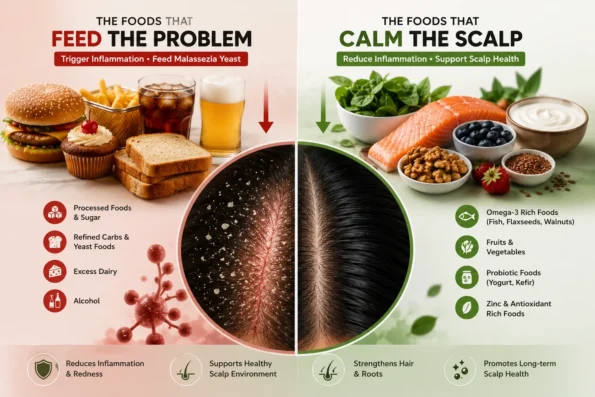
While there is no single overnight cure, treating seborrheic dermatitis with a targeted dietary approach is one of the most evidence-backed natural treatment methods available. Here is a simple 3-step protocol:
Step 1: Eliminate the triggers (Week 1–2)
Remove processed sugars, refined carbohydrates, yeast-containing foods (bread, beer, cheese), excess dairy, and alcohol from your diet. These foods feed Malassezia yeast and promote inflammation, the two core drivers of seborrheic dermatitis.
Step 2: Load anti-inflammatory foods (Week 2–4)
Increase omega-3 fatty acids (fatty fish, flaxseeds, walnuts), antioxidant-rich fruits and vegetables (berries, spinach, carrots, broccoli), and probiotic foods (yogurt, kefir). A 2019 study found higher fruit intake alone lowers the risk of seborrheic dermatitis by 25%. Learn more about nutrients that support hair and scalp health.
Step 3: Address nutrient deficiencies (Ongoing)
Supplement zinc, vitamin D, and vitamin E under medical guidance. These are consistently low in seborrheic dermatitis patients. Zinc is found in pulses, pumpkin seeds, and whole grains; vitamin D from fatty fish and sunlight; vitamin E from almonds and sunflower seeds. For a detailed breakdown, read our guide on hair foods and essential nutrients.
Confused about which foods are triggering your seborrheic dermatitis flare-ups?
A personalised scalp and diet assessment can help identify hidden triggers and improve long-term scalp health.
7-Day Indian Meal Plan: Best Diet for Seborrheic Dermatitis
This diet plan, designed with input from professional dietitians, incorporates nutrient-dense, anti-inflammatory foods tailored to Indian cuisine. It includes meal timings, portion sizes, and omega-3 supplements (e.g., cod liver oil) to support skin health. Always consult your dermatologist or dietitian before starting a new diet, especially if you have allergies or take medications.
| Day | Meal | Time | Menu |
|---|---|---|---|
|
Sunday |
Breakfast |
8:00–8:30 AM |
Brussels sprouts (1 cup) + Green tea (1 cup) |
|
|
Mid-Meal |
11:00–11:30 AM |
1 Orange + Tender coconut water (1/2 cup) |
|
|
Lunch |
2:00–2:30 PM |
2 Chapatis + Rajma curry (1 cup) + Roasted papad (1) |
|
|
Evening |
4:00–4:30 PM |
Vegetable soup (1/2 cup) |
|
|
Dinner |
8:00–8:30 PM |
2 Chapatis + Bottle gourd curry (1/2 cup) + Cod liver oil (1 capsule) or 2 white til laddoos |
|
Monday |
Breakfast |
8:00–8:30 AM |
Boiled vegetable salad (carrots, broccoli, spring onions, 1 cup) + Green tea (1 cup) |
|
|
Mid-Meal |
11:00–11:30 AM |
2 Chikoo (sapota) + Tender coconut water (1/2 cup) |
|
|
Lunch |
2:00–2:30 PM |
Parboiled rice (1 cup) + Lentil soup (1/2 cup) + Fish curry (1/2 cup, optional) |
|
|
Evening |
4:00–4:30 PM |
Sautéed bell peppers, spring onions, and tomatoes (1/2 cup) |
|
|
Dinner |
8:00–8:30 PM |
2 Chapatis + Ridge gourd curry (1/2 cup) + 2 white til laddoos |
|
Tuesday |
Breakfast |
8:00–8:30 AM |
Broccoli, spring onion, and mushroom soup (1 cup) + 3–4 raisins |
|
|
Mid-Meal |
11:00–11:30 AM |
Pomegranate seeds (1/2 cup) + Tender coconut water (1/2 cup) |
|
|
Lunch |
2:00–2:30 PM |
2 Chapatis + Chickpea curry (1/3 cup) + Bitter gourd curry (1/3 cup) |
|
|
Evening |
4:00–4:30 PM |
Tomato soup (1/2 cup) + 2 slices whole-grain toast |
|
|
Dinner |
8:00–8:30 PM |
2 Chapatis + Mixed vegetable curry (1/2 cup) + 2 white til laddoos |
|
Wednesday |
Breakfast |
8:00–8:30 AM |
Oatmeal with strawberries (1 cup) + Green tea (1 cup) |
|
|
Mid-Meal |
11:00–11:30 AM |
Grapes (1/2 cup) + Tender coconut water (1/2 cup) |
|
|
Lunch |
2:00–2:30 PM |
Vegetable pulao (1 cup) + Dum aloo (1/2 cup) + Roasted papad (1–2) |
|
|
Evening |
4:00–4:30 PM |
Chicken stew (1/2 cup, optional) |
|
|
Dinner |
8:00–8:30 PM |
2 Chapatis + Snake gourd curry (1/2 cup) + Cod liver oil (1 capsule) or 2 white til laddoos |
|
Thursday |
Breakfast |
8:00–8:30 AM |
Boiled corn and carrots (1 cup) + Green tea (1 cup) |
|
|
Mid-Meal |
11:00–11:30 AM |
1 Guava + Tender coconut water (1/2 cup) |
|
|
Lunch |
2:00–2:30 PM |
Parboiled rice (1 cup) + Fish curry (1/2 cup, optional) + Lentil soup (1/2 cup) |
|
|
Evening |
4:00–4:30 PM |
Sautéed bell peppers, spring onions, and tomatoes (1/2 cup) |
|
|
Dinner |
8:00–8:30 PM |
2 Chapatis + Baked carrots and beetroot (1/2 cup) + 2 white til laddoos |
|
Friday |
Breakfast |
8:00–8:30 AM |
Boiled vegetable salad (carrots, broccoli, spring onions, 1 cup) + Green tea (1 cup) |
|
|
Mid-Meal |
11:00–11:30 AM |
1 Kiwi + Tender coconut water (1/2 cup) |
|
|
Lunch |
2:00–2:30 PM |
2 Chapatis + Potato and drumstick curry (1/2 cup) |
|
|
Evening |
4:00–4:30 PM |
Vegetable soup (1/2 cup) |
|
|
Dinner |
8:00–8:30 PM |
2 Chapatis + Spinach curry (1/2 cup) + Cod liver oil (1 capsule) or 2 white til laddoos |
|
Saturday |
Breakfast |
8:00–8:30 AM |
8:00–8:30 AM
Broccoli, spring onion, and mushroom soup (1 cup) + 3–4 raisins |
|
|
Mid-Meal |
11:00–11:30 AM |
1 Apple + Tender coconut water (1/2 cup) |
|
|
Lunch |
2:00–2:30 PM |
Parboiled rice (1 cup) + Red saag (1/3 cup) + Lentil soup (1/2 cup) + Bottle gourd curry (1/2 cup) |
|
|
Evening |
4:00–4:30 PM |
Baked tomato and chicken (1/2 cup, optional) + Green tea (1 cup) |
|
|
Dinner |
8:00–8:30 PM |
2 Chapatis + Baked pumpkin (1/2 cup) + Cod liver oil (1 capsule) + 2 white til laddoos |
Save this seborrheic dermatitis diet chart as a PDF for easy reference or print it for your kitchen!
Still confused about which country is right for you?
Every patient’s hair loss is different. Our experts will help you understand the best technique, timeline, and expected cost for your case.
Can Seborrheic Dermatitis Be Cured With Diet?
This is the most common question we receive. Seborrheic dermatitis cannot always be permanently cured because it is a chronic condition influenced by genetics, hormonal fluctuations, and the naturally occurring Malassezia yeast. However, the distinction between ‘cure’ and ‘long-term remission’ is often not as important as it sounds in daily life.
Many patients achieve months, even years, without a single flare-up by combining the dietary changes in this guide with a consistent dermatologist-prescribed skincare routine. When recurrences do happen (typically triggered by stress, cold weather, or dietary lapses), they are milder and resolve faster.
Diet specifically helps by:
- Reducing systemic inflammation that amplifies Malassezia’s irritating effects
- Restoring zinc and vitamin D levels, which are consistently deficient in seborrheic dermatitis patients (2024 study)
- Improving gut microbiome diversity, which is linked to skin microbiome health — explore the connection between gut health and hair loss
- Removing dietary yeast and sugar that directly feed Malassezia overgrowth
Realistic expectation
Most patients following a structured anti-inflammatory diet alongside medical treatment report a 60-80% reduction in flare-up frequency within 4-6 weeks. Some achieve complete remission. Results vary by individual.
Why Seborrheic Dermatitis Keeps Coming Back
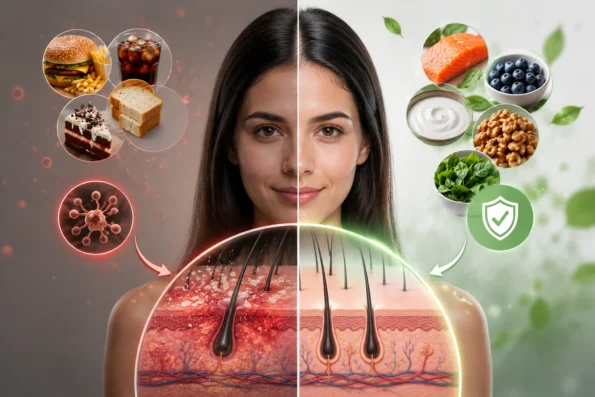
Seborrheic dermatitis can be seasonal and may be alleviated with antifungal creams and proper scalp care. However, it can also become a chronic issue. The chronic form of this disorder involves ‘Malassezia,’ a yeast that plays a significant role in the condition.
This yeast irritates the skin, causing redness and flakiness, known as dandruff, when it occurs on the scalp. The condition can also affect other body areas where oil glands and hair follicles are present. Chronic seborrheic dermatitis requires long-term care and should be managed under the supervision of a dermatologist.
Foods to Eat for Seborrheic Dermatitis
Incorporate these anti-inflammatory, nutrient-rich foods to support skin health and reduce flare-ups as part of your seborrheic dermatitis treatment plan, backed by research:
- Fruits and Vegetables: High in antioxidants (beta-carotene, lycopene, vitamins A, C, E). Examples: carrots, spinach, pumpkin, strawberries, oranges, broccoli, red bell peppers. A 2019 study linked higher fruit intake to a 25% lower risk of seborrheic dermatitis.
- Omega-3 Fatty Acids: Found in fatty fish (salmon, mackerel), flaxseeds, walnuts, and cod liver oil. A 2022 meta-analysis showed omega-3s reduce inflammation markers, potentially easing symptoms. See our full guide on omega-3s and hair health.
- Probiotics: Yogurt, kefir, sauerkraut, or kimchi support gut and skin health. A 2024 study suggested topical probiotics improve seborrheic dermatitis by enhancing skin microbiome diversity.
- Whole Grains and Pulses: Brown rice, chapatis, chickpeas, kidney beans, and lentils provide fiber, zinc, and B vitamins (B1, B2, B6, niacin, biotin) for skin repair.
- Healthy Oils and Nuts: Olive oil and flaxseed oil contain squalene and monounsaturated fats. Nuts (e.g., almonds, walnuts) offer vitamin E and zinc but check for allergies first.
- Prebiotics: Onions, garlic, oats, and asparagus feed beneficial gut bacteria, supporting overall health.
- Selenium Sources: Brazil nuts, eggs, and tuna act as antioxidants, potentially benefiting skin conditions.
Aim for a rainbow-colored plate with diverse fruits, vegetables, and whole grains to maximise nutrient intake.
Foods to Avoid for Seborrheic Dermatitis
Certain foods may trigger inflammation or worsen seborrheic dermatitis symptoms. Limit or avoid these, and keep a food diary to identify personal triggers:
- Western Diet Foods: Processed foods high in sugar and trans fats (e.g., fast food, packaged snacks) are linked to worse symptoms in females, per a 2019 study.
- Added Sugars: Cakes, cookies, soft drinks, and sauces (e.g., ketchup) increase inflammation, per CDC guidelines. Check labels for sucrose, honey, or syrups.
- Yeast-Containing Foods: Cheese, beer, wine, and baked goods (e.g., bread, biscuits) may exacerbate symptoms, per VA recommendations for a yeast elimination diet.
- Allergenic Foods: Eggs, milk, peanuts, wheat, soy, and shellfish can trigger inflammation in sensitive individuals. A 2014 review showed avoiding allergens improved eczema symptoms.
- Dairy and Alcohol: Dairy may increase oil production, and excessive alcohol weakens immunity, both potential triggers.
Consult a dietitian before eliminating food groups to avoid nutritional deficiencies.
Do’s and Don’ts for Seborrheic Dermatitis Diet
Follow these guidelines to maximize the benefits of your seborrheic dermatitis diet plan:
Do’s
- Gradually increase high-fiber carbs (e.g., whole grains, vegetables).
- Emphasize lean proteins (e.g., chicken, fish, pulses).
- Include omega-3s and monounsaturated fats (e.g., olive oil, nuts).
- Eat a variety of fruits and vegetables daily.
- Drink at least 2 liters of water to stay hydrated.
- Exercise regularly (e.g., yoga, walking) to manage stress, a common trigger.
Don’ts
- Avoid skipping meals or eating heavy meals at once.
- Limit processed juices, soft drinks, and deep-fried foods.
- Don’t start supplements (e.g., omega-3s) without medical advice, as they’re not FDA-regulated.
Lifestyle Tips to Manage Seborrheic Dermatitis
Diet alone isn’t enough; combine it with these lifestyle changes for better seborrheic dermatitis treatment results:
- Skincare Routine: Use mild, soap-free cleansers or medicated shampoos with ketoconazole, zinc pyrithione, or salicylic acid. Avoid hair styling products during flare-ups.
- Clothing Choices: Opt for soft fabrics like cotton or silk to prevent irritation from harsh materials like wool.
- Stress Management: Practise mindfulness, meditation, or yoga, as stress triggers flare-ups. Chronic stress is also a direct reason for hair loss; address it proactively.
- Sleep and Mental Health: Address depression or anxiety, which increase risk, through professional support if needed.
- Track Triggers: Keep a diary to note flare-ups linked to diet, weather, or products. If you are also experiencing itchy scalp and hair loss, tracking both together can help identify common triggers.
Along with natural remedies for seborrheic dermatitis like aloe vera, apple cider vinegar, and tea tree oil, an anti-inflammatory diet can enhance healing.
When to See a Dermatologist
If symptoms persist or worsen despite dietary and lifestyle changes, consult a board-certified dermatologist for a personalised treatment plan for seborrheic dermatitis. They can:
- Diagnose seborrheic dermatitis and rule out fungal or bacterial infections.
- Prescribe treatments like corticosteroids, antifungal creams, or light therapy.
Recommend tests for nutrient deficiencies or food allergies.
Professional Help and Treatment
If your condition becomes unmanageable, seek professional advice. HairFree HairGrow Clinic↗️ offers effective solutions for hair fall and skin problems.
Visit HairFree HairGrow Clinic for professional advice and treatment:
- HairFree HairGrow is the best hair transplant↗️ clinic in India, with 10+ branches in Surat, Pune (Pimple Gurav), Pune (Kharadi), Hyderabad, Ahmedabad, Kolkata, Indore, Bhopal, Delhi (Gurugram), Nagpur, Mumbai, Vapi (Silvassa), Bangladesh.
- Visit any branch for your hair problem or call us at +91-7272832222.
Our mission is to ensure your hair grows long and strong.
Final Thoughts: Diet Is a Piece of the Puzzle
There is no single “seborrheic dermatitis cure” through diet. But smart nutrition choices can reduce flare-ups. They can also strengthen your skin barrier and improve your overall quality of life.
Following the best seborrheic dermatitis diet plan helps lower inflammation. It supports skin repair, gut health, and immune balance.
For best results, pair your diet with a dermatologist-approved skincare routine and a seborrheic dermatitis treatment plan prescribed by a professional.
Frequently Asked Questions
-
1. What is the best treatment for seborrheic dermatitis?
The most effective treatment for seborrheic dermatitis combines medicated shampoos (ketoconazole, zinc pyrithione, or salicylic acid) with an anti-inflammatory diet. From a dietary standpoint, the key is reducing processed sugars and yeast-containing foods while increasing omega-3 fatty acids, zinc-rich foods, and antioxidant-rich fruits and vegetables.
-
2. How to treat seborrheic dermatitis at home naturally?
You can treat seborrheic dermatitis naturally at home through dietary changes (the 7-day Indian meal plan above is a great starting point), gentle soap-free cleansing, topical natural remedies like diluted tea tree oil or aloe vera gel, stress management, and ensuring adequate zinc and vitamin D levels.
-
3. Can seborrheic dermatitis be cured permanently?
Seborrheic dermatitis cannot always be permanently cured as it is a chronic condition. However, with the right diet, skincare routine, and dermatologist-prescribed treatments, most people achieve long-term remission with minimal flare-ups. The cure for seborrheic dermatitis lies in consistent long-term management rather than a one-time fix.
-
4. How I cured my seborrheic dermatitis with diet?
Many people report significant improvement, and in some cases complete remission, by eliminating processed sugars, dairy, and yeast-containing foods, while increasing omega-3 fatty acids, antioxidant-rich fruits and vegetables, and probiotic foods.
-
5. What foods should I avoid with seborrheic dermatitis?
The key foods to avoid are processed foods high in sugar and trans fats, yeast-containing foods (bread, beer, wine, aged cheese), excess dairy, alcohol, and common allergens such as eggs, peanuts, wheat, and soy if you are personally sensitive.
-
6. Which vitamins and minerals help treat seborrheic dermatitis?
A 2024 clinical study found that people with seborrheic dermatitis consistently have lower levels of zinc, vitamin D, and vitamin E. Zinc is found in pumpkin seeds, lentils, and whole grains. Vitamin D comes from fatty fish and sunlight.
-
7. Is seborrheic dermatitis related to gut health?
Yes, emerging research links gut microbiome health to skin conditions including seborrheic dermatitis. A diverse gut microbiome supported by probiotic and prebiotic foods reduces the systemic inflammation that amplifies skin reactions to Malassezia yeast.