
Quick Answer: A scalp fungal infection (tinea capitis) is caused by dermatophyte fungi invading the hair follicles, leading to itching, scaly patches, and hair breakage.
Fungal infections of the scalp have been recognized as one of the most shocking causes of hair thinning. The infections result in the destruction of the scalp, the weakening of the hair shaft, and ultimately the loss of hair in the form of patches or overall shedding.
Many people tend to think that hormonal or nutritional issues are the root cause of their hair loss, and thus, they end up delaying the proper treatment. In this guide, you will learn about fungal infection scalp hair loss, along with fast and safe recovery solutions.
Not sure if it’s fungal, dandruff, or something else?
What Are the Reasons for Fungal Infections on the Scalp?
A fungal infection of the scalp, which is medically termed tinea capitis, happens when certain fungi (dermatophytes) invade the scalp and hair follicles. These fungi prefer to live in warm and humid places. Thus, they will find it very easy to thrive in conditions where people sweat a lot, have poor scalp hygiene, or share personal items such as combs or hats.
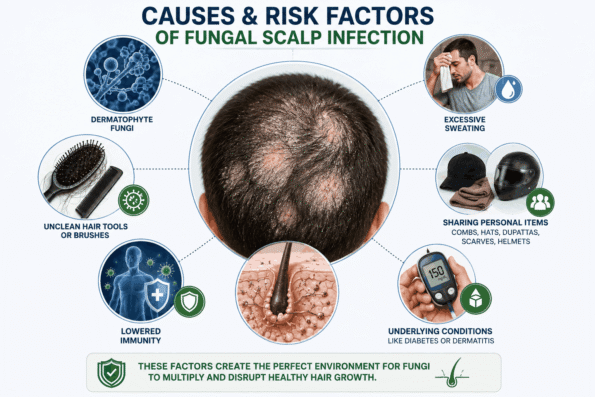
Causes and Risk Factors
- Dermatophyte fungi (Trichophyton, Microsporum)
- Excessive sweating
- Unclean hair tools or brushes
- Sharing pillows, hats, dupattas, scarves, helmets
- Lowered immunity
- Underlying conditions like diabetes or dermatitis
Such factors create an environment where fungi can multiply and disrupt healthy hair growth in follicles. This leads to itching and inflammation, which ultimately result in hair loss from the scalp.
“One of the most common mistakes we see at the clinic is patients treating a fungal scalp infection with the same anti-dandruff shampoo they’ve used for years. If the itching and flaking don’t improve within a couple of weeks, or if you notice hair breaking off in small patches, it’s worth getting it examined rather than continuing to self-treat, the earlier a fungal infection is confirmed, the less risk there is to the follicle.”
Dr. Nipun Kesarkar, M.B.B.S., F.C.P.S. (Skin & V.D.), Dermatologist & Hair Transplant Surgeon
What Is Tinea Capitis or Scalp Ringworm?
“Fungal infection on the scalp,” “tinea capitis,” and “scalp ringworm” all refer to the same underlying condition. Tinea capitis is the medical term for a dermatophyte fungal infection of the scalp and hair, and it is commonly called scalp ringworm because of the ring-shaped patches it produces; no worm is actually involved.
Knowing these terms helps when researching the condition or discussing it with a doctor, since medical literature and search results often use them interchangeably.
Fungal vs. Bacterial vs. Viral Scalp Infection: What's the Difference?
Not every scalp infection is fungal. Scalp infections generally fall into three categories, and treatment differs for each, using the wrong treatment (for example, an antibiotic on a fungal infection) can delay recovery and worsen symptoms.
| Type | Common Cause | How It Looks | Treatment |
|---|---|---|---|
|
Fungal |
Dermatophytes (tinea capitis), Malassezia yeast
|
Round scaly patches, black-dot hair breakage, itching
|
Oral antifungals + antifungal shampoo
|
|
Bacterial
|
Staphylococcus aureus (folliculitis, impetigo)
|
Pus-filled bumps, honey-coloured crusts, tenderness
|
Topical or oral antibiotics
|
|
Viral |
Herpes zoster, HPV-related
|
Blisters, pain along nerve lines, warts
|
Antiviral medication
|
A dermatologist typically confirms the type through a physical exam and, when needed, lab testing (see the diagnosis section below) before prescribing treatment — self-treating based on appearance alone often leads to the wrong medication being used.
What Are the Symptoms of a Fungal Scalp Infection?
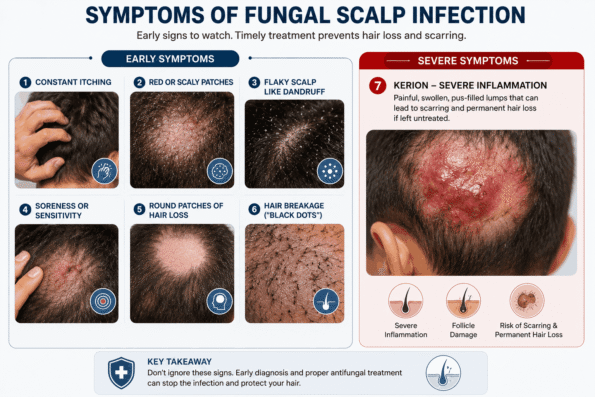
Early Signs You Should Not Ignore
If you catch the symptoms early, then you will prevent permanent damage to the hair follicles.
- Constant itching
- Red or scaly patches on the scalp
- Flaky scalp similar to dandruff
- Soreness or sensitivity
- Round loss of hair patches
- Hair fragile at the surface
- Fluid-filled lumps (in severe cases)
Severe Symptoms
In some cases, patients may develop a kerion, a very inflamed and painful area. If untreated, it could lead to scarring and long-term loss of hair.
How Does a Fungal Infection Cause Hair Loss?
The Mechanism Behind Shedding
Fungi get into the hair shaft and cuticle, thus inhibiting the building. This leads to:
Hair breakage at the root level Inflammation around follicles Blocked follicle openings Disruption of the natural growth cycle The thing is, as the infection gets even worse, the hair follicles merely rest for a long time before the next cycle starts. Thus, you will notice thinning hair or bald patches.
Risk of Permanent Hair Loss
In case the inflammation is very serious, scarring may happen. It leads to the total loss of hair in that region. Therefore, treatment would have to be done as soon as possible.
Can Adults Get Scalp Fungal Infection (Scalp Ringworm)?
Yes. Tinea capitis is most common in school-age children, but adults can develop it too, especially with close contact with an infected person or pet, weakened immunity, or shared personal items like combs and hats. Adult cases are sometimes missed because patchy hair loss in adults is more often assumed to be alopecia areata, pattern hair loss, or another common condition.
If you notice new patchy hair loss along with scaling, itching, or broken hairs, it’s worth getting it checked rather than assuming it’s ordinary hair loss. The comparison table below can help you spot the difference.
Fungal Infection vs. Dandruff vs. Alopecia Areata vs. Psoriasis vs. Folliculitis: How to Tell the Difference
Several scalp conditions can look alike at first glance, which is why self-diagnosis based on appearance alone is risky. Steroid creams, a common treatment for alopecia areata and psoriasis, can actually worsen a fungal infection, so getting the distinction right matters.
| Condition | Scalp Appearance | Itching | Hair Loss Pattern | Contagious | Confirmed By |
|---|---|---|---|---|---|
|
Fungal (Tinea Capitis)
|
Scaly, flaky, red patches
|
Common
|
Hairs broken at scalp level (“black dots”), patchy
|
Yes
|
KOH test / fungal culture
|
|
Dandruff / Seborrheic Dermatitis
|
Diffuse flaking, mild redness
|
Common |
Hair loss not usually a main feature
|
No |
Clinical exam
|
|
Alopecia Areata
|
Smooth, normal-looking skin
|
Usually absent
|
Hair falls out at the root, smooth round patches
|
No |
Clinical exam, sometimes biopsy
|
|
Scalp Psoriasis
|
Thick, well-defined scaly plaques
|
Variable |
Shedding may occur, usually regrows
|
No
|
Clinical exam, sometimes biopsy
|
|
Bacterial Folliculitis
|
Inflamed bumps or pustules around follicles
|
Sometimes tender rather than itchy
|
Localized shedding possible
|
Can spread with poor hygiene
|
Clinical exam, culture if needed
|
These conditions can overlap in appearance, which is why persistent symptoms or unexplained patchy hair loss should be evaluated by a dermatologist rather than self-diagnosed or self-treated.
How Is Scalp Fungal Infection Diagnosed?
A dermatologist typically confirms a fungal scalp infection using one or more of the following methods before starting treatment:
KOH (Potassium Hydroxide) Test
A scalp scraping or plucked hair sample is examined under a microscope after treatment with potassium hydroxide, which dissolves skin cells and makes fungal elements visible.
Fungal Culture
A sample is grown in a lab over 1–3 weeks to identify the exact fungus responsible, which helps guide the choice of antifungal medication.
Trichoscopy
Trichoscopy is a non-invasive examination of the scalp and hair using magnification. Specific hair-shaft patterns, commonly described as “comma hairs” and “corkscrew hairs,” are strong indicators of tinea capitis and can help a dermatologist start treatment even before culture results are ready.
Wood's Lamp Examination
Under ultraviolet light, some fungal species (like Microsporum) cause the hair shaft to glow blue-green, offering a quick preliminary clue during the clinical exam. However, not all fungi that cause tinea capitis fluoresce, so a normal Wood’s lamp result does not rule out infection.
Fungal involvement in scalp conditions is often underdiagnosed. A 2024 case series published in the Indian Journal of Dermatology found Malassezia yeast in 96% of nonscarring scalp folliculitis cases on cytological examination. This suggests that some scalp irritation may have a fungal component and could respond better to antifungal treatment than antibiotics.
Stop guessing. Know the real cause.
Does Hair Grow Back After a Fungal Scalp Infection?
In most cases, yes. When tinea capitis is treated appropriately and the follicles haven’t been permanently damaged, hair regrowth is the typical outcome once the infection clears. This generally takes several weeks of oral antifungal treatment, with visible regrowth following over the next 2–3 months.
Regrowth is not guaranteed to be immediate, and it depends on how severe the infection was and whether inflammation reached the follicle itself. The most important step is treating the active infection first, rather than starting hair-growth products while the fungal infection is still present.
How to Treat Fungal Infection Scalp Hair Loss Effectively?
In the fight against fungal-related hair loss, the right treatment consists of a combination of antifungal therapy, proper scalp hygiene, and hair-strengthening support.
1. Antifungal Medications
The most common treatment is through oral and topical medications:
- Terbinafine
- Itraconazole
- Ketoconazole shampoo
- Ciclopirox shampoo
- Griseofulvin – Often used for certain Microsporum infections and may be prescribed for several weeks, depending on the severity and response to treatment.
- Fluconazole – An alternative oral antifungal option that may be used when other treatments are not suitable or well tolerated.
These treatments may help control the fungal infection, reduce inflammation, and prevent it from spreading further. The right medication and treatment duration should be determined by a dermatologist.
2. Medicated Shampoos
A medicated shampoo that is safe for the scalp should be used 2-3 times a week to clear the fungal buildup:
Ketoconazole 2% Selenium sulfide Zinc pyrithione Coal tar (for flaking and scaling) These components not only lessen the activity of the fungi but also help unclog the pores.
Note: for tinea capitis specifically, medicated shampoo works best as a supporting treatment alongside oral antifungal medication, not as a stand-alone cure, shampoo alone typically cannot reach the fungus inside the hair shaft.
3. Scalp Hygiene Protocol
Infection control measures include:
Wash pillow covers and towels often Do not share brushes or hats Keep scalp dry to discourage fungal growth Stay away from heavy oils that trap moisture
4. Strengthening Hair During Recovery
After managing the infection, the focus will be on growing the hair back:
- Peptide-based serums
- Caffeine and rosemary extracts
- Biotin and keratin-rich products
- Scalp massages to improve circulation
These are ways of providing nourishment to the affected hair follicles and getting them back to their thickness.
Need the right treatment for your scalp?
Can Fungal Scalp Infections Be Prevented?
Prevention Tips
Keep the scalp area clean and dry. Do not share hair accessories with others. Wash your comb regularly Hygiene will help in the management of sweating. Use gentle shampoos to fortify your scalp’s barrier.
Lifestyle Factors
Even diet has its influences. Low immunity heightens the chances of fungi flourishing. Add foods that are rich in:
Vitamin C Zinc Omega-3 fatty acids Probiotics These are the ones that are in favor of overall scalp health.
When Should You See a Doctor?
Consult a doctor if:
Bald areas increase in size You feel continuous itching There is pus or swelling Hair is falling out in clumps You think it might be a fungal infection A timely diagnosis helps in preventing long-term damage to the hair follicles.
Final Thoughts
A fungal infection is not merely a beauty matter. It deteriorates the follicles. If the treatment is postponed, the result may be scars, permanent thinning, and widespread hair loss. Therefore, the sooner the treatment is, the better the complete recovery is and the less irreversible damage.
If you are recovering from the antifungal treatment-induced hair loss, your hair follicles require targeted nutrition to regain their strength.
HairFree HairGrow comes with the advanced scalp-supportive ingredients, which increase hair growth, recovery, and promote stronger, thicker hair.
9 FAQs
-
1. Can a fungal scalp infection cause permanent hair loss?
Severe inflammation, without treatment, can lead to irreversible damage to the follicles and thus result in scarring alopecia. Therefore, you need to react soon and get your treatment done.
-
2. What is the duration of hair loss recovery caused by fungal infection?
If treated with adequate antifungal therapy, most patients take 4–8 weeks for recovery. Hair regrowth may require an additional 2–3 months, depending on the health of the follicles.
-
3. Can we use oils in case of scalp fungal infection?
Heavy oils can trap moisture and thus lead to a rise in the occurrence of fungi. So, it is recommended that no oils be applied until the fungal infection has been fully cleared.
-
4. Is it possible for the fungal infection to be transmitted?
Yes, it can be transmitted by direct contact as well as through shared items, like combs, scarves, helmets, or pillowcases etc.
-
5. Which shampoo is the best for fungal scalp infections?
Shampoos containing ketoconazole, selenium sulfide, or ciclopirox are the most potent in suppressing the fungus and alleviating the symptoms.
-
6. What's the difference between a fungal and a bacterial scalp infection?
A fungal infection usually causes scaly, itchy, ring-shaped patches, while a bacterial infection tends to cause pus-filled bumps with honey-coloured crusting and more tenderness. Since the two require different medications, a dermatologist's diagnosis is recommended rather than guessing based on appearance.
-
7. How is a scalp fungal infection diagnosed?
Diagnosis typically involves a KOH test (microscopic examination of a scalp sample), a fungal culture to identify the exact species, trichoscopy, and sometimes a Wood's lamp exam. These tests allow your doctor to confirm the infection type and prescribe the right antifungal treatment.
-
8. Is scalp ringworm the same as tinea capitis?
Yes. Scalp ringworm is simply the common name for tinea capitis, a dermatophyte fungal infection of the scalp and hair. Despite the name, no worm is involved — the name comes from the ring-shaped patches the infection often creates.
-
9. Can adults get a fungal scalp infection?
Yes. While tinea capitis is more common in children, adults can develop it too, especially with close contact with an infected person or pet, or through shared personal items. New patchy hair loss in adults is often assumed to be alopecia areata or pattern hair loss, so a dermatologist's evaluation is recommended to confirm the actual cause.