
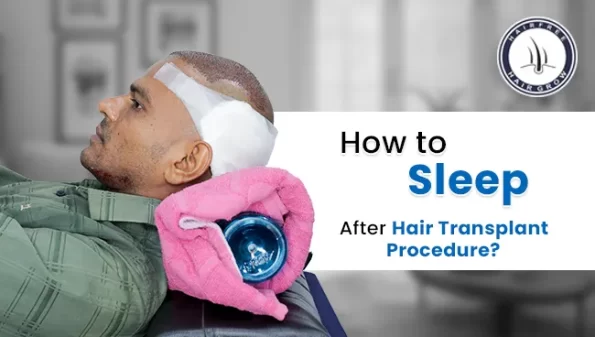
Sleep after hair transplant surgery is uncomfortable and if you do it wrong, you risk damaging your grafts.
Most patients lie down that first night and immediately realize: every position feels wrong. Pressure on the scalp, fear of rolling over, swelling in the forehead it can feel impossible to get real rest.
The good news? With the right position, the right pillow, and a few simple habits, you can sleep comfortably without putting your results at risk.
Why Sleep Matters So Much After a Hair Transplant
Sleep is not just rest it is when your body does most of its repair work. During deep sleep, your body releases growth hormones that trigger tissue regeneration and support graft survival.
Still deciding which technique is right for you? Read our blog: FUE vs DHI Hair Transplant — Which is Really Better?
Poor sleep after a hair transplant can:
- Increase swelling and inflammation around the scalp
- Reduce blood flow to newly transplanted follicles
- Raise the risk of accidental graft displacement if you toss and turn
This is why understanding how to sleep after hair transplant correctly is just as important as following your post-op medication schedule. Many cases of a failed hair transplant can be traced back to poor post-operative care including improper sleeping habits in the first critical week. And if things do go wrong, repair is always more expensive.
The Safest Position: How to Sleep After a Hair Transplant
The golden rule: sleep on your back, never on your stomach or directly on the transplanted area.
Sleeping face-down creates direct pressure on grafts that are still anchoring into the scalp during the first 7–10 days. Even side sleeping can be risky if your temple or crown was transplanted. The recovery timeline also depends on your technique see: FUE vs FUT vs DHI Hair Transplant — Which Method is Right for You?
Back Sleeping with Head Elevation (Best Method)
Elevate your head at a 30–45 degree angle using a wedge pillow or two to three stacked pillows. This does two things:
- Reduces post-operative swelling (which tends to travel down to the forehead and eyes)
- Keeps the scalp in a position that promotes blood circulation without pressure
Do not sleep completely flat. Lying fully horizontal in the first few days leads to more swelling by morning.
Side Sleeping — Is It Allowed?
Side sleeping after a hair transplant is generally not recommended for the first 7–10 days, especially if hair was transplanted near the temples or sides of the scalp. After that, you can gradually resume it based on your surgeon’s advice.
Still unsure which sleeping position is safest for your specific procedure?
Choosing the Right Hair Transplant Pillow
Your pillow choice directly affects both comfort and graft safety. Here is what to look for:
Best Neck Pillow After Hair Transplant
A U-shaped neck pillow (travel pillow style) is one of the best options for sleeping after hair transplant in the first week. It cradles your neck and prevents your head from rolling to the sides while you sleep, reducing the risk of accidental pressure on the transplanted scalp.
Many surgeons at our clinic specifically recommend a neck pillow for hair transplant patients because it naturally keeps the head in a back-facing position all night.
Pillow for Hair Transplant — What to Avoid
- Firm, high pillows that push your chin to your chest and strain the neck
- Feather pillows that can shift and cause uneven pressure
- No pillow at all lying flat increases swelling
Best Overall Pillow Choice
A memory foam wedge pillow or an adjustable wedge is ideal as a pillow for hair transplant recovery. It maintains a consistent angle throughout the night and supports the back and neck without requiring you to restack multiple pillows.
Protect Your Pillowcase
In the first few days, minor oozing or spotting from the scalp is normal. Cover your pillowcase with a clean dark-colored or disposable cover to keep things hygienic and avoid staining.
How Many Days After Hair Transplant Can I Sleep Normally?
This is one of the most common questions patients ask and the answer depends on what “normally” means for you.
Days | What to Do |
Days 1–3 | Most critical phase. Sleep only on your back, head elevated at 30–45°. Avoid any movement that presses on grafts. |
Days 4–7 | Grafts begin to anchor more securely. Continue back sleeping with elevation, but you may slightly reduce the incline. |
Days 8–14 | Most grafts are anchored. You may begin experimenting with side sleeping cautiously. Avoid stomach sleeping. |
After 2–3 weeks | Most patients can return to their normal sleeping position. Always confirm with your surgeon based on your healing progress. |
For most patients around 10 to 14 days. But sleeping after hair transplant with extra care for the full first two weeks gives you the best chance at 100% graft survival. See our before and after results to understand what proper post-op care can achieve.
Want a complete personalized recovery plan?
Night-by-Night Tips for the First Week
Night 1 (Night of Surgery)
- Sleep semi-reclined if possible (recliner chair works great)
- Do not take any sleep aids unless prescribed by your surgeon
- Keep hands away from the scalp wear a loose cotton beanie if needed
Nights 2–4
- Use your wedge pillow or stacked pillows to maintain elevation
- Sleep in a cool room heat increases swelling and itching
- If itching occurs, do not scratch; gently fan the area or ask your doctor about antihistamines
Nights 5–7
- You can reduce the elevation angle slightly for more comfort
- If you tend to move a lot in sleep, place rolled towels or blankets on either side to prevent rolling
- Continue protecting your pillowcase
Common Mistakes to Avoid While Sleeping After Hair Transplant
Even well-intentioned patients make these errors. Poor recovery habits are one of the leading causes of a failed hair transplant and repair procedures can be significantly more expensive. Read: Hair Transplant Repair Cost vs First Transplant.
- Sleeping without elevation: The single most common mistake in the first 72 hours. Always elevate.
- Using too many soft pillows: They compress and shift, giving inconsistent support.
- Touching the scalp to “check” grafts: Your hands carry bacteria and the pressure, however light, is risky.
- Sleeping with a tight cap: Anything that puts downward pressure on the recipient area should be avoided unless your surgeon specifically recommends it.
- Returning to stomach sleeping too early: Even after week 1, stomach sleeping should be avoided until your surgeon clears you.
Maintaining a Consistent Sleep Routine During Recovery
Your sleep quality affects your overall healing. Here is how to protect it:
- Go to bed and wake up at the same time every day, even on weekends
- Avoid screens for 30–60 minutes before sleep (blue light disrupts melatonin production)
- Keep your bedroom cool and dark for deeper sleep
- Avoid alcohol it disrupts sleep cycles and can increase bleeding risk post-surgery
- Stay hydrated during the day, but reduce fluids an hour before bed to avoid disrupted sleep
According to the American Academy of Sleep Medicine, adults need 7–9 hours of quality sleep per night for optimal tissue repair and immune function especially relevant during post-surgical recovery.
Pairing good sleep with the right post-op treatments further accelerates recovery. Many patients combine their transplant with PRP therapy or GFC therapy to enhance graft survival. Read our detailed comparison: GFC vs PRP — Which is Better for Hair Loss?
Conclusion
Sleep after hair transplant is not just about comfort it directly impacts your graft survival rate and overall results. The first two weeks are the most critical, and small mistakes like sleeping flat or on your stomach can undo weeks of recovery.
The expert team at Hairfree Hairgrow Clinic is here to guide you. With 18+ years of experience in hair restoration and a strong presence across Ahmedabad, Pune, Mumbai, Hyderabad, Indore, Bhopal, Kolkata, Vapi, and Gurugram, we provide personalized care tailored to your needs.
Ready to take the next step? Book your consultation with our hair transplant experts today and get a complete pre- and post-operative care plan designed for your goals.
FAQs: Sleep After Hair Transplant
-
Can I sleep on my side after a hair transplant?
Not in the first 7–10 days, especially if hair was transplanted near the temples or sides. The recovery may vary by technique. After that, you may resume side sleeping gradually based on your surgeon's guidance.
-
What is the best neck pillow after hair transplant?
A U-shaped travel neck pillow or a memory foam wedge pillow works best. The neck pillow prevents head movement during sleep, and the wedge maintains the ideal elevation angle throughout the night.
-
How long do I need to elevate my head after a hair transplant?
Most surgeons recommend keeping your head elevated at 30–45 degrees for at least the first 5–7 days after the procedure. Gentle elevation after that is still helpful but not strictly necessary.
-
What if I accidentally scratch the transplanted area in my sleep?
Do not panic. Check for dislodged grafts (visible small plugs). If concerned, contact your clinic immediately. To prevent this, wear a loose cotton cap or soft headband while sleeping.
-
Can I take sleeping pills after a hair transplant?
Only take sleep aids that your surgeon has explicitly prescribed or approved. Many over-the-counter sleep medications can thin the blood or interfere with recovery medications.
-
When can I sleep normally after a hair transplant?
Most patients can return to their regular sleeping position after 10 to 14 days. Not sure what medical terms your surgeon is using? Our Complete Guide to Hair Transplant Terms can help you communicate better during recovery.

Written By
Dr. Pankaj Khunt
MD – Ukraine
Dr. Pankaj Khunt is a highly respected hair transplant surgeon with over 5 years of experience, specializing in post-operative care. He is particularly known for his expertise in advising patients on how to sleep after a hair transplant, a critical aspect of the recovery process. Dr Khunt’s dedication to patient care extends beyond the operating room, ensuring his patients have a smooth and comfortable recovery journey.
Disclaimer
We’ve made all possible efforts to ensure that the information provided here is accurate, up-to-date and complete, however, it should not be treated as a substitute for professional medical advice, diagnosis or treatment. See Detailed Disclaimers Here.
