
Quick Answer:
What is a protein treatment for hair growth? A protein treatment is a conditioning procedure that infuses hydrolyzed proteins, like keratin, collagen, or wheat protein, into the hair shaft to repair damage, reduce breakage, and improve elasticity. Dermatologists recommend it once every 4–6 weeks for chemically treated or heat-damaged hair.
Strong, healthy hair doesn’t happen by accident; it needs the right nutrition from the inside and the right care from the outside. One of the most overlooked parts of a hair care routine is protein. Most people focus on oils, serums, and shampoos, but forget that hair itself is made of protein. When that protein breaks down, from heat, colour, chemicals, or even hard water, the damage shows up as breakage, frizz, dullness, and thinning.
Protein treatment for hair growth are designed to fix exactly this. Whether you want to do it at home or in a salon, this guide covers everything you need to know, including when a protein treatment is enough and when it isn’t.
What is a Protein Treatment for Hair?
A protein treatment is a deep conditioning treatment infused with proteins such as keratin, collagen, silk, and wheat proteins. These proteins help mend and strengthen hair, making it more resistant to damage. Since hair is primarily made of keratin, regular protein treatments can rebuild weak and damaged hair strands, reducing breakage and supporting healthier growth over time.
How Protein Treatment Works
Protein treatments fill the gaps that form in the hair cuticle due to heat styling, chemical treatments, and environmental exposure. This process strengthens the hair structure, reduces breakage and split ends, and restores elasticity, so hair bends and stretches without snapping when brushed or styled. The result is visibly fuller, shinier, and more manageable hair.
Who Should Get Protein Treatment?
Who Should Get Protein Treatment?
| Hair Type | Recommended |
|---|---|
|
Dry Hair
|
✅
|
|
Bleached Hair
|
✅
|
|
Curly Hair
|
✅
|
|
Healthy Hair
|
Occasionally
|
|
Oily Hair
|
Only if damaged
|
Understanding the causes of hair fall can help you identify whether your hair damage is surface-level, where a protein treatment for hair growth works well, or rooted in something deeper that needs a different approach. According to published research on keratin structure, the hair shaft is composed of approximately 65–95% keratin protein, which explains why protein-based treatments can effectively restore structural integrity to damaged strands.
Benefits of Protein Treatment for Hair Growth
There are several real advantages to including protein treatments in your hair care routine:
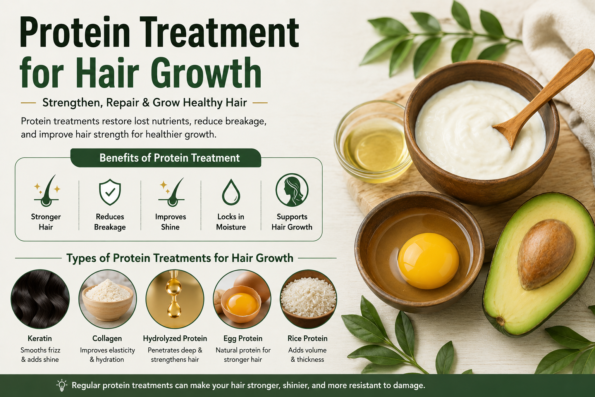
Weak or brittle hair becomes noticeably stronger, and regular use helps reduce breakage over time. For people dealing with thinning, it can give hair more density and a fuller appearance. The treatment also creates a protective layer that reduces the damage from frequent styling, colouring, or heat tools. It helps hair retain moisture, which keeps frizz under control. And because it seals the hair cuticle, split ends are reduced and overall shine improves.
Types of Protein Treatments for Hair Growth
There are several types of protein treatments, each suited to different hair concerns.
Keratin Treatments
Keratin treatments are preferred for curly, frizzy hair. They smooth out the hair shaft, reduce frizz, and add shine that can last three to six months with proper care.
Collagen Protein Treatments
Collagen protein treatments improve elasticity and hydration, ideal for dry and damaged hair. They help restore the hair’s original texture and strength.
Hydrolyzed Protein Treatments
Hydrolyzed protein treatments use smaller protein molecules that can penetrate deeper into the hair shaft, strengthening from within. They work well for thin or weak hair that needs rebuilding.
Egg Protein Treatments (Natural Treatment)
For a completely natural option, egg protein treatments are effective and easy to make at home. Eggs are rich in natural proteins and biotin, both of which support stronger, shinier hair.
Rice Protein Treatments
Rice protein adds thickness and volume, which is why it’s commonly used in professional hair protein treatment products.
Unsure which hair treatment is right for you? We’re here to help.
Best Protein Treatment Products
| Type | Treatment | Best For |
|---|---|---|
|
Salon
|
Schwarzkopf BC Repair Rescue
|
Heat and chemical damage
|
|
Salon |
L’Oréal Professionnel Absolut Repair
|
Severely damaged or over-processed hair
|
|
Salon |
Olaplex No.3 Hair Perfector |
Bond repair between salon visits
|
|
At-Home
|
Mamaearth Onion Hair Mask with Protein
|
ConteHairfall-prone hair, India-available
nt |
|
At-Home
|
Streax Vitariche Gloss Hair Serum
|
Daily maintenance, frizz control
|
|
At-Home
|
WOW Skin Science Apple Cider Vinegar Mask
|
Normal to damaged hair
|
Protein Treatment for Hair at Home: DIY Recipes
If you prefer a natural approach, these two recipes work well with ingredients you likely already have:
Egg & Yogurt Protein Treatment
Mix 1 egg, 2 tablespoons of yogurt, and 1 tablespoon of coconut oil. Apply to hair and scalp, leave for 30 minutes, then rinse with cool water and a mild shampoo. This helps restore strength, shine, and manageability.
Avocado & Honey Protein Treatment
Mash 1 ripe avocado and mix with 2 tablespoons of honey and 1 tablespoon of olive oil. Apply to damp hair, leave for 20–30 minutes, then rinse thoroughly. This deeply nourishes hair, making it soft and hydrated.
Salon vs. At-Home Protein Treatment: Which One to Choose?
| Feature | Salon Treatment | At-Home Treatment |
|---|---|---|
|
Cost |
₹2,000 – ₹8,000
|
₹300 – ₹1,500
|
|
Effectiveness |
Long-lasting (3–6 months)
|
Temporary (1–2 weeks)
|
|
Convenience |
Done by professionals
|
Requires effort at home
|
|
Ingredients
|
Stronger clinical formulations
|
Natural and mild
|
If you want lasting results with a professional finish, a salon treatment is worth the investment. If you need maintenance between salon visits or are on a budget, at-home treatments are a practical option.
Which One to Choose?
- If you want long-lasting results, a Protein Treatment for Hair in Salon is the best option.
- If you prefer a natural and budget-friendly solution, an At-Home Protein Treatment works well.
Protein Treatment Cost in India
The Protein Treatment for Hair Price varies based on location, hair length, and type of treatment.
Salon Treatment Costs
- Keratin treatment: ₹3,000 – ₹8,000 depending on hair length and city
- Olaplex treatment: ₹2,500 – ₹5,000
- Hair spa with protein: ₹1,000 – ₹3,000
At-Home Treatment Costs
- Store-bought protein masks: ₹300 – ₹1,500
- DIY treatments with kitchen ingredients: ₹100 – ₹300
Protein Treatment for Hair: Side Effects to Watch For
Protein treatments are safe when used correctly, but overuse can cause problems.
Common Side Effects
Using protein treatments too frequently can make hair dry and stiff, this is called protein overload. Some hair treatment products contain chemicals that may irritate a sensitive scalp. Without balancing protein with moisture, hair can become brittle and snap more easily. A small number of people may also experience reactions to certain ingredients.
How to Avoid Side Effects?
Apply protein treatments once every 4–6 weeks, not more. Always follow up with a moisturising conditioner or hair mask. Do a patch test before trying a new product. And if your scalp is already irritated or inflamed, check with a dermatologist before starting any treatment.
When Protein Treatment Isn't Enough
Protein treatments are excellent for surface-level hair damage, split ends, breakage from heat or colour, and general dullness. But if you’re noticing any of the following, a protein treatment won’t solve the problem:
- Hair fall from the root (not just breakage at the tips)
- Thinning at the crown or hairline
- Visible scalp or patches of hair loss
- Hair fall that started suddenly or has worsened over months
In these cases, the issue is not protein deficiency at the hair shaft; it’s at the follicle level. Conditions like androgenetic alopecia, telogen effluvium, or nutritional deficiencies require a clinical evaluation. A protein treatment will not address follicle-level hair loss; explore hair fall treatment options to understand what your situation may actually need.
Hair Specialist Tip
“Many patients who come to us for hair loss have tried every protein treatment and oil available, and seen no improvement. That’s usually because the problem is at the follicle, not the hair strand. Once we address the root cause through PRP, medications, or a transplant, the hair responds completely differently.”
Dr. Chintan Bhavsar, Co-Founder & Chief Surgeon, HairFree HairGrow
Hair fall isn’t always caused by damaged hair. Get the right diagnosis from our experts.
Final Thoughts: Is a Protein Treatment Worth It?
A protein treatment is one of the most effective ways to improve the condition of damaged, over-processed, or dull hair. Whether you choose a home remedy or a professional salon treatment, consistency matters more than intensity; overdoing it causes as much damage as ignoring it entirely.
If your hair has responded well to protein treatments but you’re still dealing with noticeable thinning or hair fall, it’s worth speaking to a specialist. At HairFree HairGrow, our team has helped thousands of patients across India identify the real reason behind their hair loss, and choose the right path forward, whether that’s a lifestyle change, PRP therapy, or a hair transplant.
Hair care and hair restoration aren’t separate categories. Sometimes one leads naturally to the other.
FAQ
-
1. Is protein treatment good for hair fall?
It depends on the cause. Protein treatment helps reduce hair breakage caused by damage or weak hair shafts. However, if you're losing hair from the root due to hormones, genetics, or nutritional deficiencies, it won't treat the underlying cause.
-
2. How often should you do a protein treatment for hair?
Most people should get a protein treatment for hair growth every 4–6 weeks. Fine or chemically treated hair may need it slightly more often, while healthy hair usually needs it less frequently. Always follow with a moisturizing conditioner.
-
3. What is the difference between keratin treatment and protein treatment?
Keratin treatment is a type of protein treatment that smooths and straightens hair. General protein treatments strengthen damaged hair using proteins like keratin, collagen, or wheat protein without necessarily changing its texture.
-
4. Can protein treatment cause hair loss?
No, protein treatment does not directly cause hair loss. However, overusing it can make hair dry and brittle, leading to breakage. Use protein treatments in moderation and maintain proper moisture balance.
-
5. What happens if I do a protein treatment every week?
Weekly protein treatments can cause protein overload, making hair stiff, dry, and prone to breakage. For most people, a treatment every 4–6 weeks is enough to keep hair healthy.