
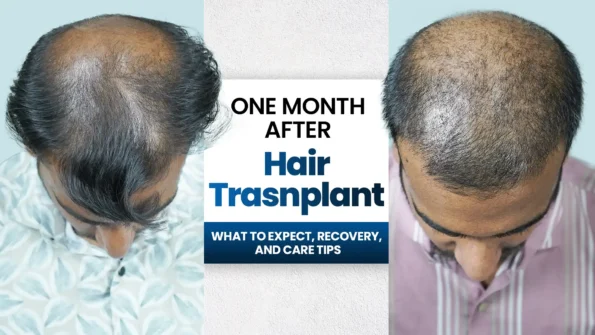
✅ Quick Summary — What Happens at 1 Month?
Transplanted hair starts shedding around week 2–4. This is completely normal. New regrowth begins at month 3–4. Full results take 9–12 months. Stay consistent with your aftercare routine.
The first month after a hair transplant is the most critical — and often the most confusing — phase of your entire journey. Whether you’ve had an FUE hair transplant or a FUT hair transplant, you may feel alarmed when your scalp starts shedding, showing redness, or looking patchy. But here’s the truth: it’s all part of a completely normal healing process.
In this guide, we cover everything you need to know about being one month after hair transplant — what your scalp looks like, why shedding happens, what side effects to expect, a full hair transplant recovery timeline, and exactly what to do next.
What Does Your Scalp Look Like at One Month After Hair Transplant?
By the time you reach one month after hair transplant, your scalp will look noticeably different from right after surgery — and not always in a reassuring way. Most patients notice:
- Shedding of transplanted hairs: Most or all of the implanted hairs fall out. This is expected and temporary.
- Mild redness: Pinkness in the recipient area, especially on fair skin. Fades by week 6–8.
- Scabbing or flakiness: Small scabs may still be present if aftercare was inconsistent.
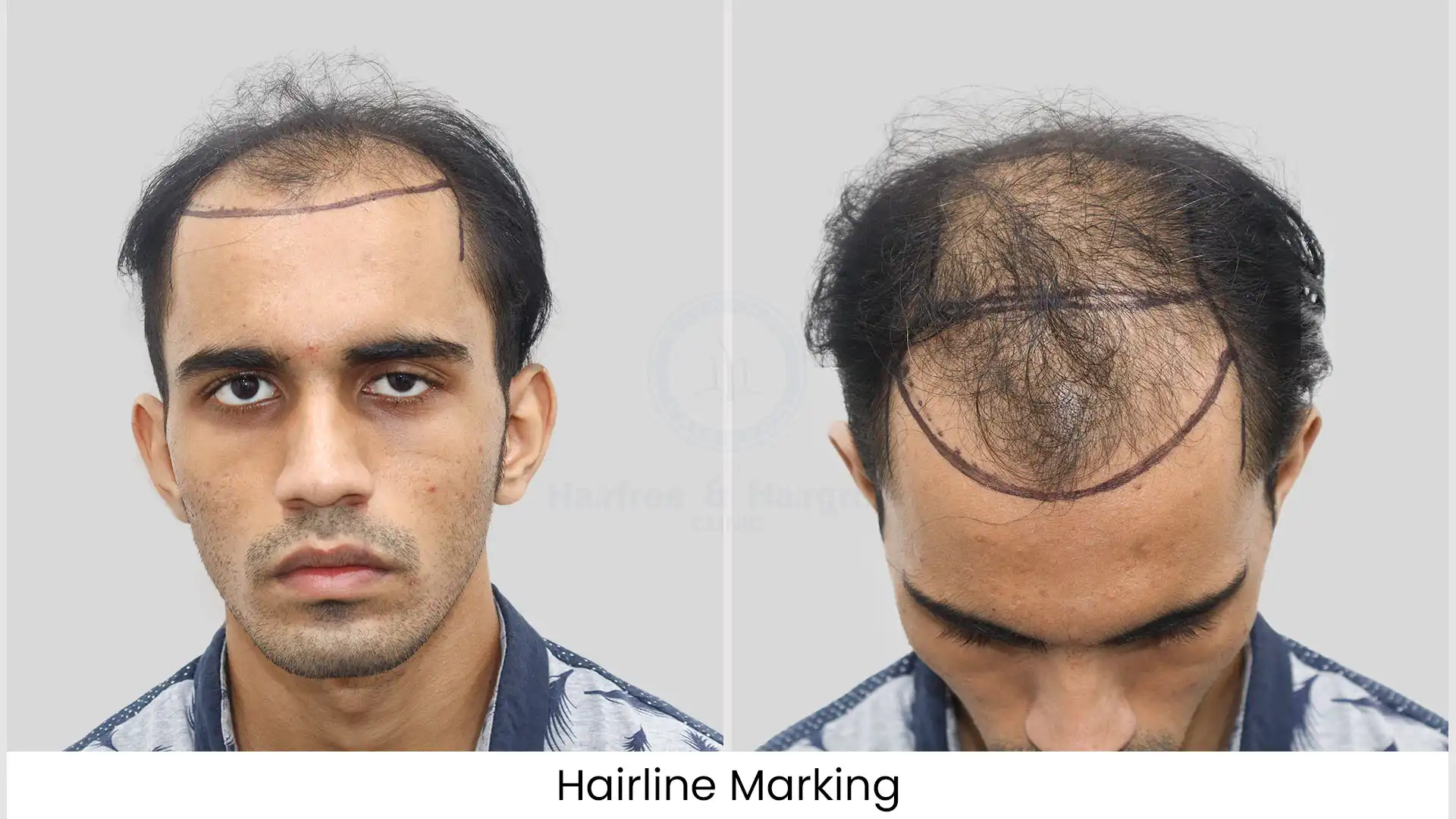
- Visible hairline shape: Even through shedding, the outline of your new hairline is visible.
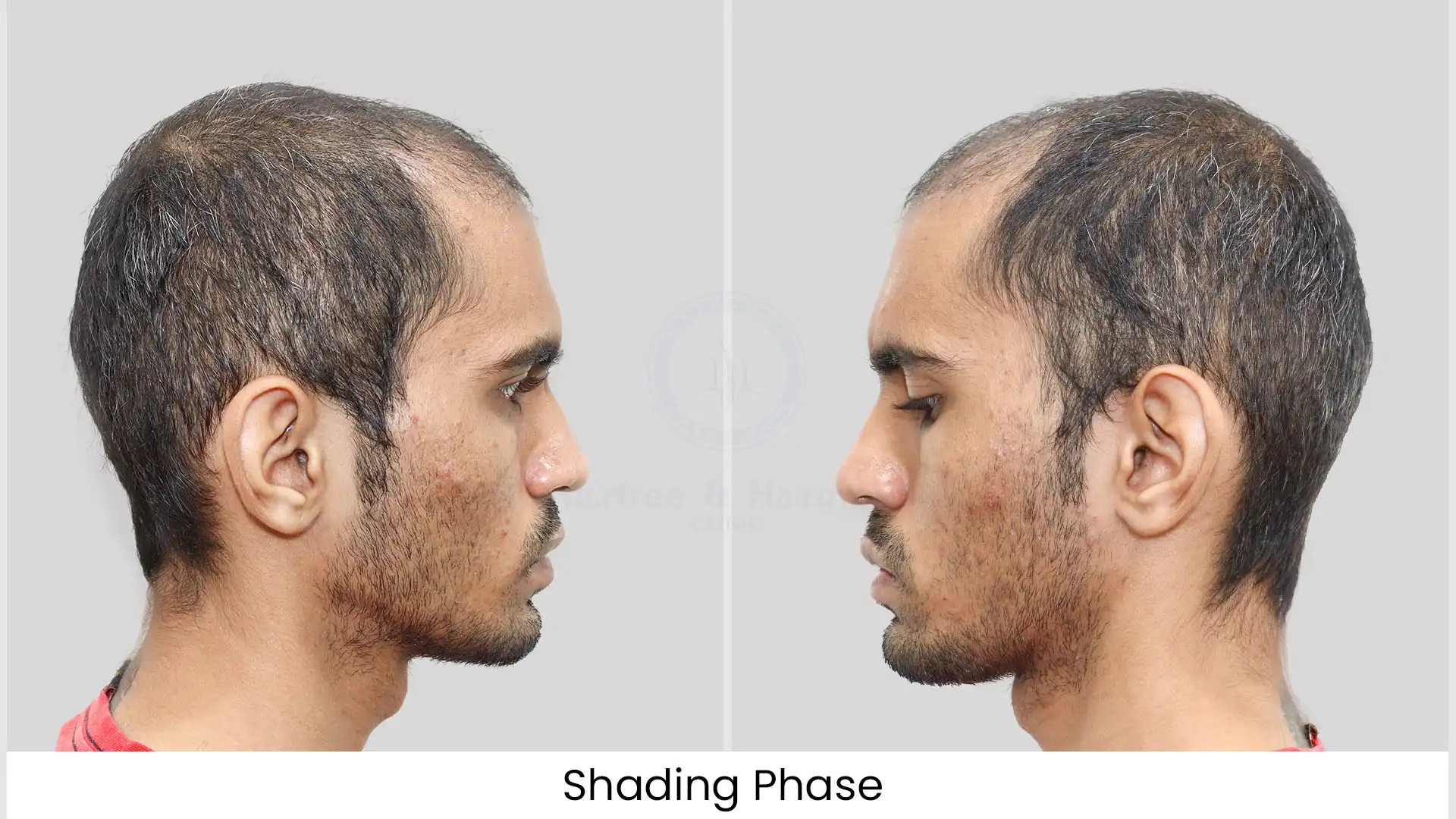
- No new growth yet: This is normal. New hair growth after transplant doesn’t begin until month 3–4.
This stage can feel discouraging, but it is a healthy sign. Your follicles are alive underground — they are simply resting before the real growth cycle begins.
Why Is My Hair Falling Out? Understanding Shock Loss
Shock loss after hair transplant — medically known as telogen effluvium — is a natural response to surgical trauma. When follicles are extracted and implanted in a new location, they temporarily enter the telogen (resting) phase of the hair cycle, causing the existing hair shaft to shed.
Why Does It Happen?
- Surgical trauma: The scalp undergoes stress during both extraction and implantation.
- Blood supply reset: New follicles need time to establish circulation in the recipient area.
- Hormonal response: Post-surgery cortisol spikes can push follicles into a resting phase.
- Natural cycle reset: Transplanted follicles simply restart their growth cycle from scratch.
Hair transplant shock loss does NOT mean the procedure failed. The follicles are still alive beneath the surface. Hair regrowth after transplant typically begins between months 3 and 4.
According to the American Academy of Dermatology, temporary hair shedding (telogen effluvium) after a hair transplant is a normal part of the hair growth cycle and does not indicate failure of the procedure.
When Should You Contact Your Surgeon?
Reach out if you notice signs of infection (pus, fever, severe swelling), extreme thinning in the donor area, or zero regrowth after 6 months. These situations are rare but important to address early.
Common Side Effects at 1 Month Post Hair Transplant
Here’s what most patients experience at 1 month post hair transplant and how to manage each symptom effectively:
1. Redness (Erythema)
Mild to moderate redness in both the recipient and donor areas is common at this stage. Patients with fair or sensitive skin tend to experience it longer — usually fading completely by week 6–8.
What helps: Gentle moisturising, avoiding direct sun, and applying any prescribed topical creams from your clinic.
2. Itching
Itching is caused by histamine release during the healing process — a completely normal immune response. It typically peaks around weeks 2–4 and then gradually subsides.
What helps: Mild antihistamines or steroid creams prescribed by your clinic. Never scratch — it can dislodge or damage grafts.
3. Scabbing or Flakiness
If small scabs are still present at this stage, it usually points to inconsistent aftercare. Gentle daily washing with a prescribed shampoo helps loosen and remove them naturally.
4. Folliculitis (Small Pimples)
Tiny pimples around transplanted grafts can appear as new hair attempts to push through the skin. This is common and usually resolves on its own within a week or two.
What helps: Warm compress and gentle cleansing. See your surgeon if it spreads or becomes painful.
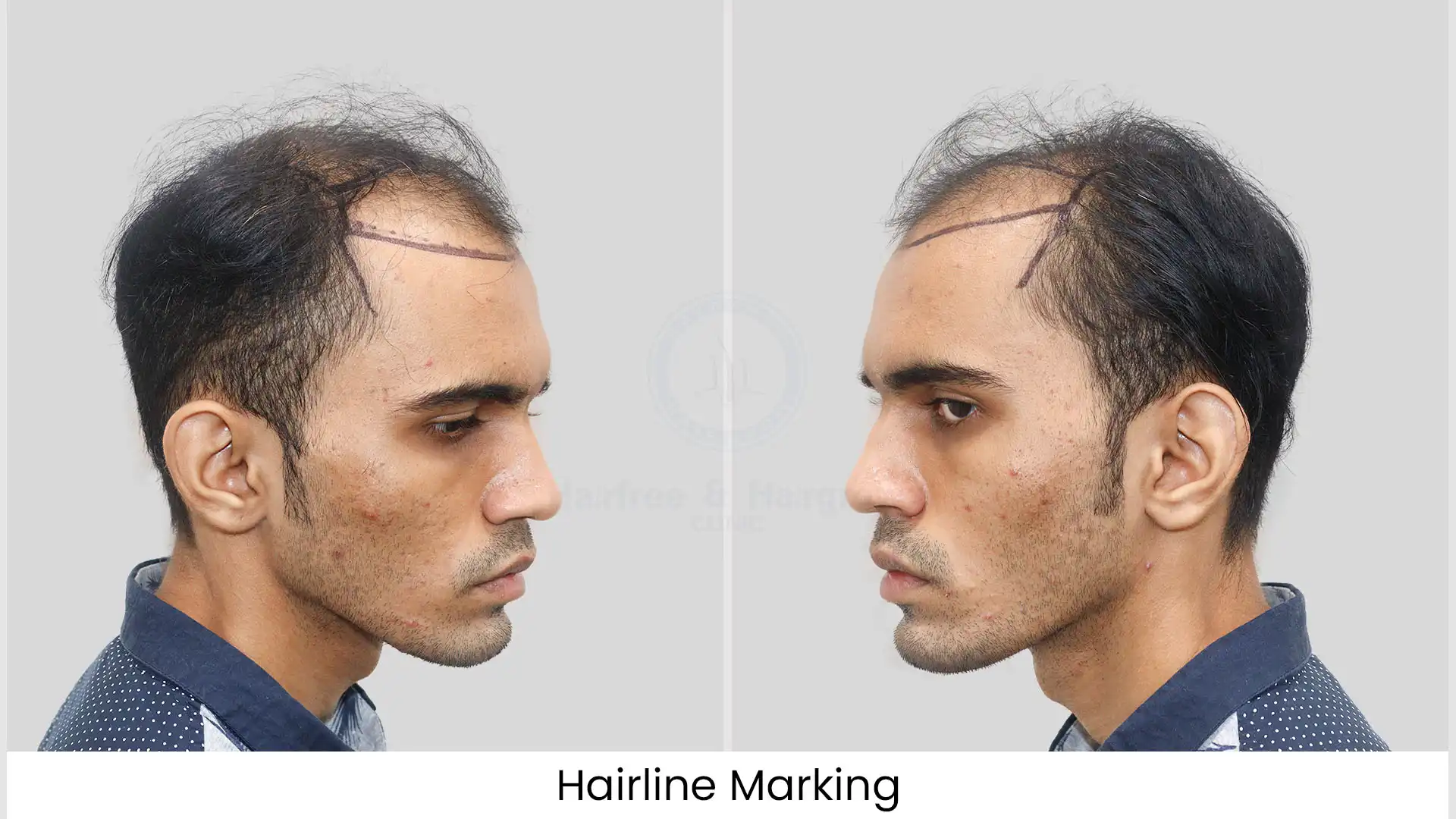
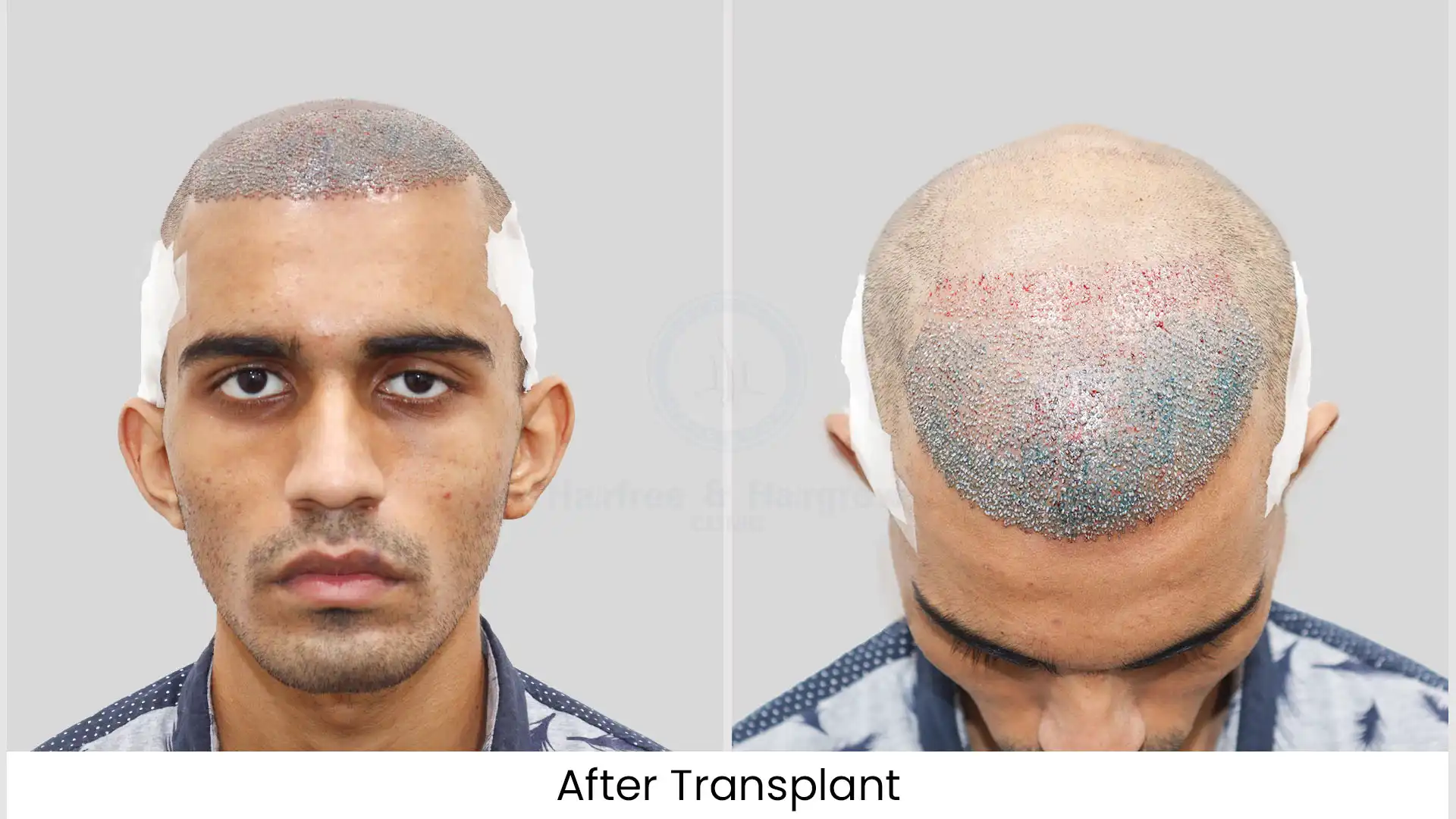
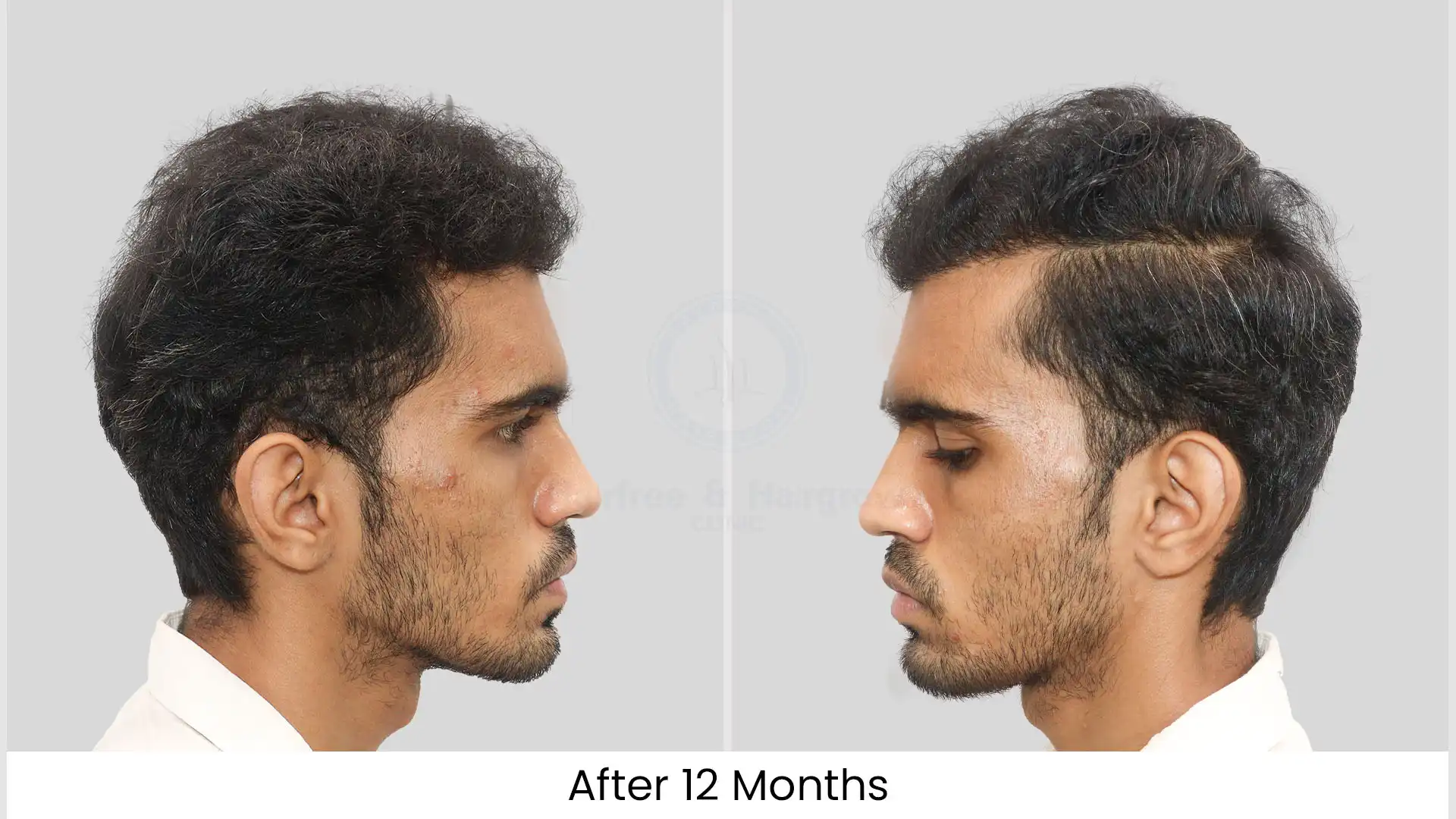
Case Studies: Real Results 1 Month After Hair Transplant
Here is what real patients experienced during their hair transplant recovery at the one-month mark:
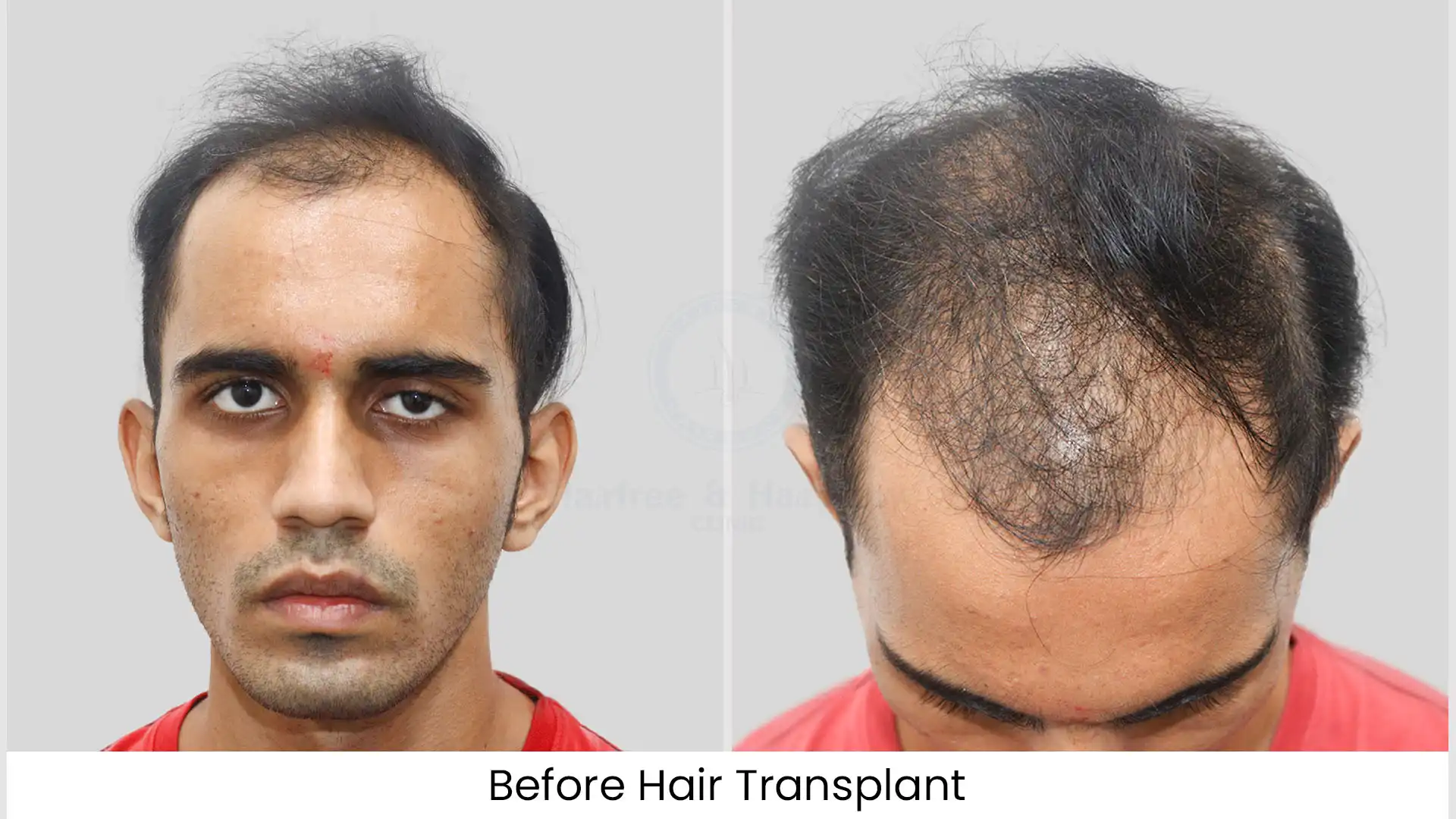
Case 1: 5,700 Grafts — Temples, Hairline & Mid-Scalp
- Before: Near-total baldness in the front and mid-scalp (Norwood Scale 5–6).
- At 1 Month: Hairline outline visible, but most transplanted hairs have shed.
- Side Effects: Redness still present; mild inflammation in both recipient and donor areas.
Surgeon Note: Large graft counts carry a higher overharvesting risk. Always verify graft count methodology with your clinic before proceeding.
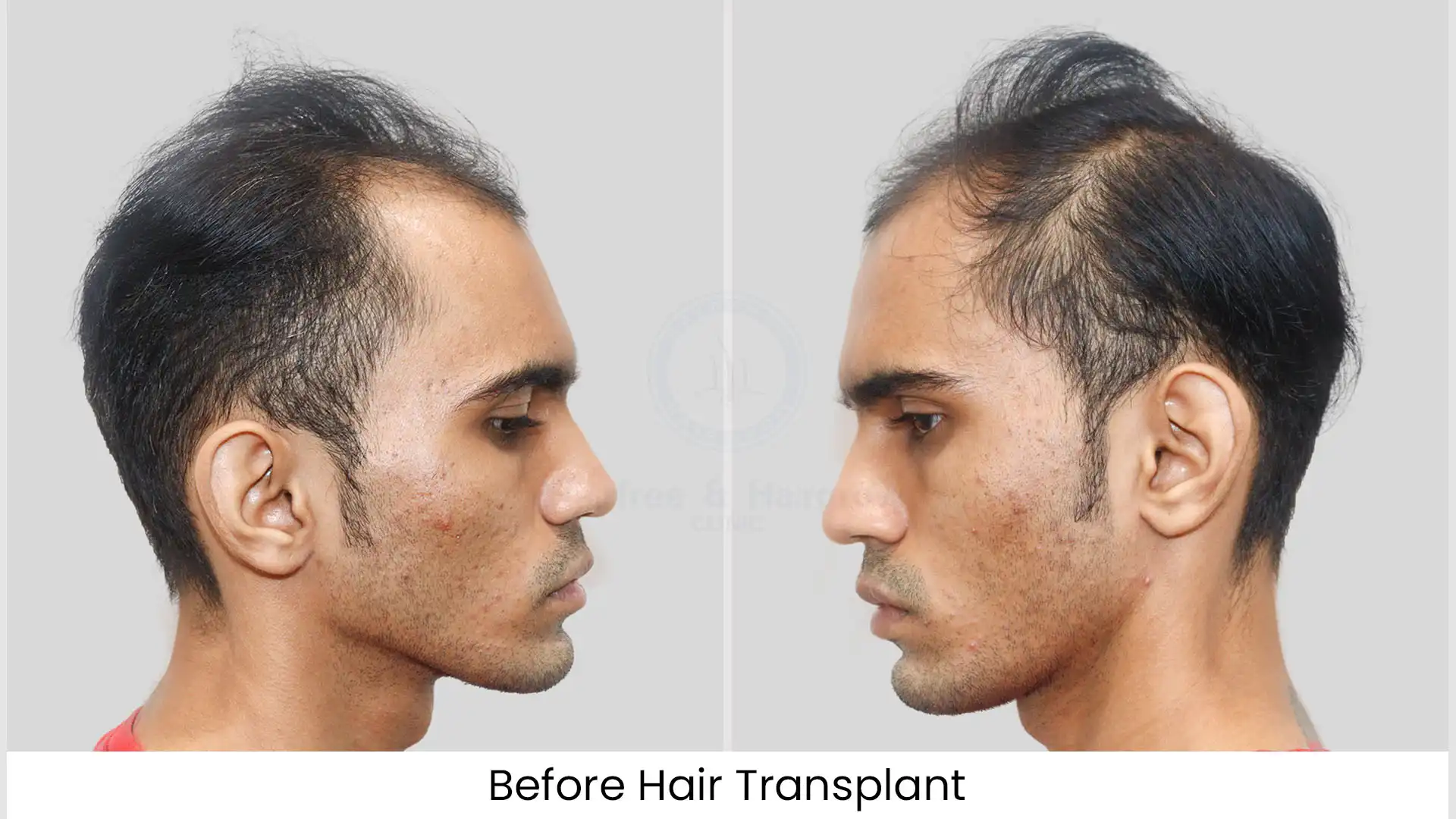
Case 2: 2,000–2,500 Grafts — Temples & Hairline (Age 27)
- Before: Rapid recession due to androgenetic alopecia (male pattern baldness).
- At 1 Month: Natural-looking hairline forming, though density is still low due to ongoing shedding.
Patient Insight: “I was mentally prepared for the hair fall, so I didn’t panic. That preparation made a huge difference.”
Case 3: 2,500 Grafts — Receding Hairline
- Before: Long hair was used to mask thinning areas.
- At 1 Month: Grafts shedding, graft entry points faintly visible — more noticeable on fair skin.
- Key Observation: Prescribed aftercare was extended by 6 weeks to manage continued redness.



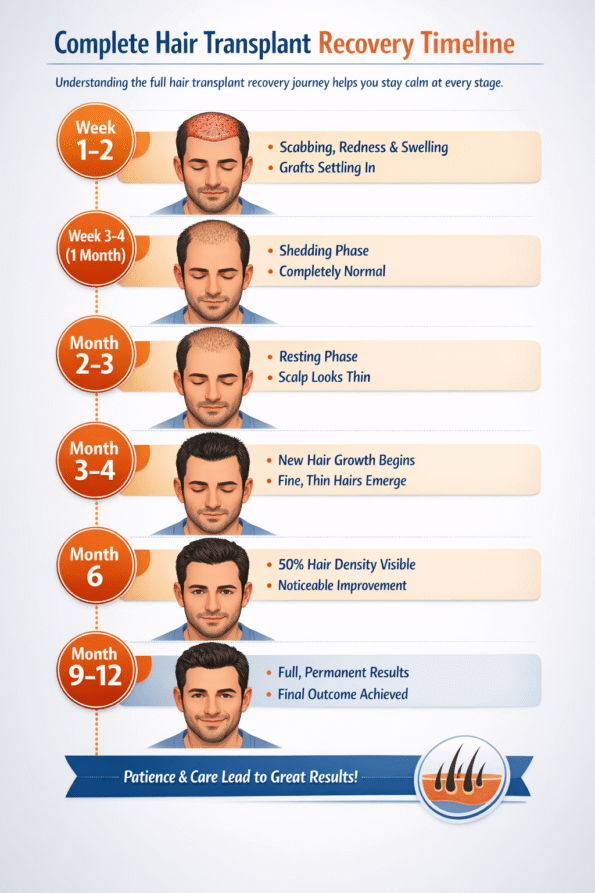
Complete Hair Transplant Recovery Timeline
Understanding the full hair transplant recovery journey helps you stay calm at every stage. Here is a clear month-by-month breakdown:
Hair Transplant Aftercare: Do's and Don'ts at 1 Month
Proper hair transplant aftercare at the one-month mark significantly impacts your long-term results. Here is what is safe and what to avoid:
✅ What You CAN Do
- Wash your hair daily using a mild, sulphate-free shampoo. Use gentle circular motions — no rubbing or scrubbing.
- Light exercise such as walking or yoga is generally safe. Avoid anything that causes heavy sweating.
- Use hair oils like coconut or argan oil — but always confirm with your surgeon first.
- Sleep in a normal position. You no longer need to elevate your head at night.
- Resume regular daily activities including driving (unless on sedative medication).
❌ What to AVOID
- No swimming — chlorine and salt water irritate healing follicles. Wait until month 3.
- No hair dye or chemical treatments until at least month 4.
- Avoid direct sun exposure — UV rays can damage new follicles. Wear a loose hat if outdoors.
- No styling products such as gels, sprays, or wax until your surgeon approves.
Never scratch the scalp, even if itchy — this can permanently damage grafts.
Medications That Support Recovery: Minoxidil, Finasteride & PRP
Minoxidil After Hair Transplant
Many surgeons recommend starting Minoxidil after hair transplant around the 4-week mark. It increases blood flow to the follicles, helping speed up the transition from the resting phase back into active growth.
Typical use: 1ml topical solution applied twice daily. Always confirm the exact timing and formulation with your surgeon.
Finasteride After Hair Transplant
Finasteride after hair transplant is an oral DHT blocker commonly prescribed to prevent further hair loss in untransplanted areas. It protects your native hair while the transplanted grafts grow in.
Note: Prescription-only. Not recommended for women of childbearing age.
PRP After Hair Transplant
PRP after hair transplant (Platelet Rich Plasma therapy) involves injecting concentrated growth factors from your own blood into the scalp. When administered at 1–3 months post-procedure, it can accelerate regrowth and improve graft survival rates.
FUE vs FUT: How Does Technique Affect 1-Month Recovery?
Both FUE hair transplant and FUT hair transplant follow a similar recovery path, but there are some important differences to know at the one-month stage:
- FUE at 1 month: Tiny circular extraction marks in the donor area are usually fully healed. Minimal scarring. Short hairstyles are possible.
- FUT at 1 month: The linear scar in the donor area may still be slightly tender. Stitches are removed around week 2. Longer hair is needed initially to conceal the scar.
- Shedding rate: Both techniques experience the same rate of shock loss — shedding is not influenced by the extraction method.
Long-term results: Both deliver equally strong outcomes. The right choice depends on your donor density, lifestyle, and hair goals.
Hair Transplant Cost: Is the Investment Worth It?
Hair transplant cost varies widely depending on location, graft count, and clinic reputation. Here’s a quick reference to set realistic expectations:
- India: ₹40,000 – ₹1,50,000 depending on clinic and number of grafts.
- Turkey: $1,500 – $4,000. A popular medical tourism destination — but research your clinic carefully.
- UK / USA: $5,000 – $15,000+. Highly regulated with experienced, board-certified surgeons.
A lower price does not equal better value. Always verify your surgeon’s credentials, ask how grafts are counted, and review before/after results from real patients before committing.
Hair Transplant Results: What to Realistically Expect
Setting realistic expectations about hair transplant results is one of the most important things you can do before and after your procedure. Here’s the honest picture:
- Month 1: Shedding phase — looks worse than before surgery. Completely normal.
- Month 3–4: Fine new hairs begin emerging. Exciting but still thin.
- Month 6: About 50% of your final density is visible. Real improvement noticeable.
- Month 9–12: Full density, natural hairline, permanent results.
Patience is the most underrated part of recovery. The patients who get the best results are those who follow their aftercare plan, avoid the temptation to compare timelines, and trust the process.
Conclusion: Stay Patient, Stay Consistent
Reaching one month after hair transplant is a real milestone — even when it doesn’t feel like one. The shedding phase is temporary, the redness will fade, and the growth is coming. Every patient goes through this stage, and the ones who come out with the best results are the ones who stay consistent with their aftercare and trust the process.
By month 6, you will start seeing the change you invested in. By month 12, it will all make sense. If you have any concerns along the way, your surgeon is always the right first call.
Book a Free Hair Transplant Consultation Today
At Hairfree Hairgrow Clinic, our experienced hair restoration specialists are here to guide you at every stage of your journey — from shedding phase to full regrowth.
With 12+ branches across Surat, Ahmedabad, Pune (Pimple Gurav), Pune Kharadi, Hyderabad, Kolkata, Bangalore, Bhopal, Delhi (Gurugram), Nagpur, Mumbai, Vapi (Silvassa), and Bangladesh, Hairfree Hairgrow Clinic makes expert hair restoration accessible—wherever you are.
FAQs: One Month After Hair Transplant
Q: Is it normal to lose transplanted hair after one month?
A: Yes — completely normal. Hair shedding after transplant (shock loss) happens to almost every patient between weeks 2–6. The follicles are alive beneath the surface and will regrow starting at month 3–4.
Q: Can I see new hair growth at one month after hair transplant?
A: No visible new growth is expected at this stage. The follicles are in their resting phase. Regrowth typically begins at month 3–4, so don’t be discouraged by the shedding.
Q: Can I use Minoxidil at 1 month?
A: Many surgeons recommend starting Minoxidil around the 4-week mark. Always confirm the exact timing and dosage with your surgeon before beginning.
Q: When can I go back to the gym after a hair transplant?
A: Light exercise is generally safe at 1 month. Avoid heavy lifting, contact sports, and activities causing heavy sweating until at least month 2–3.
Q: Why is my scalp still red at one month?
A: Redness at 1 month is normal, particularly on fair skin. It typically fades by week 6–8. Gentle moisturising and avoiding sun exposure helps speed up the process.
Q: How long does full recovery take?
A: Final results are visible at 9–12 months. Month 1 involves shedding, months 3–6 bring initial regrowth, and months 6–12 show progressive density improvement.
Q: What shampoo should I use at 1 month post transplant?
A: Use a mild, sulphate-free, pH-balanced shampoo. Avoid dandruff shampoos containing zinc pyrithione or selenium sulphide for the first 3 months.
Q: Does FUE or FUT heal faster at 1 month?
A: FUE generally heals faster — punch marks are usually fully healed by month 1. FUT patients may still have some tenderness at the scar site. Both techniques experience the same shock loss rate.

Written By
MBBS, DNB
Dr. Preeti Kantwala’s qualifications align perfectly with laser hair removal content. Her expertise specifically includes laser treatments among her areas of special interest, which directly supports the credibility of your laser hair removal.
Disclaimer
We’ve made all possible efforts to ensure that the information provided here is accurate, up-to-date and complete, however, it should not be treated as a substitute for professional medical advice, diagnosis or treatment. See Detailed Disclaimers Here.