

Quick Answer
When can you start hair oiling after hair transplant? Wait 2–4 weeks after your procedure, once the scabs have naturally fallen off. Safe oils include coconut oil, argan oil, almond oil, and jojoba oil. Avoid applying any oil during the first 2 weeks, it can dislodge newly placed grafts and delay healing.
After undergoing a hair transplant, the newly implanted hair follicles are extremely delicate and require special care. One of the most common questions patients ask is: when can I apply oil after a hair transplant? Understanding the right time and the right oil to use can significantly support healing and encourage healthy hair growth.
Generally, it is recommended to wait at least 2 to 4 weeks before applying any oil to the transplanted or donor areas. This period allows the follicles to anchor properly without any interference. Always consult your doctor or hair specialist for personalised advice on oiling after hair transplant tailored to your specific situation.
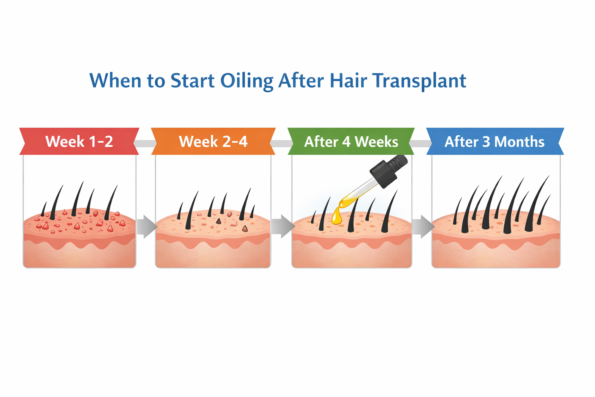
When Can You Start Oiling After Hair Transplant? (Week-by-Week Guide)
The right time to start using oil after a hair transplant depends on your healing progress. Here is a general week-by-week timeline to follow:
| Phase | Oiling Advice | Reason |
|---|---|---|
|
Week 1–2
|
Avoid all oils completely Avoid
|
Grafts are not yet anchored. Any pressure or oil can dislodge them.
|
|
Week 2–4
|
Scabs begin falling naturally, still avoid direct scalp application Avoid
|
Scalp is healing but follicles remain sensitive to friction and chemicals.
|
|
After 4 Weeks
|
Gently apply natural oils in light circular motions Safe |
Follicles are anchored. Coconut, argan, or jojoba oil can now support recovery.
|
|
After 3 Months
|
Resume normal oiling routine Safe
|
Transplanted hair enters active growth phase. Regular oiling supports strength.
|
Expert Advice
“One of the biggest mistakes patients make is applying oil too early. Newly transplanted grafts need time to anchor properly, and unnecessary pressure or products can interfere with healing. I generally advise patients to wait until the scalp has recovered and always follow their surgeon’s personalised timeline before starting any oiling routine.”
– Dr. Preeti Kantwala, Hair Transplant Surgeon, Hairfree Hairgrow Clinic
Dos and Don'ts of Post-Transplant Hair Oil Application
Proper post-transplant care is crucial to ensure the success of your hair transplant. Here are the key dos and don’ts when it comes to oiling your hair and scalp after the procedure.
Use Natural Oils Only
Using natural oils is highly beneficial for your hair and scalp. These oils help add moisture, making your hair shinier and healthier. They also contain properties that can reduce hair loss and promote overall scalp health.
Which Oil Is Best After Hair Transplant?
Patients often ask: after hair transplant which oil is best? Here are the most commonly recommended options:
- Coconut oil: Rich in fatty acids, coconut oil penetrates deep into the hair shaft, providing moisture and preventing protein loss. It also has natural antibacterial properties that help keep the scalp clean during recovery.
- Almond oil: Contains high levels of vitamin E, which nourishes the scalp and hair, reducing inflammation and promoting healthy hair growth.
- Olive oil: Known for its moisturising properties, olive oil soothes the scalp and adds a healthy shine without clogging follicles.
- Argan oil: Lightweight and non-greasy, argan oil provides hydration, reduces frizz, and supports scalp health without weighing down new hair growth.
- Jojoba oil: Closely mimics the scalp’s natural sebum, making it an excellent oil for balancing scalp moisture after a transplant.
- Rosemary oil: Known for boosting blood circulation to the scalp, rosemary oil can stimulate hair follicles and encourage new hair growth, especially useful from the 3-month mark onward.
How to Apply Oil After Hair Transplant
When applying oil, always do it gently. Use your fingertips to apply the oil in light circular motions on your scalp. This massage technique helps improve blood circulation, which further supports hair growth and scalp health. Never rub or press hard on the transplanted area, especially in the first few months.
Avoid Chemical-Based Oils
It is crucial to avoid oils that contain chemicals, preservatives like alcohol, or artificial perfumes. These substances can irritate your sensitive scalp and significantly slow down the healing process. Chemical-based oils can cause inflammation and may even lead to further hair loss, the opposite of what you want after a transplant.
Benefits of Natural Oils After Hair Transplant
Using natural oils can offer numerous benefits for your scalp and hair health, especially after a hair transplant:
- Moisturises scalp and hair: Oils like coconut oil, argan oil, and olive oil provide natural hydration, keeping your hair looking healthy and voluminous through the recovery period.
- Reduces inflammation and itching: Natural oils have anti-inflammatory properties that help manage the itching and irritation commonly experienced after a transplant procedure.
- Boosts hair growth: Oils like rosemary oil improve blood circulation to the scalp, stimulating follicles and encouraging new hair to grow faster and stronger. It’s known for its ability to improve blood circulation to the scalp, which can stimulate hair follicles and encourage hair growth.
- Strengthens hair shafts: Regular use of natural oils from the 3-month mark onwards can strengthen your hair, making it less prone to breakage and damage.
Important Considerations When Applying Oil After Hair Transplant
Do Not Mix Oil with Minoxidil
One of the most common questions is: can I apply oil after hair transplant if I am also using Minoxidil? The answer is no. Minoxidil and natural oils have different functions and should not be used at the same time. If you are applying oil, ensure you skip Minoxidil application for that session, and vice versa.
Timing and Frequency of Oiling
The frequency of oil application depends on your scalp condition. For oily scalps, once a week is sufficient, while dry scalps may require oiling twice a week. The best time to apply hair oil after hair transplant is at night, this allows you to wash it off in the morning, preventing dirt from sticking to your oily scalp during the day, which can lead to itching and delayed healing.
Proper Washing After Oiling
After applying oil at night, wash your scalp thoroughly in the morning with a mild, doctor-recommended shampoo. Leaving oil on your scalp during the day can attract dust and pollutants, causing irritation and slowing the healing process, especially important to avoid in the early weeks post-transplant.
Personalised Care at HairFree HairGrow Clinic
Every person’s scalp is different, and what works for one patient may not work for another. Our doctors provide a personalised post-transplant care plan based on your scalp condition, hair type, and the technique used, whether BIG FUE, Bio FUE, or I-FUE. If you have any doubts about oiling after your hair transplant, always consult your healthcare provider before starting.
Visit any Hairfree Hairgrow branch for your hair problem or call us at +91-72 72 83 2222
We are located in Surat, Ahmedabad, Pune (Pimple Gurav), Pune Kharadi, Hyderabad, Kolkata, Bangalore, Bhopal, Delhi (Gurugram), Nagpur, Mumbai, Vapi (Silvassa), and Bangladesh.
Conclusion
Knowing when to start using hair oil after a hair transplant and choosing the right type of oil plays a major role in your recovery and long-term results. Wait 2–4 weeks, stick to natural oils like coconut, argan, jojoba, or almond oil, and always follow your HFHG doctor’s specific guidance. Avoid chemical-based products, never mix oil with Minoxidil in the same session, and keep your scalp clean by washing off oil every morning.
With the right care and patience, your transplanted hair will grow strong, healthy, and natural.
FAQ
-
1. Can I apply oil after hair transplant in the first week?
No. The first two weeks after a hair transplant are critical — the grafts are not yet anchored to the scalp. Applying any oil during this period can dislodge the newly placed follicles and severely impact your results. Always wait until your doctor gives clearance, which is typically after 2–4 weeks.
-
2. Can I use oil after hair transplant if I have an oily scalp?
Yes, but with caution. If you have an oily scalp, limit oil application to once a week and always wash it off the next morning. Choose lightweight oils like jojoba oil, which closely mimics the scalp's natural sebum without adding excess grease.
-
3. Can I use castor oil after hair transplant?
Castor oil is thick and heavy in consistency. While it is known for promoting hair growth, it is not recommended in the early recovery phase as its weight can put pressure on newly placed grafts. After 3 months, you may use it in small amounts mixed with a lighter carrier oil like coconut or almond oil.
-
4. Can I use rosemary oil after hair transplant?
Yes, rosemary oil is excellent for stimulating blood circulation to the scalp and encouraging new hair growth. However, it should only be used after the 3-month mark, and always diluted in a carrier oil like coconut or jojoba, never applied directly to the scalp in concentrated form.
-
5. How long should I leave oil on my scalp after hair transplant?
The ideal method is overnight application, apply oil gently before sleeping and wash it off thoroughly the next morning with a mild shampoo. Leaving oil on your scalp during the day attracts dust and pollutants, which can irritate the healing scalp and delay recovery.
-
6. Can I oil my donor area after hair transplant?
Yes, the donor area (back and sides of the head) generally heals faster than the transplanted zone. Once scabs have naturally fallen off, usually within 10–14 days, you can gently apply oil to the donor area. Always get confirmation from your HFHG doctor before starting.
-
7. Which oil should I avoid after hair transplant?
Avoid all chemical-based oils, oils containing alcohol, artificial fragrances, or preservatives. Mineral oil and petroleum-based products should also be avoided as they can clog follicles and slow healing. Stick to pure, natural oils recommended by your doctor.
-
8. Does oiling help hair growth after transplant?
Oiling alone does not directly cause hair growth after a transplant, the grafts grow based on the success of the procedure and your overall health. However, the right oils like rosemary oil and coconut oil support scalp health, reduce inflammation, and improve blood circulation, which creates a better environment for new hair to grow.
-
9. Can I use Bhringraj oil after hair transplant?
Bhringraj oil is a traditional Ayurvedic oil known for promoting hair growth and reducing hair fall. It can be used after the 3-month mark once the scalp has fully healed. However, always consult your Hairfree Hairgrow doctor before introducing any new oil into your post-transplant routine.