
Quick Answer
Did Rohit Sharma have a hair transplant? The topic of Rohit Sharma hair transplant has been discussed for years. While he has never officially confirmed it, the visual evidence, studied across hundreds of photos from his Under-19 days to recent IPL matches, tells a consistent story.
Rohit Sharma is one of the greatest batsmen India has ever produced. 179 in a World Cup match, multiple double centuries, and now a retired legend of the game. But off the pitch, a very different conversation has been going on for years, one that millions of Indian men quietly relate to his hair.
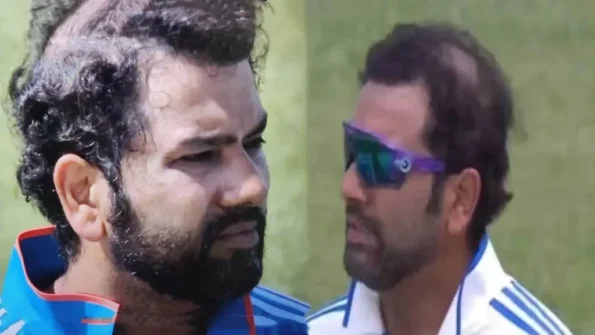
Over the last decade, sharp-eyed fans and hair restoration experts have noticed a clear change in Rohit Sharma’s hairline and density.
This blog breaks that story down, stage by stage, with clinical context. Whether you’re a cricket fan, someone dealing with male pattern baldness, or seriously considering a hair transplant in India, this is worth reading carefully.
Rohit Sharma's Hair Timeline: From U-19 to the Indian Captaincy
Early Career (Before 2007): Full Hairline, No Concerns
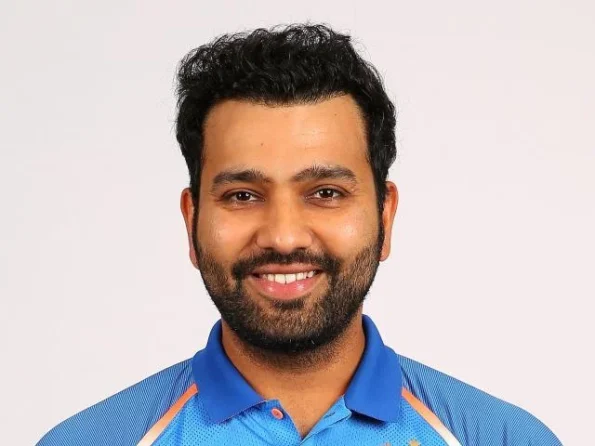
Rohit Sharma’s Under-19 and early domestic cricket photos show what hair experts call a Norwood Grade 1 hairline, straight, dense, no temple recession. Nothing unusual for a teenager.
Indian Team Entry (2007–2012): First Signs of Thinning
Shortly after joining the Indian team, photos began showing mild temple recession, the classic start of androgenetic alopecia (male pattern hair loss). This placed him roughly at Norwood Grade 2, where the hairline starts pulling back at the corners, forming a subtle V or M shape.
This is incredibly common. Research suggests that over 50% of Indian men begin showing some degree of hair loss by their mid-20s, largely driven by genetics and the DHT (dihydrotestosterone) hormone.
Mid-Career (2012–2017): Progression to Norwood Grade 3-4
As his cricket career grew, and with it, the scrutiny of endorsements, brand deals, and constant media coverage, the hair loss became more visible. Temple recession deepened. And critically, thinning began appearing in the crown area (vertex), which hair specialists classify as a transition into Norwood Grade 3-4.
At this point, experts analyzing his public photographs note a V-shaped hairline, some crown thinning, and reduced overall density. This is typically the stage when hair transplant consultations become a serious option.
2014–2018: The First Rohit Sharma Hair Transplant (Strongly Speculated)
This is where the most significant change appears.
Comparing photos from around 2014 to images from 2017–18, observers and hair restoration analysts consistently note:
- Hairline lowered at the front – the frontal point came noticeably forward
- Corner correction – the temples were brought up and given a more natural shape
- Increased density in the frontal third of the scalp
No visible scarring on Rohit Sharma’s scalp suggests he did not opt for the FUT (strip) method. It is highly likely he chose the FUE (Follicular Unit Extraction) technique, a minimally invasive procedure known for leaving minimal scars and offering a quicker recovery period. This matters because cricketers cannot take extended breaks from their schedules; FUE allows return to normal activity within 7–10 days.
Observations of the treated areas suggest approximately 2,000 grafts could have been used to fill in the thinner sections of his scalp.
⚠️ Important Disclaimer: Rohit Sharma has never publicly confirmed or denied undergoing a hair transplant. All available claims are based on photographic comparisons, media commentary, and expert observations, not verified medical records. This analysis is educational in nature, and we respect his personal privacy on the matter.
Worried That Your Hairline Is Changing Too?
You don’t have to wait until your hair loss becomes impossible to hide. A timely diagnosis can help you understand the real cause and explore the right treatment before the problem progresses.
Expert View: What a Hair Transplant Surgeon Observes
“Cases like Rohit Sharma’s are actually very common in our consultation room, young men in their late 20s or early 30s who are at Norwood Grade 3 or 4, active professionals, and extremely conscious about their appearance. The key principle we follow is: never design a hairline for who you are today. Design it for who you’ll be at 45. If the frontal hairline is placed too low without accounting for future crown progression, the result can look unnatural over the next 10–15 years. That’s why a staged approach, addressing the frontal zone first, then revisiting the crown once the loss pattern stabilizes, is almost always the right call for patients in this age group.”
— Dr. Kiran Chotaliya, M.D. Skin & V.D., Dermatologist & Hair Transplant Surgeon, HairFree HairGrow Clinic, Pune | 11 Years Experience | Lokmat Health Icon Award — Best Skin & Hair Doctor in Pune
What the Experts Noticed: Hairline Design Analysis

Hair restoration specialists who have studied Rohit Sharma hair transplant photos point out two key things about the (speculated) transplant, one that worked well, and one that raises valid clinical questions.
✅ What Was Done Right: Corner Elevation
The corners of his hairline, what surgeons call the “temporal peaks” were kept naturally elevated rather than brought too far down. This is correct surgical planning. A conservative temple angle ages gracefully, whereas aggressively lowering the temples creates problems later when the surrounding native hair continues to thin.
⚠️ Point of Discussion: Frontal Hairline Placed Too Low
Some hair specialists have observed that the frontal midpoint of the hairline appears quite low relative to his face proportions. Here’s why this becomes a clinical problem over time:
When a patient is young and still in an active phase of hair loss, placing the hairline too low leaves very little room to maneuver if further recession occurs behind the transplanted zone. If native hair behind that new hairline continues to thin over the years, the transplanted front looks disconnected and unnatural.
This is why experienced surgeons follow the principle: design the hairline for who you’ll be at 45, not just who you are at 28.
The Crown Area: Why a Second Hair Transplant May Be Needed
The first transplant addressed the frontal zone, hairline, and temples. But male pattern baldness in Norwood Grade 3-4 cases doesn’t stop there. The crown (vertex) continues to thin independently.
The frontal area treatment results were successful, but the crown area developed a new bald patch that would require a separate session to address. This two-phase pattern is very normal for men who start their hair restoration journey in their late 20s or early 30s. The frontal zone often needs one session; the crown is addressed separately, sometimes years later, once the baldness pattern has fully stabilized.
Recent image comparisons from his public appearances suggest possible improved density in the crown area, though again, no official confirmation exists.
Noticing a Receding Hairline or Thinning Crown?
Every person’s hair loss pattern is different. The best results come from a personalised treatment plan designed by experienced hair transplant surgeons after a detailed scalp evaluation.
Why Indian Cricketers Are Getting Hair Transplants
Rohit Sharma is far from alone. Several Indian cricketers, including Virat Kohli, Virender Sehwag, Hardik Pandya, Harshal Patel, and Yusuf Pathan, have also had hair restoration treatments.
The reasons are straightforward:
- Brand value depends on appearance – cricketers sign dozens of endorsement deals. Their face is their brand.
- Constant camera exposure – HD broadcast cameras, social media, press conferences. Every hairline change gets noticed.
- Early onset in Indian men – genetic predisposition to androgenetic alopecia is high in South Asian men. Many begin thinning in their early 20s.
- World-class options in India – India has excellent FUE surgeons at far more accessible price points than international markets.
What’s changed culturally is that the stigma around hair transplants has fallen sharply. These cricketers, by choosing treatment, have helped normalize it for millions of fans who face the same issue.
The FUE Method: Why It's the Right Choice for Active Professionals
Since FUE is the most likely technique used (based on the absence of visible scarring), here’s what you need to understand:
FUE (Follicular Unit Extraction) involves extracting individual hair follicles from the donor area (usually the back and sides of the scalp) one by one and implanting them into the thinning zones. No linear scar, no stitches, and relatively fast recovery.
| Feature | FUE | FUT (Strip Method) |
|---|---|---|
|
Scarring |
Minimal, tiny dots |
Linear scar at back |
|
Recovery Time |
7–10 days
|
14–21 days
|
|
Natural Result
|
Yes |
Yes |
|
Suitable For
|
Active professionals, athletes
|
Higher volume requirements
|
For someone who can’t disappear from the public eye for weeks, FUE is the only logical choice.
5 Clinical Lessons From Rohit Sharma's Hair Journey
Whether you’re at Grade 2 or Grade 4, Rohit Sharma’s journey offers genuinely useful takeaways for anyone considering a hair transplant in India.
1. Don't Wait Until It's "Bad Enough"
The ideal window is when you’re between Norwood Grade 2–4, with a stable donor area. Waiting until Grade 5 or 6 significantly limits what a surgeon can achieve.
2. Hairline Design Is Everything
A surgeon who places your hairline too low is not doing you a favor, even if it looks great at consultation. Demand a long-term hairline design that accounts for future recession.
3. Temples Deserve a Conservative Approach
Over-transplanting the temples when you’re young creates problems later. The surrounding native hair continues to thin, leaving an unnatural patch. Less, in this case, is more.
4. The Crown Often Needs Separate Planning
If your hair loss pattern involves both the frontal zone and the crown, don’t expect one session to fix everything. A staged approach is clinically sound and produces better long-term results.
5. Post-Transplant Maintenance Is Non-Negotiable
A transplant restores treated areas, but non-transplanted native hair can continue thinning. A long-term maintenance plan, including medications like finasteride or minoxidil if prescribed, is as important as the procedure itself.
Thinking About a Hair Transplant? Talk to HairFree HairGrow's Experts First
Rohit Sharma hair transplant journey is a mirror for what millions of Indian men face, early thinning, the pressure of appearance, and eventually, the decision to do something about it.
If you’re noticing a receding hairline, temple recession, or a thinning crown, the smartest first step is a proper clinical assessment, not a YouTube comparison video.
HairFree HairGrow is one of India’s most trusted multi-city hair restoration clinic chains, with 40+ qualified surgeons, 11,000+ successful procedures, and clinics across Surat, Ahmedabad, Pune (Pimple Gurav), Pune Kharadi, Hyderabad, Kolkata, Bangalore, Bhopal, Delhi (Gurugram), Nagpur, Mumbai, Vapi (Silvassa), and Bangladesh.
Our advanced BIG-FUE technique uses:
- Trichoscopy analysis for accurate hair loss assessment
- 4x–5x magnification for precision microsurgery
- Sapphire tip custom blades for natural-density results
- KEEP Implanter for near 100% graft survival
- Graft Chiller + Growth Factor system throughout the procedure
Every consultation is honest and pressure-free. Our doctors will tell you exactly where you stand, and whether a transplant is the right option for you right now, or not.
FAQ
-
1: Did Rohit Sharma confirm his hair transplant?
No. Rohit Sharma has never publicly confirmed or denied undergoing a hair transplant. The discussion is based on visual comparisons of photographs taken across different phases of his career.
-
2: What type of hair transplant technique did Rohit Sharma likely use?
The absence of visible scarring strongly indicates the FUE (Follicular Unit Extraction) method, which is minimally invasive, has no linear scar, and has quicker recovery, making it the preferred choice for public figures and athletes.
-
3: How many grafts are estimated to have been used?
Based on visual analysis of the treated area, approximately 2,000 grafts are estimated to have been transplanted in the frontal zone.
-
4: Will Rohit Sharma need another hair transplant?
Based on expert analysis of his crown thinning pattern, a second session targeting the vertex area would be a logical next step, consistent with standard two-phase hair restoration planning for Norwood Grade 3–4 patients.
-
5: How much does a hair transplant cost in India?
Costs vary based on the clinic, surgeon, technique, and number of grafts. A quality FUE procedure for 2,000–2,500 grafts at a reputed clinic typically ranges between ₹60,000–₹1,50,000+. Always choose a clinic with verified doctor credentials, not just the cheapest option.
-
6: At what age should someone consider a hair transplant?
Most hair restoration experts recommend waiting until the hair loss pattern has sufficiently stabilized, typically after age 25–27, before proceeding.