
You spent lakhs of rupees on a hair transplant. You took the days off work. You followed every step leading up to the procedure. And yet, months later, you’re staring in the mirror, wondering why your hair transplant results look nothing like what you expected.
You’re not alone. And here’s the truth nobody tells you upfront: most hair transplant failures aren’t because the procedure doesn’t work, they’re because of completely avoidable mistakes.
Whether you haven’t had your surgery yet or you’re already worried about your recovery, this guide will walk you through the 5 biggest mistakes that ruin hair transplant results, and exactly what to do instead.
5 Biggest Reasons Hair Transplant Results Go Wrong
| Mistake | What Happens |
|---|---|
|
1. Choosing the wrong clinic |
Poor growth, scarring, unnatural hairline |
|
2. Ignoring aftercare instructions |
Grafts may fail or heal poorly |
|
3. Panicking during shedding phase |
Unnecessary stress and harmful actions |
|
4. Getting a transplant before hair loss stabilises |
Uneven long-term results and “island effect” |
|
5. Accepting a poorly designed hairline |
Unnatural appearance, hairline looks artificial for life |
Mistake #1: Choosing the Wrong Clinic or an Unqualified Surgeon
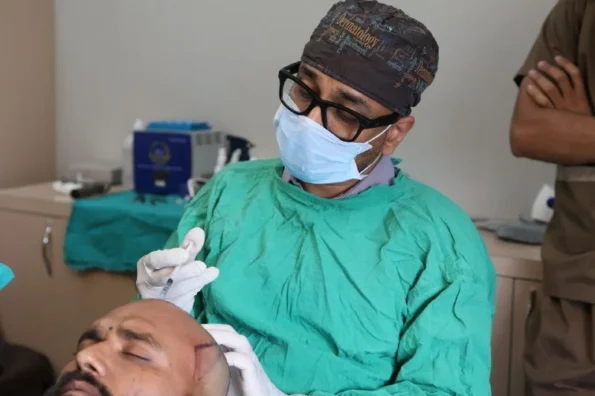
Let’s start with the one that causes the most damage, and the one that’s hardest to fix.
The global demand for hair transplant surgery has exploded in the last decade. And unfortunately, so has the number of unqualified clinics trying to cash in on it.
According to the 2025 ISHRS (International Society of Hair Restoration Surgery) census, repair cases from black-market and low-quality clinics now represent 10% of all hair transplant procedures worldwide, up from just 6% in 2021.
Think about that. One in ten people who walk into a hair transplant clinic ends up needing corrective surgery because of someone else’s mistake.
These cut-price clinics lure patients with attractive pricing and glossy before-after photos. But behind the scenes, they often rely on undertrained technicians instead of qualified surgeons, use outdated tools, skip sterilisation protocols, and rush procedures to handle high volumes. The result? Unnatural hairlines, visible scarring, graft failure, and permanent damage to your donor area.
What to do instead:
Look for a clinic where a qualified, experienced surgeon performs and oversees the entire procedure, not just the initial consultation. Check for board certifications, read verified patient reviews, and ask to see actual before-and-after results, not just curated social media posts. A good surgeon will also tell you honestly if you’re NOT a good candidate right now, rather than taking your money regardless.
Still searching for the right clinic? Don’t risk your results with the wrong hands.
Our expert surgeons assess your hair, scalp, and donor area, and give you an honest evaluation before recommending any procedure.
Mistake #2: Ignoring Post-Op Aftercare Instructions
Here’s something most patients don’t fully appreciate until it’s too late: the surgery itself is only half the battle. What you do in the weeks after your hair transplant procedure determines whether those grafts survive and grow, or die.
The first 10 to 14 days after a hair transplant are absolutely critical. Your newly transplanted hair follicles haven’t anchored themselves yet. They’re sitting in fresh incisions, delicate, vulnerable, and completely dependent on your care.
The most common aftercare mistakes that ruin results
- Touching, scratching, or picking at the transplanted area, even once, can dislodge grafts before they’ve taken root
- Sleeping flat on your back without elevation puts pressure on the scalp and increases swelling
- Sun exposure in the first month, UVB rays damage graft tissue and can lead to graft necrosis (tissue death)
- Wearing tight hats, helmets, or headbands before the grafts have healed
- Washing hair incorrectly, too hard, too soon, or with the wrong shampoo
- Smoking constricts blood vessels and reduces oxygen supply to the scalp, one of the fastest ways to kill newly placed grafts
- Drinking alcohol within the first two weeks slows healing and interferes with prescribed medications
- Skipping follow-up appointments where your surgeon can catch problems early
A failed hair transplant is not always the surgeon’s fault. In many cases, patients who had technically excellent procedures ended up with poor results simply because they didn’t follow their post hair transplant care instructions properly.
What to do instead:
Read your aftercare guidelines like your results depend on it, because they do. Use only the prescribed shampoos. Sleep with your head elevated for at least the first week. Stay out of the sun. Attend every follow-up appointment. And if something feels wrong, call your clinic immediately, don’t wait and hope it resolves on its own.
Already had a transplant and worried about your recovery? Small mistakes can still be corrected if caught early.
We offer dedicated post-op consultations to review your healing progress and course-correct if needed.
Mistake #3: Panicking During the Shedding Phase
This one causes enormous unnecessary distress and, unfortunately, leads some patients to take harmful actions that actually make things worse.
Here’s something your surgeon should tell you clearly before your procedure: after a hair transplant, the transplanted hair will fall out. Not because something has gone wrong. Because it’s supposed to.
This is called the shedding phase or shock loss, and it typically begins around weeks 3 to 6 after surgery. The transplanted hair shafts fall out while the follicles beneath the skin go into a resting state. This is a completely normal part of the hair transplant recovery process.
But because most patients aren’t fully prepared for it, they panic. They assume their transplant has failed. They start frantically applying extra products, over-massaging their scalp, using unproven treatments, or worst of all, going to another unqualified clinic for a “second opinion” that ends up causing real damage.
The actual hair transplant growth timeline looks like this:
Weeks 1–2 | Grafts anchor. Scabbing is normal. |
Weeks 3–6 | Shedding phase transplanted hair falls out |
Months 2–3 | Dormant phase. Follicles rest beneath the scalp. |
Months 3–4 | New growth begins slowly appearing |
Months 4–6 | Visible new hair becomes noticeable |
Months 9–12 | Full, final results visible |
Your final hair transplant results won’t be visible until 9 to 12 months after the procedure. Judging your transplant at month 2 or 3 is like judging a cake by what it looks like halfway through baking.
What to do instead:
Before your surgery, have a detailed conversation with your surgeon about what to expect month by month. Ask for a written recovery timeline. When the shedding phase begins, don’t panic; refer back to that timeline and trust the process. If you’re genuinely concerned, call your clinic and describe what you’re seeing rather than acting on fear.
Mistake #4: Getting a Hair Transplant When Your Hair Isn't Stable Yet
This is a mistake that happens before the surgery even starts, and it’s one of the most overlooked reasons why hair transplant results fall short.
A hair transplant works by moving permanent hair follicles from your donor area (typically the back and sides of the scalp) to the thinning or bald areas. But if your hair loss is still actively progressing, if you’re still losing native hair, getting a transplant right now is like building a house on shifting ground.
Here’s what happens: your transplanted hair stays. But the native hair surrounding it continues to fall. Over time, you’re left with an unnatural “island” of transplanted hair sitting in the middle of a bald patch, a look that’s immediately obvious and very difficult to correct. This is sometimes called the “island effect.”
Conditions that can make you a poor candidate right now:
- Active or rapidly progressing androgenetic alopecia (male or female pattern baldness)
- Untreated thyroid disorders, both hypothyroidism and hyperthyroidism, disrupt the hair growth cycle
- Diabetes affects healing and reduces graft survival rates
- Scalp infections or active inflammation, scarring alopecia, for example, must be in remission before surgery is even considered
- High stress levels, severe nutritional deficiencies, or chronic illness
Additionally, hair should be stable for at least 6 months before undergoing a transplant. Surgery itself creates trauma to the scalp, which can sometimes accelerate temporary hair loss (shock loss) in the native hair around the transplanted area.
Medical treatments like Finasteride and Minoxidil are often recommended before and after a transplant to stabilise remaining hair. PRP (Platelet Rich Plasma) therapy is another evidence-backed option that can both prepare the scalp pre-surgery and support graft survival post-surgery.
What to do instead:
Get a thorough evaluation, not just of your hair, but of your overall health. A responsible clinic will run blood tests, assess your hair loss pattern, review your family history, and tell you honestly whether now is the right time for a transplant or whether you should stabilise first. Rushing into surgery to save money or time almost always costs more of both in the long run.
Mistake #5: Accepting a Poorly Designed Hairline
You can have technically perfect surgery, healthy grafts, excellent survival rates, no scarring, and still walk away with results that look obviously artificial. Why? Because hairline design is as much an art as it is a science, and it’s one of the most commonly under-discussed aspects of hair transplant surgery.
A Poorly Designed Hairline is Usually the Result of:
- Setting the hairline too low creates a look that’s acceptable at 30 but bizarre and unnatural at 50, as your native hair continues to thin around it
- A perfectly straight hairline natural hairlines are never perfectly straight. A straight transplanted hairline immediately signals to anyone who looks closely that the hair isn’t natural
- Wrong angle and direction of graft placement, each hair follicle must be implanted at the correct angle and direction to mimic natural growth. Grafts placed at the wrong angle create a stiff, unnatural appearance
- Using outdated techniques, older plug-based methods placed groups of hair in visible, unnatural clusters. Modern FUE (Follicular Unit Extraction) and Direct Follicular Implantation techniques allow individual follicles to be placed with precision, but only when performed by a skilled surgeon
- Overharvesting the donor area, taking too many grafts from one session, can permanently deplete your donor reserve, making any future sessions impossible or limited
A great surgeon plans the hairline by studying your face shape, your current hair loss pattern, your age, and critically, where your hair loss is likely to progress to in the future. The goal isn’t just to make you look good today. It’s to design a hairline that will look natural, age-appropriate, and proportionate for the next 30 to 40 years.
What to do instead:
Before committing to any clinic, ask your surgeon to explain their hairline design philosophy. Ask them to show you examples of their work on patients with a similar hair loss pattern to yours. A good surgeon will plan the hairline in consultation with you, showing you what it will look like and explaining the reasoning. If a clinic rushes you into surgery without a thorough hairline design conversation, that’s a red flag.
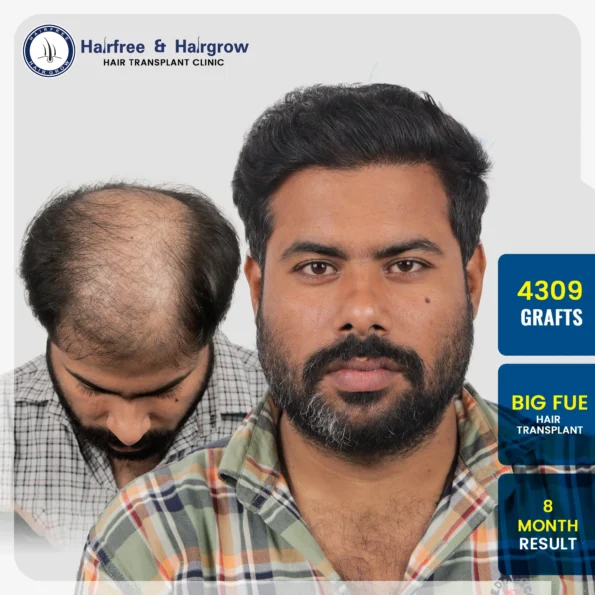
Had a bad experience elsewhere? Results not what you expected? It’s not too late to explore corrective options.
Our surgeons specialise in repair and corrective procedures, from fixing unnatural hairlines to restoring overharvested donor areas.
What If Your Hair Transplant Has Already Gone Wrong?
If you’re reading this after a disappointing hair transplant experience, first take a breath. Depending on the issue, there are real options available.
- Corrective hair transplant surgery can rebuild a more natural hairline, fill in patchy areas, or repair scarred donor zones
- Scalp micropigmentation (SMP) can camouflage scarring or low density
- PRP therapy can sometimes improve the survival and thickness of transplanted hair even after the procedure
- Minoxidil and Finasteride can slow further loss of native hair and protect the results you do have
The most important step is getting an honest assessment from an experienced specialist, not another clinic that will simply offer you another surgery without understanding what went wrong the first time.
The Bottom Line
A hair transplant can be genuinely life-changing, restoring not just your hair, but your confidence, your comfort in social situations, and the way you feel when you look in the mirror. Modern techniques like FUE and Direct Follicular Implantation have success rates of 90–95% when performed correctly.
But “correctly” depends on far more than the surgical technique alone.
It depends on choosing an experienced, qualified surgeon. Following aftercare instructions with discipline. Understanding the recovery timeline. Ensuring your hair is stable before surgery. And insisting on a hairline designed not just for today, but for the decades ahead.
Avoid these 5 mistakes, and your chances of getting results you’re genuinely proud of go up dramatically.
Frequently Asked Questions
-
What is the most common reason a hair transplant fails?
The most common reasons include choosing an unqualified surgeon or low-cost clinic, not following post-op care instructions, and having unrealistic expectations about the recovery timeline. In many cases, hair transplant failure is entirely preventable.
-
Can a bad hair transplant be fixed?
In most cases, yes, though the options depend on the severity of the issue. Corrective surgery, scalp micropigmentation, and PRP therapy are all possible solutions. The earlier the problem is identified, the more options are available.
-
Is it normal to lose transplanted hair after surgery?
Yes, completely. The shedding phase, where transplanted hair falls out around weeks 3 to 6 is a normal and expected part of the hair transplant recovery process. The follicles remain alive beneath the scalp and new growth begins within a few months.
-
How long does it take to see full hair transplant results?
Full, final hair transplant results are typically visible at 9 to 12 months after the procedure. Judging results before this point, especially during the shedding phase, can be very misleading.
-
What should I avoid after a hair transplant?
Avoid touching or scratching the transplanted area, direct sun exposure, smoking, alcohol, tight headwear, strenuous exercise, and harsh shampoos, especially in the first 2 to 4 weeks after surgery. Always follow the specific hair transplant aftercare instructions given by your surgeon.
-
Can smoking ruin a hair transplant?
Yes. Smoking reduces blood circulation and oxygen supply to the scalp, which can negatively affect healing and graft survival. Most surgeons recommend avoiding smoking for at least a few weeks before and after the procedure to protect hair transplant results.
-
How do I know if my hair transplant is successful?
Successful hair transplant recovery usually includes proper healing in the first few weeks, temporary shedding around weeks 3–6, and gradual new growth starting from months 3–4. Final density and natural-looking results are typically visible between 9–12 months after surgery.