

Quick Answer: Can you get a second hair transplant? Yes — and it’s quite common. Over 25% of patients get one. It’s safe when your donor area has sufficient grafts remaining and at least 12–18 months have passed since your first procedure.
You did everything right: research, budget, procedure, patience. But the results didn’t fully meet your expectations.
Maybe the density feels low, the surrounding hair kept thinning, or the hairline doesn’t look quite right. Now you’re wondering: Is a second hair transplant possible? Is it safe? Is it worth it?
Here’s the truth: you’re not alone, and you still have options.
Around 25% of patients go for a second hair transplant. Not always because the first failed hair transplant, but because hair loss continues over time. For many, a second session is simply the next step in the journey to improve density, refine the hairline, or address ongoing thinning.
This guide will give you clear, honest answers.
What Exactly Is a Second Hair Transplant?
A follow-up session is simply a follow-up hair restoration procedure performed after your first transplant. It could happen because the first procedure didn’t deliver the desired density, because your natural hair continued falling out after surgery, because the surgery was performed poorly and needs correction, or because your baldness has progressed with time.
Think of it less as a “retry” and more as a continuation. In fact, many experienced surgeons plan for the possibility of a second session right from the start — especially in patients with advanced baldness patterns (Norwood Scale Grade 5, 6, or 7) where covering the full area in one sitting would require taking too many grafts from the donor zone at once.
A second hair transplant can be done using FUE (Follicular Unit Extraction), FUT (Follicular Unit Transplantation), or Direct Follicular Implantation techniques — often the same method used the first time, though sometimes a different approach is chosen depending on what the previous procedure left behind.
Is Second Hair Transplant Safe? Let's Be Real
This is the question most people Google at 2 AM, and the answer deserves a straight response. Yes, a second hair transplant is safe when the following conditions are in place:
- Sufficient donor hair is still available in the safe donor zone (back and sides of the scalp)
- The first transplant’s donor area has fully healed
- At least 12–18 months have passed since the first procedure so final results can be properly assessed
- The surgeon performs a thorough pre-op analysis of graft quality and density
- Underlying scalp health is good no active infection, scarring, or inflammation
You can understand this better in this detailed guide on donor area hair transplant.
We’ll assess your current hair situation, review your previous procedure, and give you an honest answer.
When Do You Actually Need a Second Hair Transplant?
Not every disappointing result means you need another surgery. But there are clear situations where a second hair session becomes the logical and sometimes necessary next step.
You May Need It If:
- Low Density After First Transplant
One session often can’t give full density, especially in large bald areas. A second session helps thicken the results. - Ongoing Hair Loss (Androgenetic Alopecia)
Transplanted hair stays, but natural hair can keep falling. A second transplant covers newly bald areas.
- First Transplant Failed
Patchy growth, unnatural hairline, or poor results? A hairline reconstruction surgery can fix and improve the outcome.
4. It Was Pre-Planned
In advanced baldness, surgeons often split treatment into two sessions: first for coverage, second for density.
When You May NOT Be Eligible
If your donor area is overused (too many grafts taken), you may not have enough hair left for another procedure. Always get a second opinion.
Hair transplant repair surgery often combines techniques, for example, using FUE to extract and redistribute poorly placed grafts, while also adding new grafts from the donor area to fill gaps. It requires an experienced eye, a steady hand, and careful pre-surgical planning. Not every clinic offers it; always look for a surgeon with documented before-and-after cases in hair repair specifically.
What Happens After a Failed Hair Transplant?
A failed hair transplant is painful financially, emotionally, and sometimes literally. But it’s not a dead end. Here’s what you should do:
Here’s what you should do:
- Wait Before Judging Results
Hair growth takes time. You can’t call it a failure before 12 months. What looks thin at 4–6 months can improve significantly by month 12–15. - Revisit Your Surgeon
If your clinic is reliable, they may offer a correction or touch-up. But if you notice poor practices, lack of follow-up, or unclear communication, it’s better to consult a hair transplant repair specialist. - Consider a Repair Procedure
A second surgery can fix issues like patchy growth, unnatural hairline, or low density, but only after proper evaluation.
A second hair restoration surgery is often the best way to correct poor results, but it must be done carefully, with donor area assessment as the top priority.
Can You Get a Second Hair Transplant After 6 Months?
The short answer is: generally, no, and here’s why.
At 6 months post-op, your scalp is still healing. The transplanted follicles are only partway through their growth cycle. Most patients are in the “shock loss” recovery phase, where transplanted hair has shed and new growth is just beginning to emerge. Assessing your results at this point is nearly impossible.
The medically recommended minimum waiting period is 12 months between two hair transplant procedures. Many surgeons prefer 12–18 months so that:
- The full results of the first transplant are visible and assessable
- Scalp healing is complete and the donor area has recovered
- Ongoing hair loss patterns have become clearer
- The surgeon can plan the second session with accurate, up-to-date data
The only exception: if there’s a serious medical concern like infection or graft rejection that requires urgent intervention.
Not sure how your previous transplant performed or whether you’re ready for a second procedure?
Second Hair Transplant Before and After: What to Realistically Expect
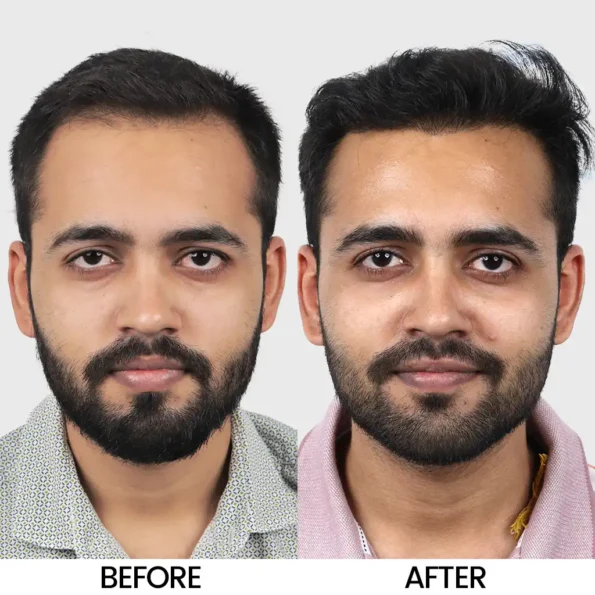
Here’s a realistic breakdown of the timeline and expectations:
Immediately After Surgery (Days 1–14)
The recipient area will be red, slightly swollen, and you’ll notice small scabs around each newly implanted graft. This is completely normal. The donor area (usually the back of the head) will show small extraction marks. Rest, avoid sun exposure, follow your surgeon’s aftercare instructions religiously.
The Shedding Phase (Weeks 2–8)
Most transplanted hairs will fall out during this phase. This is called “shock loss” and it alarms almost every patient who doesn’t know to expect it. The hair shaft sheds, but the follicle remains alive beneath the scalp. This is normal and does not mean the procedure failed.
Early Growth (Months 3–6)
Fine, soft new hairs begin to emerge from the transplanted follicles. Growth is patchy and uneven at this stage. Resist the urge to judge your results here.
Real Results Visible (Months 9–14)
By month 9 to 12, you’ll have a much clearer picture of what the second transplant before and after transformation actually looks like. Hair thickens, texture improves, and the hairline takes its intended shape. Full final results are typically visible at 14–18 months.
Pro Tip: Take dated photos every 4 weeks under the same lighting and angle. Slow, gradual progress is hard to notice day-to-day, but your photo timeline will show you just how far you’ve come.
Second Hair Transplant Cost in India
One of the biggest reasons people consider India for a hair transplant is the significant cost advantage compared to the UK, USA, or Middle East, without compromising on quality at reputable clinics.
Procedure Type | Approx. Cost in India | Grafts (Typical) |
FUE (mild top-up) | ₹40,000 – ₹70,000 | 1,000–1,500 grafts |
FUE (moderate) | ₹70,000 – ₹1,20,000 | 1,500–2,500 grafts |
FUT | ₹50,000 – ₹90,000 | 1,500–3,000 grafts |
Hair Transplant Repair Surgery (correction) | ₹80,000 – ₹1,80,000 | Varies by damage |
Direct Follicular Implantation | ₹90,000 – ₹1,60,000 | 1,000–2,000 grafts |
The hair transplant cost in India depends on several factors: the clinic’s reputation, the surgeon’s experience, the city, the technique used, and most importantly, the number of grafts required.
Compared to the UK (where a second hair transplant can cost £3,000–£8,000) or the US ($5,000–$15,000), India offers the same quality of care from top surgeons at a fraction of the price.
This is why medical tourism for hair restoration in India, particularly in cities like Jaipur, Delhi, and Mumbai, has grown significantly over the last decade.
The Donor Area: The One Factor Everyone Ignores Until It's Too Late
Here’s something not enough people talk about when considering a second hair transplant: the donor area is finite. Once a follicle is harvested, it does not regenerate at the donor site. The hair loss there becomes permanent, though when done correctly, it’s spaced so evenly that it remains undetectable.
Key questions to ask:
- How many grafts were taken in my first procedure?
- What is the current density of my donor zone?
- How many grafts can safely be extracted without visible thinning at the donor site?
- Are body hair grafts (BHT) a viable supplementary option in my case?
If your first transplant didn’t give you the density or hairline you expected, don’t guess your next step — get expert clarity.
At Hairfree Hairgrow Clinic, we’ve helped thousands of patients successfully plan and perform their second hair transplant with precision and long-term results in mind.
Why trust us?
✔ 18+ years of proven experience in hair restoration
✔ Network of 13 advanced clinics across India
Surat, Ahmedabad, Pune (Pimple Gurav), Pune Kharadi, Hyderabad, Kolkata, Bangalore, Bhopal, Delhi (Gurugram), Nagpur, Mumbai, Vapi (Silvassa), and Bangladesh.
Not sure if your hairline qualifies for a transplant? Let our experts analyse your scalp and give you honest, personalised advice.
FAQs
-
How many hair transplants can a person have in total?
There is no fixed maximum number. The limit is entirely determined by your donor area. Some people with dense donor zones can safely undergo 3–4 procedures over a lifetime. However, most patients achieve their desired result within 1–2 transplants. Only 3.3% of patients ever need a third hair transplant.
-
Is a second hair transplant more painful than the first?
Not typically. The procedure itself is performed under local anaesthesia, so you won't feel pain during surgery. Some patients report mild soreness at the donor site for a few days post-op.
-
Should I get a second hair transplant if my hair loss is still active?
Ideally, your hair transplant should be planned once your hair loss has stabilised. If androgenetic alopecia is still progressing rapidly, a second procedure may give you results that look incomplete again within a few years.
-
Does a second hair transplant have a lower success rate than the first?
Not necessarily. When performed by an experienced surgeon who properly assesses graft quality and respects donor area limits, a second hair transplant has a comparable success rate to the first.
-
How do I know if my first hair transplant actually failed?
A failed hair transplant is characterised by less than 20–30% graft survival (normal is 90–95%), no visible growth after 15 months, or growth that is grossly uneven or patchy. Some degree of unevenness in early months is normal.