

Quick Answer:
Yes, weather can affect hair transplants, mainly your comfort and recovery, not your final results. Extreme heat, cold, humidity, or dry conditions can make healing trickier, but they won’t stop your grafts from growing. Across most of India, October to March is the easiest window. If your only option is summer or monsoon, that’s completely fine too, you’ll just need a few extra precautions, covered below.
Hair transplants are a big step toward regaining confidence and a fuller head of hair. But did you know that something as simple as the weather can play a role in how your transplant turns out? Yes, it’s true! Weather can influence hair transplant recovery, healing, and even hair growth. Let’s break it down in easy terms so you can understand how and why weather matters, and what you can do about it.
How Does Weather Affect Hair Transplants?
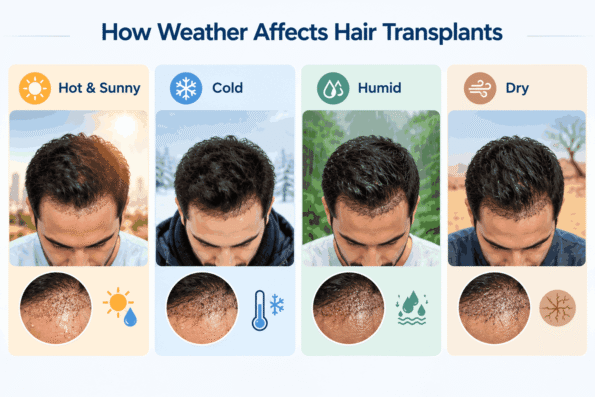
After a hair transplant, your scalp is sensitive. The tiny grafts (new hair roots) need the right conditions to settle in and grow. Weather can either help or make things tricky. Here’s how different types of weather can affect your transplant:
Hot and Sunny Weather: Too much heat or direct sunlight can dry out your scalp. It might also make you sweat a lot, which can irritate the grafts. UV rays from the sun can harm the healing skin too.
Cold Weather: Freezing temperatures can slow down blood flow to your scalp. This might delay healing and affect how fast your hair grows.
Humid Weather: High humidity can keep your scalp moist, which sounds good but can lead to infections if it’s too much. Sweat and moisture might also loosen the grafts.
Dry Weather: Low humidity can make your scalp flaky and itchy. This might tempt you to scratch, which isn’t good for new hair roots.
So, weather affects hair transplants by changing how your scalp heals and how your hair settles in.
The Role of Climate in Hair Growth
The climate impact on hair growth isn’t just about the transplant day. It’s also about the weeks and months after. Your scalp needs a steady environment to support those new follicles. For example:
Warm, balanced climates help blood circulation, which brings nutrients to your hair roots. Extreme climates (super hot or super cold) can stress your scalp and slow down growth.
Think of your new hair like a plant. It needs the right “weather” to thrive!
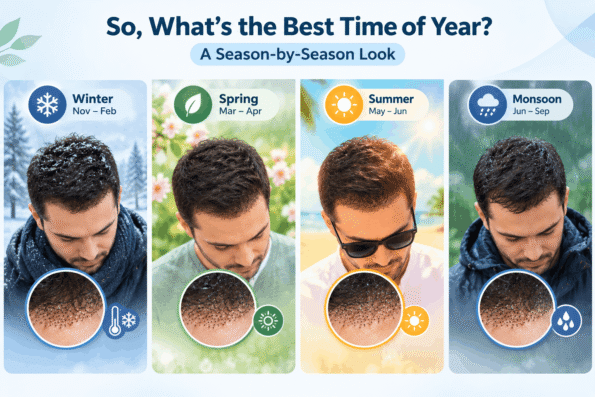
So, What's the Best Time of Year? A Season-by-Season Look
| Season | Months | What Makes It Easy | What to Watch For | Verdict |
|---|---|---|---|---|
|
Winter |
Nov–Feb
|
Low sweat, low humidity, layered clothing hides the healing scalp easily
|
Dry indoor heating can cause flakiness
|
Most comfortable overall
|
|
Spring/Early Summer
|
Mar–Apr
|
Mild temperatures in most regions
|
UV intensity starts climbing by April
|
Good second choice
|
|
May–Jun
|
Peak Summer
|
Longer daylight for scheduling around holidays
|
Heavy sweating, strong sun
|
Doable with strict precautions
|
|
Monsoon |
Jun–Sep
|
Cooler than peak summer
|
High humidity, travel disruptions
|
Needs the most careful aftercare
|
Tips for Post-Hair Transplant Care in Different Weather
Good post-hair transplant care can protect your results, no matter the weather. Here are some easy tips to follow:
| Weather Type | What to Do | What to Avoid |
|---|---|---|
|
Hot and Sunny
|
Wear a loose hat, stay in shade, use sunscreen later
|
Direct sun, tight caps, heavy sweating
|
|
Cold
|
Keep your head warm with a soft scarf, stay indoors
|
Extreme cold, harsh winds
|
|
Humid
|
Keep scalp clean, use a fan to stay dry
|
Over-washing, touching grafts
|
|
Dry
|
Moisturize lightly (ask your doctor), drink water
|
Scratching, harsh products
|
These simple steps can make a big difference in how well your transplant heals.
Why Does Weather Affect Hair Transplants?
Your scalp is like a little ecosystem after a transplant. The grafts are delicate, and your skin is busy repairing itself. Weather changes things like moisture, temperature, and even how much you sweat. All of this can either support or stress your healing process. That’s why weather affects hair transplants more than you might think!
Monsoon Aftercare: What Nobody Tells You
Monsoon is the season we get asked about the most, and for good reason. Recovering with 80%+ humidity in the air is genuinely different from recovering in dry winter conditions. If your surgery date lands between June and September, here’s what actually helps:
- Wash on your doctor’s schedule, not more. It’s tempting to rinse the scalp often when it feels sticky from humidity, but over-washing in the first two weeks does more harm than the humidity itself.
- Keep the healing area dry between washes. A soft cotton cloth to gently pat away sweat (never rub) makes a real difference on muggy days.
- Use a dehumidifier or AC in your recovery room if you can. Bringing indoor humidity down, even for a few hours a day, meaningfully lowers infection risk during the first two weeks.
- Carry a compact umbrella, not a tight cap, if you’re out in the rain. Tight headwear that traps moisture against a healing scalp is worse than a few raindrops.
- Watch for early infection signs, unusual redness, warmth, or discharge around grafts, and contact your clinic immediately rather than waiting it out.
- Build in a buffer day for travel. Heavy rain disrupts flights and trains more in monsoon than any other season, so don’t schedule your follow-up visit too tightly against your return journey.
If you’re in a city like Pune, where the monsoon is long and consistent rather than sudden and heavy, indoor humidity control matters even more than umbrella logistics. Keeping your recovery space dry for at least a few hours daily is the single highest-impact thing you can do during a Pune monsoon recovery.
Planning Your India Trip: For International and NRI Patients
If you’re travelling from outside India, the calculation looks a little different. Your comfort during recovery still matters, but so does the trip logistics.
- Avoid stacking your trip against the monsoon if you’re coming from a very different climate. Adjusting to India’s humidity while also adjusting to a new time zone and recovering from surgery is a lot at once.
- October through March lines up with India’s general tourism season too, so flights and accommodation tend to be smoother to plan.
- Build in a few extra recovery days before you fly back. Long-haul flights involve dry cabin air and prolonged sitting, both easier to manage a week or two into recovery rather than in the first few days.
- If you’re weighing India against other destinations, our Medical Tourism for Hair Transplant in India page covers cost comparisons and what your full trip typically looks like, start to finish.
What Experts Say
“Patients often come in convinced that winter is the only ‘safe’ time for a transplant, and I understand why, it’s the most comfortable season to heal in. But I’ve seen excellent results in every season we operate in. The real variable isn’t the calendar, it’s how closely someone follows their aftercare plan for their specific climate,” says Dr. Kiran Chotaliya, MD (Skin & VD), MBBS, DDV, Dermatologist and Hair Transplant Surgeon at HairFree HairGrow Clinic.
Doctors agree that weather isn’t the only factor, but it’s one to watch. They suggest keeping your scalp protected and following their care advice no matter the season. Pair that with good post-hair transplant care, and you’re setting yourself up for success.
Real-Life Example
Imagine you get a transplant in the middle of summer. The sun’s blazing, and you’re sweating all day. Without a hat or shade, your scalp could get irritated, and your grafts might struggle. Now picture doing it in a cool, breezy fall, your scalp stays comfy, and healing feels easier. Weather makes a difference!
Final Thoughts on Weather and Hair Transplants
So, can weather affect hair transplants? Absolutely. From heat to cold, humidity to dryness, the climate around you plays a part in hair transplant recovery and growth. Proper post-hair transplant care helps in achieving the best results. There isn’t a single “best” month that applies to everyone, it depends on your city, your travel plans, and how much effort you can put into aftercare for that season. If you’re planning a hair transplant, choose a reliable clinic like Hairfree & Hairgrow for expert guidance and care.
Not sure which window fits your situation?
Book a free hair analysis and we’ll help you map out a timeline that works for your city, travel plans, and hair goals.
FAQs About Weather and Hair Transplants
-
1. Can I get a hair transplant in rainy weather?
Yes, but keep your scalp dry after the procedure. Rain can carry dirt or germs, so use an umbrella or hood till you're healed.
-
2. Does cold weather stop hair growth after a transplant?
It won't stop it, but it might slow it down. Keep your scalp warm to help climate impact on hair growth stay positive.
-
3. How long should I avoid the sun after a hair transplant?
Stay out of direct sun for at least 2-4 weeks. After that, use a hat or sunscreen as your doctor suggests.
-
4. Is humidity bad for hair transplant recovery?
Too much humidity can increase infection risk. Keep your scalp clean and dry for good post-hair transplant care.
-
5. What's the best season for a hair transplant?
Mild seasons like winter or early spring are ideal in most of India. They avoid extremes and make recovery smoother.
-
6. Is a dehumidifier good for hair transplant recovery?
Yes, especially during monsoon or in humid coastal cities. Keeping indoor humidity lower reduces how long your scalp stays damp, which lowers infection risk during the first two healing weeks.
-
7. Does temperature affect hair growth after a transplant?
It can affect comfort and healing speed slightly (cold slows circulation, heat increases sweating), but it doesn't change your final results.
-
8. I'm travelling from outside India. When should I plan my trip?
October to March tends to work best, both for recovery comfort and because it overlaps with India's general travel season.
-
9. What is the best month for a hair transplant in India?
There's no single best month for the whole country, but October through March works well for most cities because of lower humidity and milder sun.