
QUICK ANSWER BOX
Natural remedies like scalp massage, onion juice, and hair oils improve scalp health and reduce breakage, but they can’t reverse genetic (androgenetic) hair loss. If you’re seeing a receding hairline or thinning crown, a dermatologist can confirm the cause.
Looking for natural ways to grow hair? The best way to grow hair naturally is by maintaining a healthy diet, using herbal oils, applying DIY hair masks, and following a proper hair care routine.
Natural ingredients like aloe vera, coconut oil, onion juice, and fenugreek seeds can promote hair growth without side effects. Regular scalp massages and a balanced diet with essential vitamins also help in achieving thicker, stronger hair.
Losing hair can be stressful, but the good news is that there are natural ways to grow hair that actually work! Unlike chemical treatments, natural remedies nourish your hair from the root, making them strong and healthy. This guide will help you understand how to stop hair loss and regrow hair naturally using home remedies, oils, and dietary changes.
“Most patients who come to us have already tried every kitchen remedy for months before asking a doctor. Natural care has real value for scalp health, but if the hair loss is genetic, no oil or mask changes the underlying cause. The sooner that distinction is made, the less time and hope is wasted.”
Dr. Shridevi Lakhe, M.B.B.S., D..D.V (Skin – V.D) Dermatologist & Hair Transplant Surgeon
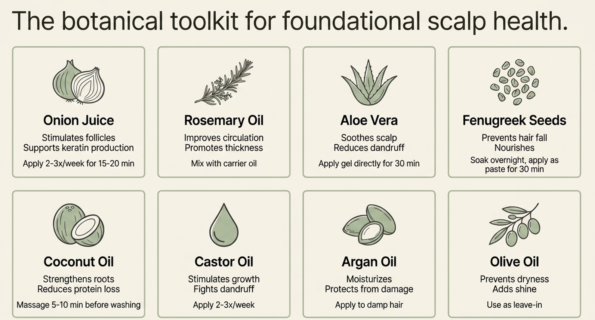
| Remedy | Benefits | How to Use |
|---|---|---|
|
Onion Juice
|
Stimulates hair follicles
|
Apply 2-3 times a week
|
|
Aloe Vera
|
Soothes scalp & reduces dandruff
|
Apply gel directly
|
|
Coconut Oil
|
Strengthens roots & prevents breakage
|
Massage before washing
|
|
Rosemary Oil
|
Improves scalp circulation
|
Mix with carrier oil
|
|
Egg Mask
|
Boosts protein for stronger hair
|
Use once a week
|
|
Fenugreek Seeds
|
Prevents hair fall & nourishes scalp |
Soak & apply as a paste
|
Not sure if home care is enough for your hair loss?
Get a free scalp and hair analysis from our specialists and know exactly what’s causing it.
1. Scalp Massage: Simple Yet Effective
One of the easiest natural ways to grow hair is by massaging your scalp daily. Massaging increases blood flow to hair follicles, encouraging healthy hair growth.
How to Do It?
- Use warm coconut oil or castor oil.
- Gently massage in circular motions for 5–10 minutes.
- Leave it overnight and wash your hair the next day.
2. Best Natural Oils for Hair Growth
Natural oils can deeply nourish the scalp and improve hair health. Some of the best natural oils for hair growth include:
| Oil | Benefits | How to Use |
|---|---|---|
|
Coconut Oil
|
Strengthens hair, reduces protein loss
|
Massage before washing |
|
Castor Oil
|
Stimulates hair growth, fights dandruff
|
Apply 2-3 times a week
|
|
Rosemary Oil
|
Boosts circulation, promotes hair thickness
|
Mix with carrier oil
|
|
Argan Oil
|
Moisturizes and protects from damage
|
Apply to damp hair
|
|
Olive Oil
|
Prevents dryness, adds shine
|
Use as a leave-in oil
|
Using these oils regularly can prevent hair thinning and strengthen hair roots.
3. DIY Hair Masks for Thicker Hair
Using DIY hair masks for thicker hair can provide deep nourishment to your scalp and strands. Here are some easy recipes:
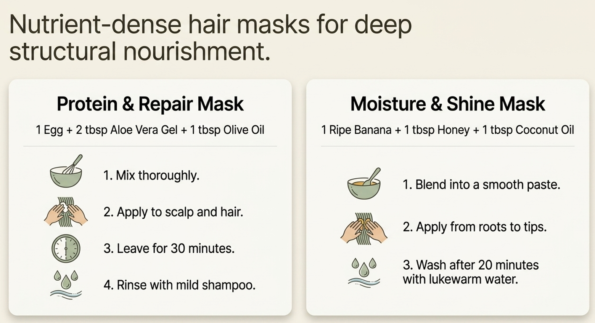
Egg & Aloe Vera Mask
- 1 egg
- 2 tbsp aloe vera gel
- 1 tbsp olive oil
How to Use
- Mix all ingredients well.
- Apply to scalp and hair.
- Leave for 30 minutes and rinse with mild shampoo.
Banana & Honey Mask
- 1 ripe banana
- 1 tbsp honey
- 1 tbsp coconut oil
How to Use
- Blend everything into a smooth paste.
- Apply from roots to tips.
- Wash after 20 minutes with lukewarm water.
4. Hair Growth Home Remedies for Longer Hair
There are many hair growth home remedies for thicker hair that can improve scalp health and stimulate hair follicles. Some of the best remedies include:
Aloe Vera Gel
Aloe vera contains enzymes that improve hair growth and reduce dandruff.
- Extract fresh aloe vera gel and apply it to the scalp.
- Leave it for 30 minutes and rinse with lukewarm water.
Onion Juice
Onion juice is rich in sulfur, which strengthens hair strands. It’s one of the most searched natural options specifically for a receding hairline, since sulfur is believed to support keratin production at the follicle.
- Blend an onion and extract the juice.
- Apply to the scalp for 15-20 minutes before washing.
Fenugreek Seeds
Fenugreek seeds help in reducing hair fall and promote growth.
- Soak fenugreek seeds overnight and grind them into a paste.
- Apply to the scalp and wash after 30 minutes.
5. Home Remedies for Receding Hairline
If your hairline is receding, try these home remedies:
- Onion Juice: Apply fresh onion juice on your scalp 2-3 times a week.
- Amla Powder & Lemon: Mix and apply as a mask to strengthen hair roots.
- Fenugreek Seeds Paste: Soak fenugreek seeds overnight, grind, and apply on the scalp.
A receding hairline is one of the earliest signs of androgenetic (pattern) hair loss. Home remedies can support scalp health, but they generally can’t reverse a hairline that’s already receding, that usually needs a clinical evaluation to confirm the cause.
Noticed your hairline moving back? That’s worth checking properly, not guessing with more remedies. Our doctors can tell you in one visit whether it’s reversible naturally or needs treatment.
6. Vitamins for Natural Hair Growth
Your diet plays a huge role in hair growth. Eating foods rich in vitamins for natural hair growth can make a big difference.
Essential Hair Growth Vitamins
| Vitamin | Benefits | Food Sources |
|---|---|---|
|
Biotin (B7)
|
Strengthens hair
|
Eggs, nuts, bananas
|
|
Vitamin D
|
Prevents hair thinning
|
Sunlight, dairy products
|
|
Vitamin E
|
Improves scalp health
|
Almonds, sunflower seeds
|
|
Iron
|
Prevents hair fall
|
Spinach, red meat
|
7. Stress and Hair Loss: The Connection
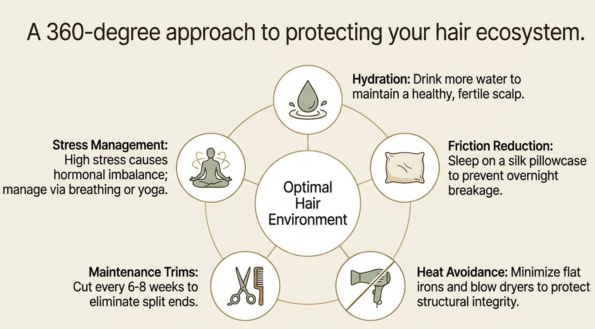
Stress is one of the biggest reasons for hair fall. High stress leads to hormonal imbalance, which affects hair growth. Try meditation, yoga, or breathing exercises to control stress and promote healthy hair growth.
8. Natural Hair Growth Tips: Lifestyle Changes That Help
Making a few small changes in your daily routine can help your hair grow healthier and stronger. Here are some easy tips to follow:
- Drink More Water – Staying hydrated keeps your scalp healthy, which helps your hair grow.
- Avoid Too Much Heat – Try not to use straighteners, curling irons, or blow dryers too often. Heat can make your hair weak and break easily.
- Get Regular Trims – Cutting your hair every 6-8 weeks helps remove split ends and keeps your hair looking fresh.
- Use a Silk Pillowcase – Sleeping on silk reduces friction, which means less breakage and smoother hair in the morning.
These simple habits can make a big difference in keeping your hair strong, healthy, and growing well.
9. When Natural Remedies Aren't Enough
Home remedies work well for general scalp health, dandruff, dryness, and mild seasonal shedding. But they have real limits.
Natural remedies typically help with:
- Dry or flaky scalp
- Hair breakage from heat or styling damage
- Temporary shedding from stress or nutrient gaps
- Improving shine, softness, and manageability
Natural remedies typically do not reverse:
- Androgenetic alopecia (male/female pattern hair loss), genetic, hormone-driven, and progressive
- Receding hairlines or a widening scalp part
- Post-partum or thyroid-related hair loss without addressing the underlying cause
- Advanced hair thinning where follicles have already miniaturized
If you’ve been consistent with natural remedies for 3–6 months without improvement, especially with a receding hairline or thinning crown. That’s usually a sign the cause is genetic or medical, not something home care alone will fix.
Pattern hair loss isn’t rare, it’s the most common cause of hair loss overall. Androgenetic alopecia affects an estimated 50 million men and 30 million women in the U.S. alone, and more than 50% of men over age 50 show some degree of hair loss. If your hair loss fits this pattern, natural remedies can support your scalp, but they won’t address the underlying cause on their own.
10. Natural Remedies vs PRP/GFC vs Hair Transplant, Which One Do You Need?
Not all hair loss needs the same solution. Here’s how the options compare:
| Approach | Best For | What It Can't Fix |
|---|---|---|
|
Natural remedies (oils, masks, diet)
|
Scalp health, minor breakage, temporary shedding |
Genetic or hormonal hair loss
|
|
PRP (Platelet-Rich Plasma)
|
Early-stage thinning, boosting existing follicle strength
|
Fully bald or scarred areas
|
|
GFC (Growth Factor Concentrate)
|
Similar to PRP, often used for early pattern hair loss
|
Advanced baldness with no active follicles
|
|
Hair Transplant
|
Receding hairline, bald patches, advanced pattern hair loss
|
N/A, this is the permanent solution for miniaturized/lost follicles
|
A simple way to think about it: natural remedies maintain what you have, PRP/GFC can slow down and partially reverse early thinning, and a hair transplant restores hair where follicles are already gone. The right starting point depends on how advanced the hair loss is, which is exactly what a scalp analysis is for.
Final Thoughts
Growing hair naturally is possible with the right care and patience. These natural ways to grow hair, from hair growth home remedies to the best natural oils for hair growth, combined with a healthy lifestyle, can help you achieve long, thick, and healthy hair.
Not seeing results, or noticing your hairline change?
That’s frustrating, and it’s worth getting a clear answer instead of guessing with more home remedies.
FAQs
-
1. Can onion juice or aloe vera actually regrow hair?
They can improve scalp circulation and reduce breakage, which supports existing hair. They do not regrow hair lost to genetic pattern baldness, since that requires addressing DHT sensitivity at the follicle level.
-
2. How long should I try home remedies before seeing a doctor?
If there's no visible improvement after 3–6 months of consistent use, or if you notice a receding hairline or thinning crown, consult a dermatologist rather than continuing home care alone.
-
3. Is natural hair regrowth possible after a receding hairline?
Natural remedies alone typically cannot reverse a receding hairline once follicles have miniaturized. Clinical options like PRP, GFC, or hair transplant are usually needed to restore density in these cases.
-
4. Does scalp massage really help hair grow faster?
Yes, for scalp circulation and relaxation, which can support healthier existing hair, but it doesn't change hormonal or genetic causes of hair loss, so results are limited to maintenance rather than regrowth.
-
5. Can diet and vitamins alone stop hair fall?
A nutrient deficiency (iron, biotin, vitamin D) can cause hair fall, and correcting it helps, but if your diet is already adequate and hair fall continues, the cause is likely hormonal or genetic, not nutritional.
-
6. What's the difference between normal shedding and pattern hair loss?
Normal shedding is diffuse (all over the scalp) and temporary. Pattern hair loss follows a specific pattern, with a receding hairline in men, a widening part in women, and is progressive without treatment.