
Medically Reviewed by Dr. Chintan Bhavsar, M.D. (Skin & V.D.), Co-Founder & Chief Surgeon, HairFree HairGrow
Quick Answer: Telogen Effluvium usually lasts 3 to 6 months, with full hair volume recovery taking 6 to 12 months. Shedding typically starts 3–4 months after a stressful trigger (illness, childbirth, surgery, crash dieting), peaks around month 4–6, and regrowth begins by month 6–9.
Noticing extra hair in the shower, on your pillow, or collecting in your hairbrush can feel scary. Sometimes, you may even see small thinning patches and panic that something is seriously wrong. But if this shedding started a few months after a stressful event, illness, childbirth, or major lifestyle change, there’s a high chance you’re dealing with Telogen Effluvium (TE), a temporary, stress-triggered hair shedding condition.
In this blog, you’ll learn how long does telogen effluvium last, why it happens, and what you can do to support healthy regrowth.
What Is Telogen Effluvium?
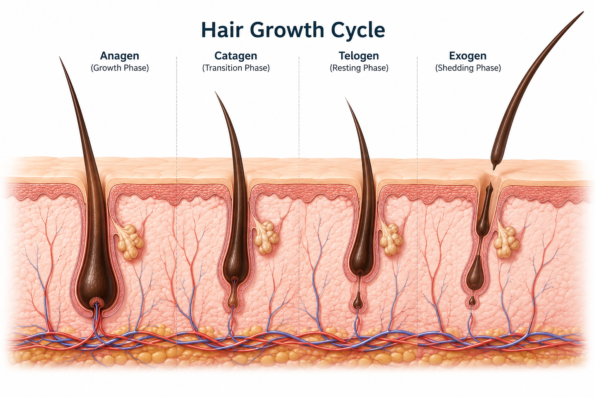
Your hair grows in cycles. At any given time:
85–90% of your hair is in the anagen (growth) phase, which lasts 2–5 years. 10–15% is in the telogen (resting) phase, which lasts 3–4 months. Normally, shedding around 100 hairs a day is completely normal.
Telogen Effluvium occurs when a higher percentage of hairs (20–30%) shift into the telogen phase all at once.
This sudden shift means many strands stop growing and begin shedding together after a few months, causing noticeable thinning.
Why Does Telogen Effluvium Happen?
Telogen effluvium happens when the body experiences significant physical or psychological stress.
Your body prioritizes survival functions and temporarily reduces “non-essential” processes like hair growth.
Common triggers include:
- Major surgery
- Childbirth
- Severe illness (including COVID-19)
- Strong medications or sudden dose changes
- Acute emotional stress
- Caregiving burnout
- Work-related mental stress
- Crash dieting or severe calorie restriction
- Deficiencies in protein, iron, zinc, or vitamin D
- Thyroid disease
- Inflammatory bowel disease
- High fever or infections
A prospective cohort study following hospitalized COVID-19 patients found that nearly 69% reported telogen effluvium at follow-up, most commonly with early-onset, moderate hair loss
(source: PubMed cohort study).
So, How Long Does Telogen Effluvium Last?
Telogen Effluvium usually lasts 3 to 6 months, and full recovery takes 6 to 12 months.
Every case is a little different, though. At HairFree & HairGrow, when we assess a patient’s telogen effluvium timeline, we look at the trigger, how long it’s been active, and current nutrition and thyroid status, because these three factors are what actually decide whether someone recovers on the faster or slower end of that range.
Expert Opinion
Most patients panic the moment they see extra hair on their pillow, but true telogen effluvium is one of the most reversible types of hair loss we treat. The mistake I see most often is patients waiting too long to check their thyroid and ferritin levels, that single blood test can shave months off an unnecessarily prolonged recovery.
says Dr. Chintan Bhavsar, Co-Founder & Chief Surgeon at HairFree & HairGrow.
Understanding the timeline deeply will help you feel more in control.
1. Stress Event Happens (Day 0)
Birth, surgery, illness, dieting, emotional stress, etc.
2. Nothing Happens Right Away (Month 0–3)
The hair is in the telogen phase, but shedding hasn’t started yet.
3. Shedding Starts (Month 3–4)
This is why your hair may start falling 3–4 months after the stress.
Example: You delivered your baby in October, and your severe shedding starts in January.
4. Shedding Continues (Month 4–6)
Hair fall looks dramatic, but it is reversible.
Around this time, you may also notice small dents in your nails, because nail growth also slows during stress.
5. Regrowth Begins (Month 6–9)
Lorem ipsum dolor sit amet, consectetur adipiscing elit. Ut elit tellus, luctus nec ullamcorper
As the follicles move back into the anagen phase:
You’ll notice short spiky baby hairs coming out Your hairline may look fuzzy Thin areas start filling in
This is a positive sign that your hair is growing again.
6. Full Recovery (Month 9–12+)
Your hair volume returns to normal, but growing it back to its previous length can take much longer because hair grows slowly.



Telogen Effluvium vs Pattern Hair Loss
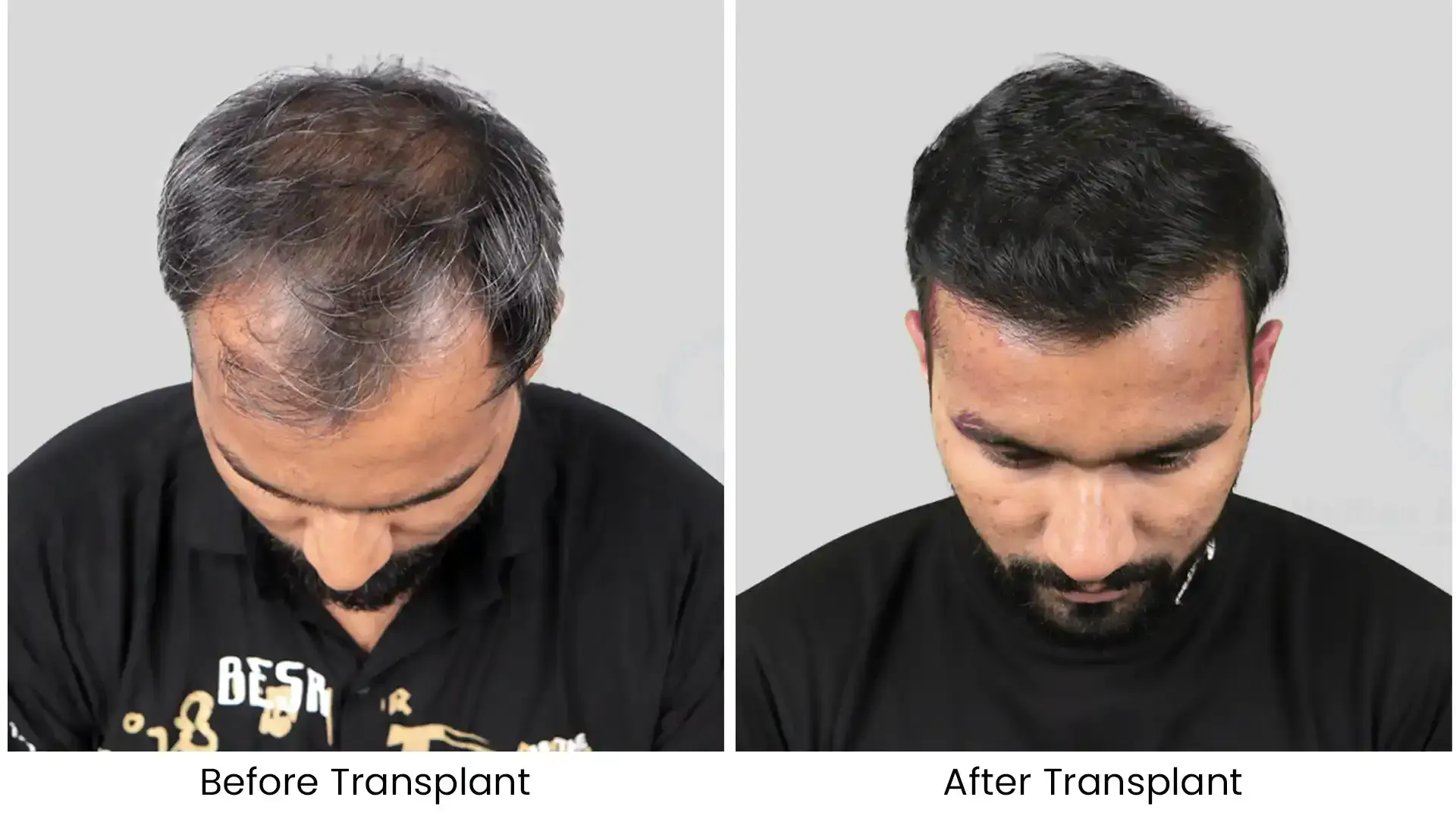
Although both conditions cause hair thinning, Telogen Effluvium (TE) and Pattern Hair Loss (Androgenetic Alopecia) are very different. Understanding the difference can help you know what to expect and when to seek treatment.
| Telogen Effluvium | Pattern Hair Loss |
|---|---|
|
ContentTriggered by stress, illness, surgery, childbirth, or nutritional deficiencies |
Primarily caused by genetics and hormones
|
|
Sudden increase in hair shedding
|
Gradual thinning over months or years
|
|
Hair falls evenly across the scalp
|
Hair loss usually starts at the temples, crown, or widening part
|
|
Hair follicles remain healthy
|
Hair follicles gradually shrink over time
|
|
Usually temporary and reversible
|
Progressive without appropriate treatment
|
|
Recovery is common once the trigger is addressed
|
Often requires ongoing medical treatment to maintain results
|
If you’re unsure which condition you’re experiencing, a dermatologist can evaluate your scalp, medical history, and hair growth pattern to provide an accurate diagnosis.
When to See a Doctor?
Most cases (95%) resolve on their own without treatment. But you need medical evaluation if you notice any of the following telogen effluvium recovery signs are missing:
- Your shedding lasts longer than 6–9 months
- You see smooth bald patches
- Your eyebrows or beard are thinning
- There is severe itch, burning, or redness
- You suspect thyroid, autoimmune, or nutritional issues
Conditions like Alopecia Areata, Female/Male Pattern Baldness, Frontal Fibrosing.
How to Speed Up Telogen Effluvium Recovery
Telogen Effluvium (TE) can be emotionally overwhelming, especially when shedding feels sudden and uncontrollable. While the condition is temporary, certain habits can support the recovery process and help your hair return to its normal growth cycle sooner. Here’s how to approach TE with care and intention.
1. Reduce or Remove the Trigger
TE almost always begins with a stressor, physical or emotional. If that stress continues, the shedding can persist longer than expected.
Take time to identify what may have triggered your TE: illness, emotional pressure, burnout, major life changes, or intense work schedules.
Simple stress-management practices like meditation, yoga, gentle walks, regular sleep, or speaking with a counselor can make a meaningful difference. Setting healthy boundaries at work and slowing down when needed helps your body shift back into balance.
2. Focus on a Balanced, Protein-Rich Diet
Your hair reflects your overall nutritional health. Because hair is made of protein, your body needs consistent nourishment to support strong regrowth.
Aim for meals that are colourful and nutrient-dense — lean protein, iron-rich foods, zinc, vitamin D, fresh fruits, and vegetables.
Avoid crash diets or rapid weight loss. They are one of the most common triggers for Telogen Effluvium and can prolong shedding.
3. Consider Supplements When Necessary
Supplements don’t stop TE, but they can provide nutritional support during the recovery phase. Products such as Viviscal or Nutrafol may be helpful for some people, especially if their diet is lacking.
However, these are optional and often expensive. Use them only if needed and avoid them during pregnancy or breastfeeding. If you’re unsure, speak with a healthcare provider before starting any supplement.
4. Minoxidil for Faster Regrowth
Lorem ipsum dolor sit amet, consectetur adipiscing elit. Ut elit tellus, luctus nec ullamcorper mattis, pulvinar dapibus leo.
Minoxidil (topical or oral) is one of the few scientifically supported options that can help move hair back into the growth phase more quickly.
If you choose to use it, consistency matters. Most people need at least 9–12 months of continuous use to see stable results.
Stop only after your shedding and density have fully stabilized. Remember, minoxidil is not recommended during pregnancy or breastfeeding.
5. Gentle, Natural Support Options
While natural therapies don’t “cure” TE, they can support scalp health and improve hair quality during recovery. Rosemary oil, castor oil, LED light therapy, professional microneedling, and PRP treatments are commonly used.
Choose what aligns with your comfort level and budget. TE improves even without high-cost treatments, so don’t feel pressured into anything unnecessary.
Want to Recover Your Hair Faster?
The sooner the underlying cause is identified, the sooner your hair can return to its normal growth cycle. Our dermatologists evaluate your scalp, nutrition, lifestyle, and medical history to create a customized recovery plan.
Is Telogen Effluvium Permanent?
No. Telogen Effluvium is overwhelmingly temporary. Most people see shedding resolve within 3–6 months, followed by regrowth over the next several months.
Only a small percentage (around 5%) experience prolonged TE, usually due to untreated medical issues such as thyroid imbalances, iron deficiency, chronic stress, or autoimmune conditions. Once the underlying cause is addressed, the hair cycle typically returns to normal.
Does Hair Grow Back After Telogen Effluvium?
Yes. In the vast majority of cases, hair grows back after Telogen Effluvium because the hair follicles are not permanently damaged. They simply enter the resting phase earlier than normal before restarting the natural growth cycle.
As the underlying trigger resolves, most people begin noticing tiny new hairs along the hairline and parting within 6–9 months. Over time, these new hairs become thicker, helping restore overall hair density. While shedding often settles within a few months, it can take 9–12 months or longer for hair to regain its previous volume and length due to the naturally slow rate of hair growth.
Conclusion
Lorem ipsum dolor sit amet, consectetur adipiscing elit. Ut elit tellus, luctus nec ullamcorper mat
If you’re still worried about how long does telogen effluvium last, here’s the reassuring bottom line: the shedding phase settles on its own for nearly everyone, and the months that follow bring steady, visible improvement, provided the underlying trigger is addressed. Every person’s telogen effluvium timeline is slightly different, but improvement almost always happens.
At Hairfree & Hairgrow Clinic, we go beyond basic advice. Our experts look at your scalp, your lifestyle, your health, and your hair cycle to understand what’s really happening and what will help you recover faster.
- Gentle, medically backed treatments
- Deep hair & scalp analysis
- Targeted plans for shedding, thinning, and regrowth
- Supportive care that helps you feel seen, not just treated
It’s normal to feel anxious watching your hair fall out, but you don’t have to figure out your recovery timeline alone. Our doctors can assess your specific trigger and give you a clear, personalized recovery plan.
Book your consultation
FAQs
-
1. What actually happens when I see a doctor for telogen effluvium? What tests should I expect?
A doctor typically starts with a scalp exam and a detailed history of recent triggers (illness, surgery, diet, medication changes), then usually orders blood work, a thyroid panel (TSH), ferritin/iron levels, and sometimes vitamin D or zinc.
-
2. My telogen effluvium timeline seems slower than 3–6 months; what should I do?
A slower timeline doesn't automatically mean something is wrong, but it's worth checking three things before assuming the worst: whether the original trigger has fully resolved, whether you've had thyroid and ferritin levels tested, and whether a new stressor has restarted the shedding cycle.
-
3. I'm seeing baby hairs but still shedding, is that normal?
Yes, this is one of the most common points of confusion. Regrowth and shedding can overlap for several weeks to a couple of months as your hair cycle resets, some follicles enter the growth phase while others are still finishing their resting phase.