
Sapphire FUE hair transplant success rates are generally high, often cited as exceeding 90-95%, with some sources claiming up to 99%.
The Sapphire FUE hair transplant technique has emerged as an advanced, minimally invasive procedure capable of delivering high-density, natural-looking results. Its distinguishing feature lies in the use of sapphire crystal microblades, which create precise and uniform recipient sites.
These blades allow significantly improved incision accuracy compared to steel instruments, leading to faster healing and improved graft survival. Hairfree & Hairgrow incorporates this technology into its surgical protocols for patients requiring refined, aesthetic correction of hair loss.
Why Sapphire FUE Is a Game-Changing Technique
The Sapphire FUE transplant method integrates synthetic sapphire blades designed for microscopic incisions. Because sapphire is an exceptionally hard and biologically stable material, each blade maintains a consistent cutting edge throughout the procedure. This allows surgeons to create narrow, V-shaped channels that closely match the diameter of the follicular units being implanted.
Dermatologic literature, including data from the International Journal of Trichology, demonstrates that sapphire incisions reduce epidermal trauma and minimize postoperative inflammation. The precision offered by sapphire blades provides improved graft anchorage and lower risks of compression, which are critical factors for long-term follicular stability.
This level of incision control positions the Sapphire FUE transplant as a suitable choice for patients requiring high-density packing, especially in frontal reconstruction zones.
Sapphire FUE vs Traditional FUE: What Makes It Different?
When comparing Sapphire FUE vs FUE, the most definitive clinical difference lies in incision geometry. Steel blades create slightly wider and rounded entry points, whereas sapphire blades generate narrower, more controlled angles, allowing tighter spacing and improved direction alignment.
For instance, hairline reconstruction demands micro-incisions that mimic natural follicular emergence. Sapphire instrumentation enables this degree of accuracy, reducing the risk of visible transplantation patterns—the unnatural “plugged” appearance seen in outdated methods.
The Sapphire FUE transplant therefore becomes the technique of choice when natural contouring of frontal zones, temples, or irregular recession patterns is required.
Step-by-Step Sapphire FUE Procedure
At Hairfree & Hairgrow, the procedural steps for the hair transplant follow a standardized medical structure:
Donor Evaluation
Dermoscopy is performed to assess follicular density, hair shaft calibre, and transection susceptibility.
Local Anaesthesia and Tumescent Preparation
Controlled tumescence ensures optimal scalp rigidity for recipient site creation, improving blade accuracy.
Follicular Extraction
A motorized micro-punch is used to harvest individual follicular units while minimizing transection.
Recipient Site Creation with Sapphire Microblades
Each channel is created with strict attention to depth, angulation, and direction. The sharpness and stability of the blade ensure smooth, uniform entry points.
Follicular Implantation
Grafts are inserted delicately into the prepared channels, ensuring correct orientation for a natural appearance.
The precision of each step contributes to the overall superiority of the Sapphire FUE in selected cases.
Medical Benefits of Sapphire FUE: A Clinical Perspective
The recognised Sapphire FUE benefits in medical literature include:
- Reduced epithelial disruption due to smaller incision width
- Lower postoperative swelling and faster re-epithelialization
- Higher graft density ais chievable per square centimeter
- Improved direction control and natural angulation
- Reduced risk of scarring due to minimal disruption of surrounding tissue
- Higher survival rates for delicate single-hair follicular units
Several European clinical reviews report graft survival rates of 85–95% under sapphire-assisted protocols. These findings reinforce the value of the Sapphire hair transplant for patients seeking natural cosmetic outcomes.
Expected Growth Pattern and Sapphire FUE Results
The Sapphire FUE results follow a predictable timeline based on anagen and telogen cycling patterns:
First Week
Minor edema and scabbing occur. Sapphire incisions, being narrower, close rapidly.
1–3 Months
Transplanted follicles undergo physiological shedding (telogen effluvium). This is an expected and necessary stage.
4–6 Months
Initial regrowth begins. Early hair strands appear fine and gradually increase in calibre.
9–12 Months
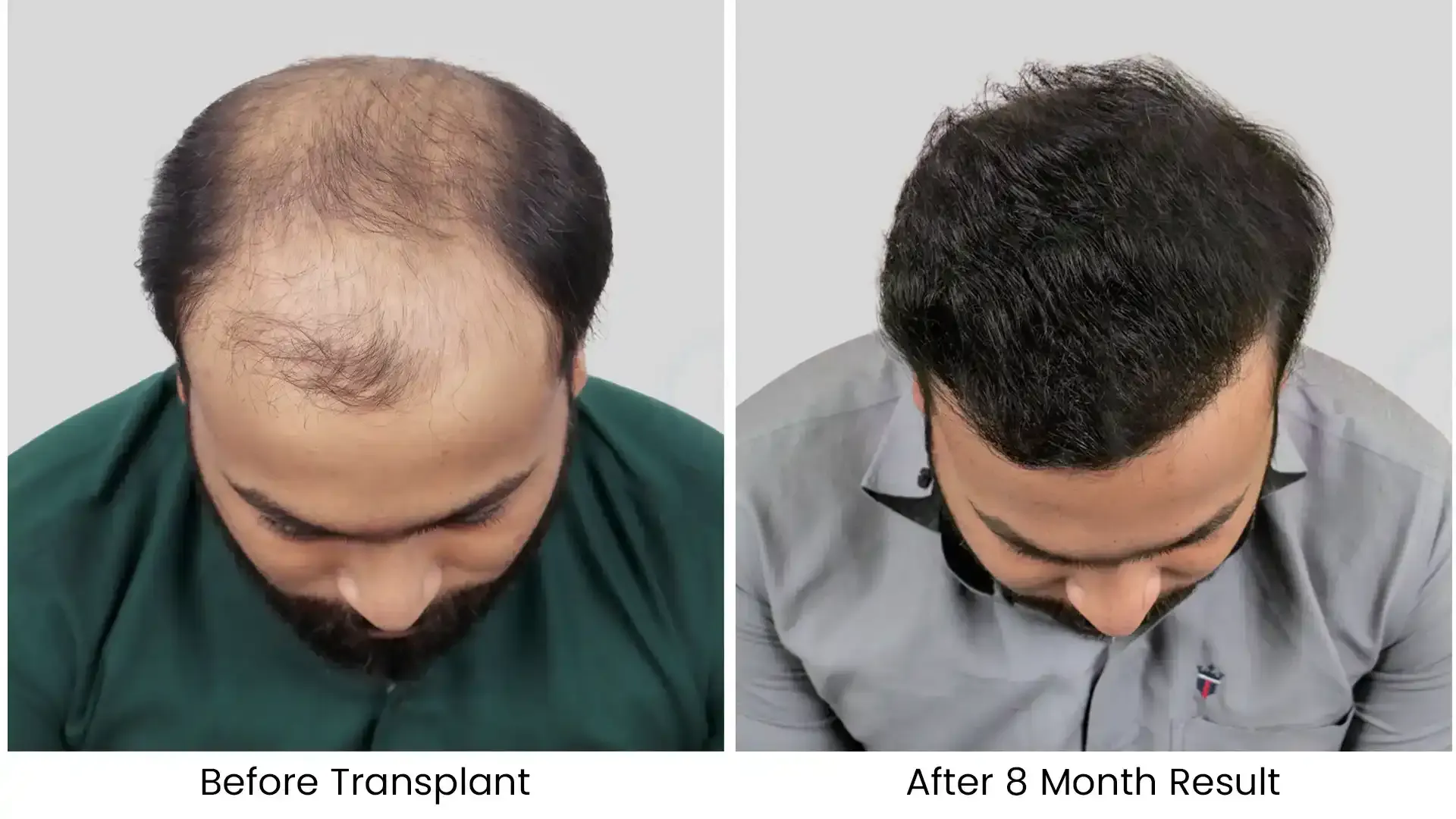
Full cosmetic expression appears. Density becomes uniform, and hair shafts thicken with improved natural direction.
These timelines are consistent across most patients undergoing a Sapphire FUE transplant, though individual biology may cause mild variations.
Sapphire FUE Recovery Timeline
A major advantage of the technique is reduced downtime. The documented Sapphire FUE recovery time is:
- Return to routine work: 48–72 hours
- Scab clearance: 7–10 days
- Redness resolution: 2–3 weeks
- Complete tissue stabilization: 4–6 months
This rapid recovery is directly associated with the micro-incision efficiency of the hair transplant, as smaller entry points reduce tissue inflammation.



Sapphire Hair Transplant Cost in India and Worldwide
The Sapphire hair transplant cost varies widely based on the number of grafts, surgeon’s expertise, clinic infrastructure, and the complexity of the case. Internationally, pricing ranges from USD 2,000 to USD 7,500. According to Indian clinical surveys, the cost-per-graft for sapphire instrumentation ranges approximately ₹80–₹120 in reputable centres.
Hairfree & Hairgrow provides graft-based, transparent pricing models, ensuring patients understand their financial requirements before undergoing the hair transplant. No hidden charges or bundled procedural markups are applied.
Who Is the Ideal Candidate for Sapphire FUE?
The technique is particularly indicated for:
- Patients seeking high-density frontal reconstruction
- Individuals requiring natural temporal point redefinition
- Male or female patients with strong donor availability
- Those prioritizing minimal scar visibility
- Patients wanting predictable outcomes with lower tissue trauma
The hair transplant is also useful in cases where previous surgical methods have produced irregular or sparse results.
Potential Risks and Clinical Precautions
While sapphire blades reduce trauma, risks remain intrinsic to any surgical procedure. Documented complications include:
- Temporary sensory alteration
- Perifollicular inflammation
- Limited shock loss
- Rare graft necrosis in compromised vascular regions
Hairfree & Hairgrow mitigates these risks through controlled incision depth, precise tumescence, sterilization protocols, and scheduled postoperative reviews.
Why Hairfree & Hairgrow Is Positioned as a Leading Provider
Hairfree & Hairgrow integrates advanced sapphire-based surgical systems with evidence-based practices. Strengths include:
- Specialist surgeons experienced in high-density hairline reconstruction
- Customised incision planning using sapphire microblades
- Detailed post-care protocols
- Multicity accessibility across India
- Ethical and transparent clinical communication
Patients benefit from a structured approach centred on long-term follicular stability and realistic medical planning.
Conclusion
The Sapphire FUE hair transplant represents a significant evolution in aesthetic hair restoration. Its capability to produce high-density, naturally aligned growth while minimizing tissue trauma makes it a preferred method for patients requiring advanced correction. The integration of sapphire microblades provides enhanced incision precision, improved healing, and long-term stability of grafts. When performed within a controlled medical framework, this method offers predictable, high-quality outcomes.
Hairfree & Hairgrow remains committed to delivering medically sound, technologically refined Sapphire FUE hair transplant procedures tailored to individual clinical needs.
FAQs
1. Is Sapphire FUE better than regular FUE?
Yes. Sapphire FUE offers more precise and narrower incisions, allowing higher density, faster healing, and more natural angles compared to steel-blade FUE.
2. How long does it take to recover after a Sapphire FUE hair transplant?
Most patients return to work within 48–72 hours. Scabs clear in 7–10 days, and redness usually settles within 2–3 weeks.
3. Are Sapphire FUE results permanent?
Yes. The transplanted follicles are taken from the permanent donor zones, so the results are long-lasting, provided proper post-care is followed.
4. Does Sapphire FUE hurt?
No. The procedure is done under local anesthesia, making it comfortable. Minor tightness or redness afterward is normal and temporary.
5. How much does a Sapphire FUE hair transplant cost in India?
The cost generally ranges from ₹80–₹120 per graft in reputable clinics, depending on graft count, surgeon expertise, and case complexity.