
Quick Answer
Can liver disease cause hair loss? Yes. Liver conditions such as cirrhosis, hepatitis, and fatty liver disease can contribute to hair loss by affecting nutrient absorption, protein production, and hormone balance. Treating the underlying liver condition and maintaining a healthy diet may help reduce hair shedding and support hair regrowth.
Key Takeaways
- Liver disease can contribute to hair loss indirectly through nutrient deficiencies, inflammation, and hormonal imbalances.
- Fatty liver disease, hepatitis, cirrhosis, and Wilson’s disease are among the liver conditions associated with hair thinning.
- Deficiencies in iron, zinc, protein, and vitamin D may affect healthy hair growth.
- Treating the underlying liver condition may help reduce hair shedding and support regrowth.
- Persistent hair loss should always be evaluated by a healthcare professional.
Liver and hair loss have a deeper connection than most people realise. The liver is the largest internal organ in the human body and is responsible for over 500 critical functions, including processing the proteins, vitamins, and hormones that directly fuel hair growth.
Understanding the link between fatty liver and hair loss is important because studies suggest that patients with chronic liver disease often experience noticeable hair changes, including hair thinning, dryness, and accelerated hair fall. Yet, very few people connect their hair loss to their liver health when seeking treatment.
In this guide, we explain exactly how liver function affects your hair, which liver disorders are most commonly linked to hair loss, what you can do to protect both your liver and your hair, and when you should seek professional help.
“At our clinics, we frequently see patients who have been experiencing hair loss for months without knowing that an underlying health issue, including liver dysfunction, could be contributing to it. A thorough diagnosis is always the first step.” — Dr. Chintan Bhavsar, Hair Transplant Specialist, HairFree & HairGrow Clinic |
How Does the Liver Affect Hair Growth?
Yes, liver disease can contribute to hair loss, but usually not directly. Conditions such as fatty liver disease, hepatitis, and cirrhosis may affect nutrient absorption, protein metabolism, hormone regulation, and overall health. These changes can disrupt the normal hair growth cycle and lead to increased hair shedding or thinning.
1. Protein Synthesis
Hair is composed almost entirely of a protein called keratin. The liver is the primary site where dietary proteins are broken down into amino acids and reassembled into the proteins the body needs, including those used for hair growth. When liver function is impaired, this process breaks down, leaving hair follicles protein-deprived and weak.
2. Hormone Regulation
The liver metabolises hormones including oestrogen, testosterone, and thyroid hormones. An imbalance in these hormones, caused by a malfunctioning liver, is a well-documented cause of hair loss. For example, elevated oestrogen levels (due to poor liver metabolism) can trigger a type of hair loss called telogen effluvium.
3. Nutrient Absorption and Transport
The liver produces bile, which is essential for absorbing fat-soluble vitamins, Vitamin A, D, E, and K. It also regulates iron levels in the blood. Iron deficiency is one of the most common causes of hair loss in both men and women. When the liver cannot produce or regulate these adequately, hair follicles suffer.
4. Detoxification
A compromised liver cannot effectively filter toxins from the blood. This leads to a build-up of harmful substances that can disrupt the normal hair growth cycle and push hair follicles prematurely into the shedding phase (telogen phase).
Could an underlying health condition be causing your hair loss?
A hair analysis can help identify possible causes such as nutritional deficiencies, hormonal changes, or liver-related health issues.
Liver and Hair Loss: Which Liver Disorders Cause Hair Fall?
Several specific liver conditions are known to contribute to hair thinning and hair loss. Here is what you need to know about each one:
Cirrhosis
Cirrhosis is a chronic liver condition where healthy liver tissue is progressively replaced by scar tissue. According to Stanford Health Care, cirrhosis patients commonly experience hair thinning, dry and brittle hair, and in advanced cases, noticeable hair loss across the scalp. The scarring severely reduces the liver’s ability to produce proteins and regulate hormones needed for hair health.
Hepatitis (B and C)
Hepatitis causes inflammation of the liver, which disrupts normal liver function. Chronic Hepatitis B and C are particularly associated with hair loss, both from the disease itself (due to reduced protein metabolism and immune system stress) and as a side effect of antiviral medications used in treatment. If you are undergoing Hepatitis treatment and noticing hair loss, consult a trichologist alongside your physician.
Non-Alcoholic Fatty Liver Disease (NAFLD)
NAFLD is now one of the most common liver conditions globally, affecting an estimated 25% of the world’s population according to the World Gastroenterology Organisation. Fat accumulation in the liver leads to inflammation and impaired liver function, which affects the liver’s ability to process the nutrients hair follicles depend on. Hair thinning is a reported symptom in patients with moderate to severe NAFLD.
Wilson's Disease
Wilson’s disease is a rare genetic disorder that causes copper to accumulate in the liver, brain, and other organs. Excess copper disrupts liver function and can interfere with zinc metabolism, a mineral critical for hair follicle health. Hair loss, along with neurological symptoms, is one of the early warning signs of Wilson’s disease.
Autoimmune Hepatitis
In autoimmune hepatitis, the body’s immune system attacks liver cells. The resulting inflammation and reduced liver function, combined with the immune dysfunction, can trigger diffuse hair thinning, a pattern similar to that seen in other autoimmune-related hair loss conditions like alopecia areata.
Can Fatty Liver Cause Hair Loss?
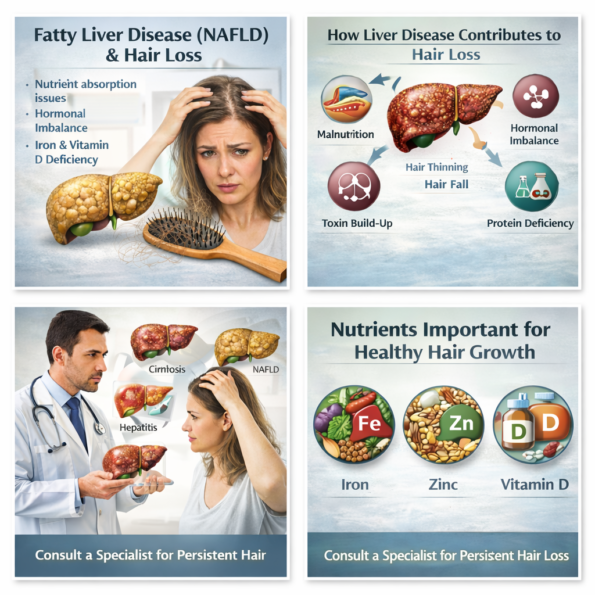
Fatty liver disease (NAFLD) is one of the most common liver conditions worldwide and is increasingly linked to metabolic health problems. While fatty liver does not directly cause hair loss, the inflammation, insulin resistance, and nutrient imbalances associated with the condition may affect healthy hair growth.
Many patients with moderate to severe NAFLD report increased hair shedding, thinning hair, and reduced hair quality. Managing body weight, improving diet, exercising regularly, and treating fatty liver disease may help improve overall hair health.
Are you noticing persistent hair loss along with other symptoms?
Early diagnosis can help identify the cause and guide the right treatment.
Key Nutrients the Liver Processes for Hair Health
Understanding which nutrients are involved helps you take targeted action. Here are the most important ones:
Biotin (Vitamin B7)
Biotin is essential for keratin production, the protein that makes up your hair. The liver plays a role in biotin metabolism. Liver dysfunction can impair biotin availability, leading to brittle hair and hair loss. Food sources include eggs, almonds, sweet potato, and spinach.
Iron
Iron deficiency is the most common nutritional cause of hair loss in women. The liver stores iron in the form of ferritin and regulates its release into the bloodstream. A damaged liver may release ferritin improperly, causing either iron deficiency or overload, both of which are harmful to hair follicles. Iron-rich foods include lentils, spinach, pumpkin seeds, and lean meats.
Zinc
Zinc is essential for maintaining the oil glands around hair follicles and for cell repair and division. The liver is involved in zinc absorption and distribution. Low zinc levels are directly linked to hair thinning. Good sources include chickpeas, pumpkin seeds, cashews, and whole grains.
Vitamin D
Vitamin D receptors are found in hair follicles, and Vitamin D deficiency is increasingly linked to non-scarring hair loss. The liver converts the form of Vitamin D absorbed through the skin into the active form the body can use. Liver disease can therefore lead to Vitamin D deficiency even in individuals with adequate sun exposure.
Liver-Friendly Foods That Also Benefit Your Hair
Leafy Greens - Spinach, Kale, Swiss Chard
Leafy greens are rich in Vitamins A and C, folate, and iron. They support liver detoxification processes and provide the micronutrients hair follicles need for strong, healthy growth. Include at least one serving daily.
Berries - Blueberries, Strawberries, Raspberries
Berries are high in antioxidants that protect liver cells from oxidative stress. A healthier liver processes nutrients more efficiently, including those destined for your hair follicles. Berries also contain Vitamin C, which aids iron absorption.
Fatty Fish - Salmon, Mackerel, Sardines
Fatty fish are an excellent source of omega-3 fatty acids, which reduce liver inflammation and support optimal liver function. Omega-3s also nourish the scalp and help prevent dryness and dandruff, a common side effect of poor liver function.
Walnuts and Flaxseeds
These are plant-based sources of omega-3 fatty acids and are also rich in Vitamin E, which protects liver cells. Regular consumption supports both liver recovery and scalp health.
Turmeric
Curcumin, the active compound in turmeric, has well-documented anti-inflammatory and liver-protective properties. Studies published in journals including the World Journal of Gastroenterology have shown its benefits in reducing liver inflammation, which can indirectly benefit hair health.
How to Take Care of Your Liver for Better Hair - 6 Actionable Steps
- Eat a liver-supportive diet – Focus on vegetables, whole grains, lean proteins, and antioxidant-rich foods. Reduce processed foods, refined sugar, and trans fats. A Mediterranean-style diet is widely recommended for liver health.
- Stay hydrated – Drink 2–3 litres of water daily. Adequate hydration helps the liver flush toxins efficiently and keeps hair follicles nourished.
- Exercise regularly – Aim for at least 150 minutes of moderate exercise per week (30 minutes, 5 days). Physical activity reduces fat accumulation in the liver and improves overall circulation – delivering more nutrients to hair follicles.
- Limit alcohol consumption – Alcohol is directly toxic to liver cells. Even moderate excess can impair liver function significantly over time. If you drink, stay within recommended limits.
- Get adequate sleep – 7 to 8 hours per night. The liver does much of its repair and detoxification work during sleep. Chronic sleep deprivation is a known risk factor for fatty liver disease.
- Get regular liver function tests – Especially if you have a family history of liver disease, are overweight, or are experiencing unexplained hair loss alongside fatigue, jaundice, or digestive issues. Early detection is key.
Liver-Related Hair Loss vs Other Common Types of Hair Loss
| Type of Hair Loss | Main Cause | Reversible? |
|---|---|---|
|
Liver-Related Hair Loss |
Nutritional deficiencies, inflammation, hormonal imbalance |
Often Yes |
|
Telogen Effluvium |
Stress, illness, surgery |
Usually Yes |
|
Androgenetic Alopecia |
Genetics and DHT sensitivity |
Progressive |
|
Alopecia Areata |
Autoimmune condition
|
Variable |
When Should You See a Doctor for Liver-Related Hair Loss?
See a doctor promptly if you experience hair loss alongside any of the following symptoms:
- Persistent fatigue or weakness
- Yellowing of skin or eyes (jaundice)
- Swollen abdomen or legs
- Dark urine or pale stools
- Nausea, loss of appetite, or unexplained weight loss
- Skin itching without a rash
These could indicate a liver condition that requires medical attention. Addressing the root cause is the most effective way to stop liver-related hair loss.
Can Hair Grow Back After Liver Disease Treatment?
In many cases, yes. If hair loss is caused by nutritional deficiencies, inflammation, medication side effects, or temporary stress related to liver disease, hair growth may improve once the underlying condition is properly managed.
Most people notice a reduction in hair shedding within 2 to 3 months after treatment begins. Visible improvement in hair density and regrowth may take between 4 and 6 months, depending on the severity of the liver condition, nutritional status, and overall health.
However, if liver disease has triggered or revealed another form of hair loss, such as androgenetic alopecia, additional hair restoration treatments may be required.
Still unsure what’s causing your hair loss?
At HairFree & HairGrow Clinic, our specialist doctors diagnose the root cause of your hair loss, including health conditions like liver disorders, and provide the most advanced treatments available in India.
Conclusion
The connection between your liver and hair loss is real, well-established, and often overlooked. A healthy liver ensures your hair follicles receive the proteins, vitamins, minerals, and hormones they need to grow strong and healthy. Liver disorders, from Fatty Liver to Cirrhosis, can disrupt this supply chain and lead to significant hair loss.
The most effective approach is to address both: treat and support your liver health, and at the same time, consult a qualified trichologist to manage the hair loss with targeted treatments.
If you are experiencing unexplained hair loss, whether you suspect a liver connection or not, the team at HairFree & HairGrow Clinic can help you get to the root cause and create a personalised treatment plan.
Frequently Asked Questions
-
1. Can liver disease cause hair loss?
Yes. Liver diseases including Cirrhosis, Hepatitis B and C, NAFLD, and Wilson's Disease can all contribute to hair loss. The liver's role in protein synthesis, hormone regulation, and nutrient absorption is critical for hair follicle health. When liver function is compromised, hair follicles are deprived of the nutrients and hormones they need to produce healthy hair.
-
2. Does fatty liver (NAFLD) cause hair loss?
NAFLD can indirectly cause hair loss by impairing the liver's ability to process nutrients and regulate hormones. Patients with moderate to severe NAFLD often report hair thinning. Addressing NAFLD through weight loss, dietary changes, and medical treatment can help improve hair health over time.
-
3. Can liver damage be reversed to restore hair growth?
In many cases, yes, particularly in early-stage liver disease. Conditions like NAFLD and early-stage Hepatitis can often be reversed or significantly improved with lifestyle changes and medical treatment, which can then allow hair growth to recover. Advanced liver damage (such as late-stage Cirrhosis) is harder to reverse, but supportive hair treatments can still improve hair quality.
-
4. Which blood tests should I do to check if my liver is affecting my hair?
Ask your doctor for a Liver Function Test (LFT), which measures enzymes like ALT, AST, and bilirubin. You should also check your serum ferritin (iron stores), Vitamin D levels, Zinc, and a full hormonal panel if hair loss is significant. These tests together give a comprehensive picture of whether liver health is contributing to your hair loss.
-
5. Can liver function and hair loss be linked in women specifically?
Yes - women are particularly vulnerable to liver-related hair loss because liver dysfunction affects oestrogen metabolism. Excess oestrogen (due to poor liver clearance) or hormonal imbalance can trigger telogen effluvium (diffuse shedding) in women. Iron deficiency, which the liver regulates, is also a leading cause of hair loss specifically in women.
-
6. Does Minoxidil help with hair loss caused by liver disease?
Minoxidil is a topical or oral treatment that stimulates hair follicles and can help with hair loss regardless of cause. However, it addresses the symptom rather than the root cause. For liver-related hair loss, treating the underlying liver condition is the most important step. Minoxidil can be used as a supportive treatment alongside medical management of the liver condition, always under medical supervision.
-
7. Which organs other than the liver affect hair growth?
Hair growth is regulated by multiple organs and systems. The thyroid gland (thyroid hormones regulate hair growth cycle), adrenal glands (stress hormones like cortisol affect hair), kidneys (regulate fluid and mineral balance), and the digestive system (nutrient absorption) all play a role alongside the liver. If you have unexplained hair loss, a comprehensive evaluation across these systems may be needed.
-
8. How long does it take for hair to recover after liver health improves?
Hair growth cycles typically take 3 to 6 months to show visible improvement after the underlying cause is addressed. If your liver health improves significantly, you can expect to see reduced hair shedding within 2 to 3 months, and noticeable regrowth within 4 to 6 months. This timeline varies depending on the severity of the liver condition and individual factors.